 City postcard
Hokkaido
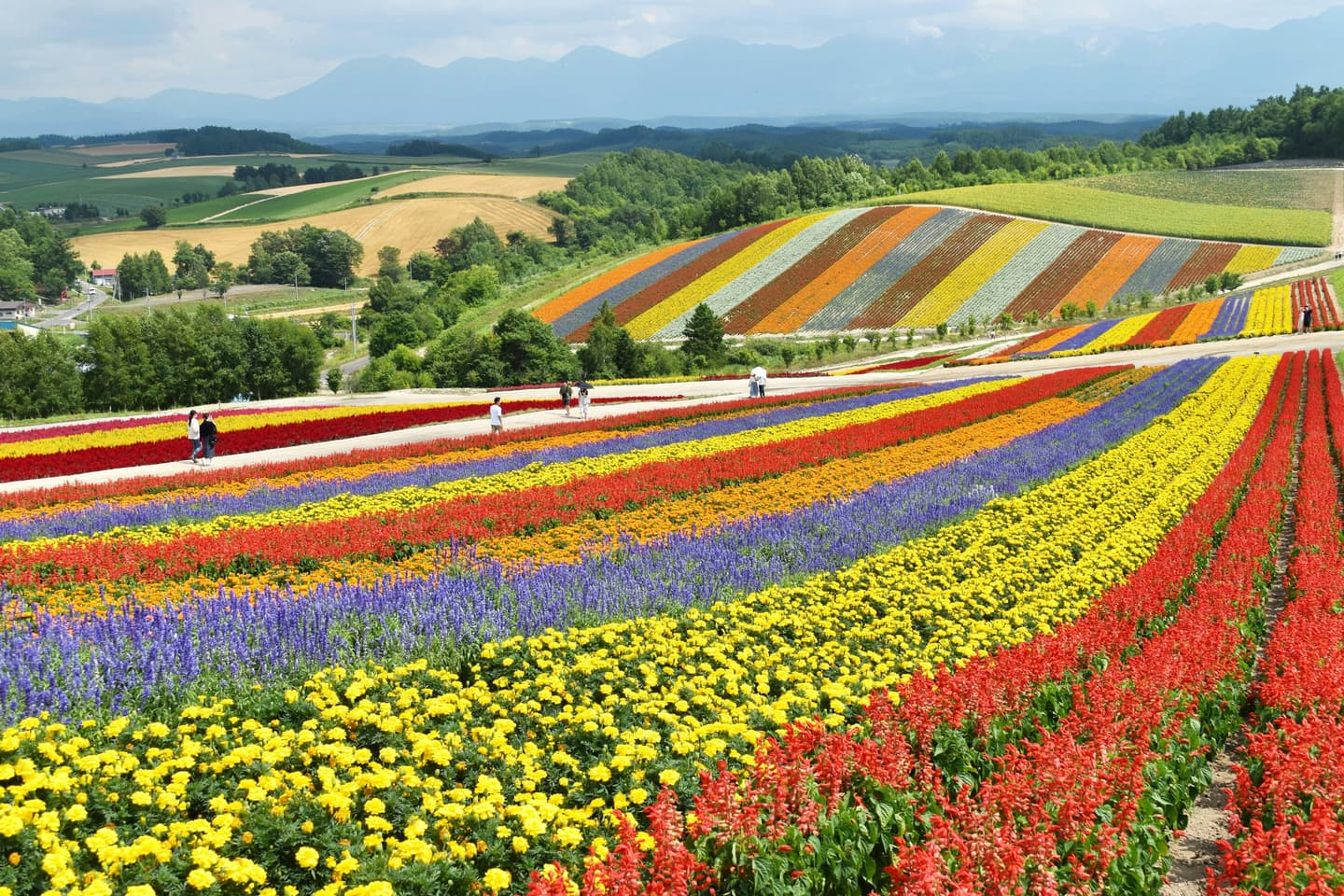
Japan's wild north — world-class powder snow, volcanic landscapes, and lavender fields with no rainy season.
Japan's wild north — world-class powder snow, volcanic landscapes, and lavender fields with no rainy season.
Hokkaido is Japan's second-largest and northernmost island, celebrated for its dramatic four seasons, pristine national parks, and some of Asia's finest ski terrain. Winters bring legendary "Japow" powder to resorts like Niseko and Furano, while summers offer cool, humidity-free weather perfect for hiking, cycling, and watching flower fields explode with lavender. The capital Sapporo anchors the island with city culture, miso ramen, and a world-famous snow festival, while far-flung regions like Shiretoko and Lake Akan reward adventurous travellers with wildlife, hot springs, and Ainu indigenous heritage. Housing and daily costs run significantly lower than Tokyo, making it an increasingly attractive base for expats and remote workers seeking space and nature.
City postcardJapan's wild north — world-class powder snow, volcanic landscapes, and lavender fields with no rainy season.
A signature stop locals and returning travelers point to in Hokkaido.
A signature stop locals and returning travelers point to in Hokkaido.
A signature stop locals and returning travelers point to in Hokkaido.
A signature stop locals and returning travelers point to in Hokkaido.
A signature stop locals and returning travelers point to in Hokkaido.
A signature stop locals and returning travelers point to in Hokkaido.
A signature stop locals and returning travelers point to in Hokkaido.
A signature stop locals and returning travelers point to in Hokkaido.
A visual anchor inside Hokkaido worth building into the route.
A pocket of Hokkaido with its own temperament — worth a deliberate detour when you're in the area.
A pocket of Hokkaido with its own temperament — worth a deliberate detour when you're in the area.
A pocket of Hokkaido with its own temperament — worth a deliberate detour when you're in the area.
A pocket of Hokkaido with its own temperament — worth a deliberate detour when you're in the area.
Wanderlust Pro
Pro members see insider tips for Hokkaido: a short list of restaurants, cafés and sights, picked by AI as local suggestions to double-check before you go.
The quick answers travelers want before they commit to flights, neighborhoods, and how long to stay.
The fastest and most common way to reach Hokkaido is by air. Flights from Tokyo to Sapporo's New Chitose Airport (CTS) take approximately 90 minutes, with direct services from major Japanese cities (Tokyo, Osaka) and international hubs including Seoul and Taipei. By train, the JR Tohoku/Hokkaido Shinkansen runs from Tokyo to Shin-Hakodate-Hokuto (~5 hours), where you transfer to the Hokuto Limited Express for a further ~4 hours to reach Sapporo — around 8 hours total. Budget travellers can also arrive by long-distance ferry from several Honshu ports including Niigata, Sendai, and Nagoya. Be aware there are two Sapporo airports: New Chitose (CTS), the international hub with excellent public transport links south of the city, and Sapporo Okadama (OKD) in the north, which has limited connections — always double-check before booking, as transferring between the two takes roughly 1.5 hours.
Hokkaido is Japan's largest prefecture at roughly 83,000 km², so distances between attractions are substantial. For city-focused trips, JR Hokkaido trains connect major hubs; the Hokkaido Rail Pass (foreign tourists only) offers unlimited JR rides — 3-day pass ¥17,400, 5-day ¥23,480. The Rapid Airport service links New Chitose Airport to central Sapporo in about 37 minutes. Within Sapporo, a subway 1-day pass provides unlimited rides; Sapporo and Hakodate also have historic streetcar/tram networks. For rural areas and nature destinations, a rental car is the most flexible option (approximately ¥5,000–¥8,000/day); nearly all rental vehicles include GPS navigation. Note that winter driving (November–April) on icy roads is hazardous — snow tyres are standard but experience is recommended. Ski resort buses from Sapporo to Niseko or Furano run for around ¥4,000–¥5,500. Buses also reach remote spots like Shiretoko and Lake Akan that have no rail access. Internal flights from New Chitose to Kushiro, Wakkanai, or Memanbetsu take 35–50 minutes for those on tight schedules.
Hokkaido is a genuine four-season destination, and the 'best' time depends entirely on what draws you. Winter (December–February) is peak season for skiing: the heaviest powder falls between late December and February, when Niseko and Furano are at their world-famous best. The Sapporo Snow Festival in early February draws enormous crowds — book accommodation 6 months or more in advance for January–February visits. Summer (July–August) is Hokkaido's other peak season: no rainy season, no oppressive humidity, and the lavender fields of Furano hit full bloom in July. Mainland Japanese flock north to escape the heat, so expect busy roads and higher prices in August. Cherry blossoms arrive much later than the rest of Japan — typically late April to early May — making spring a quieter, more affordable window with spectacular scenery. Goryokaku Park in Hakodate is a top sakura spot. Autumn (September–October) is arguably the island's hidden gem: brilliant fall foliage at Sounkyo Gorge peaks in mid-October, crab season opens, crowds thin, and prices drop. For budget-conscious travellers, March–June and September–October offer the best value without sacrificing scenery.
Arrive at New Chitose Airport and take the Rapid Airport train (~37 min) to central Sapporo. Drop bags and walk to Odori Park and the iconic Sapporo TV Tower for city views.
Head to the Sapporo Beer Museum (free entry, tastings available) then explore the Nijo Market for fresh seafood rice bowls (kaisendon). Stroll the underground shopping arcades connecting Odori and Sapporo stations.
Dinner in Susukino — try Sapporo miso ramen, Genghis Khan mutton barbecue, or a soup curry. Explore Hokkaido's most vibrant nightlife district.
Take the JR Rapid train (~30 min, ~¥640) west to Otaru. Walk the historic Otaru Canal, browse glasswork studios, and visit the seafood market for fresh crab and uni.
Return to Sapporo then board a limited express (~1.5 hrs) south to Noboribetsu Onsen. Walk the dramatic Hell Valley (Jigokudani) volcanic landscape with its steaming craters and sulphurous vents.
Soak in an open-air rotenburo at your ryokan or onsen hotel while surrounded by forested mountains — a quintessential Hokkaido experience.
Take the JR limited express north from Sapporo to Asahikawa (~1.5 hrs), then transfer to the Furano Line. Arrive in Furano and head straight to Farm Tomita for lavender fields (peak July) and seasonal blooms.
Drive or cycle the famous Patchwork Road between Biei and Furano — patchwork crop fields and rolling hills make this one of Hokkaido's most photogenic routes. Stop at the Blue Pond (Aoike) in Biei for its striking turquoise waters.
Dinner in Furano town with local Yubari melon products and Furano wine before heading back to Sapporo or continuing to your next Hokkaido destination.
Real coworking spaces, laptop-friendly cafés, and libraries mapped near the center of the city — the closest, best-rated desks first.
No coworking-ready spots surfaced for this city yet.
Pick a different category or check back once we’ve indexed more desks for this city.
Ask for cafés, quiet neighborhoods, date-night spots, or a first 48-hour plan.
Mention calls, Wi-Fi needs, or how much of the day has to stay laptop-friendly.
Get faster answers on where to stay, when to move neighborhoods, and what to skip.
There aren’t any, yet!
Block off the weeks you're free. Wanderlust turns this dossier — flights, lodging, neighborhoods, timing — into a single draft itinerary in about ninety seconds.
Wanderlust Pro
Insider tips for Hokkaido, unlimited AI-built itineraries, and travel companions you can invite to plan a trip together. From $5.00/month, billed annually.
Wanderlust Pro
Pro members see insider tips for Hokkaido: a short list of restaurants, cafés and sights, picked by AI as local suggestions to double-check before you go.