Top sight
Top sight
Europe's kitesurfing capital where the Atlantic meets the Mediterranean, just 14 km from Africa.
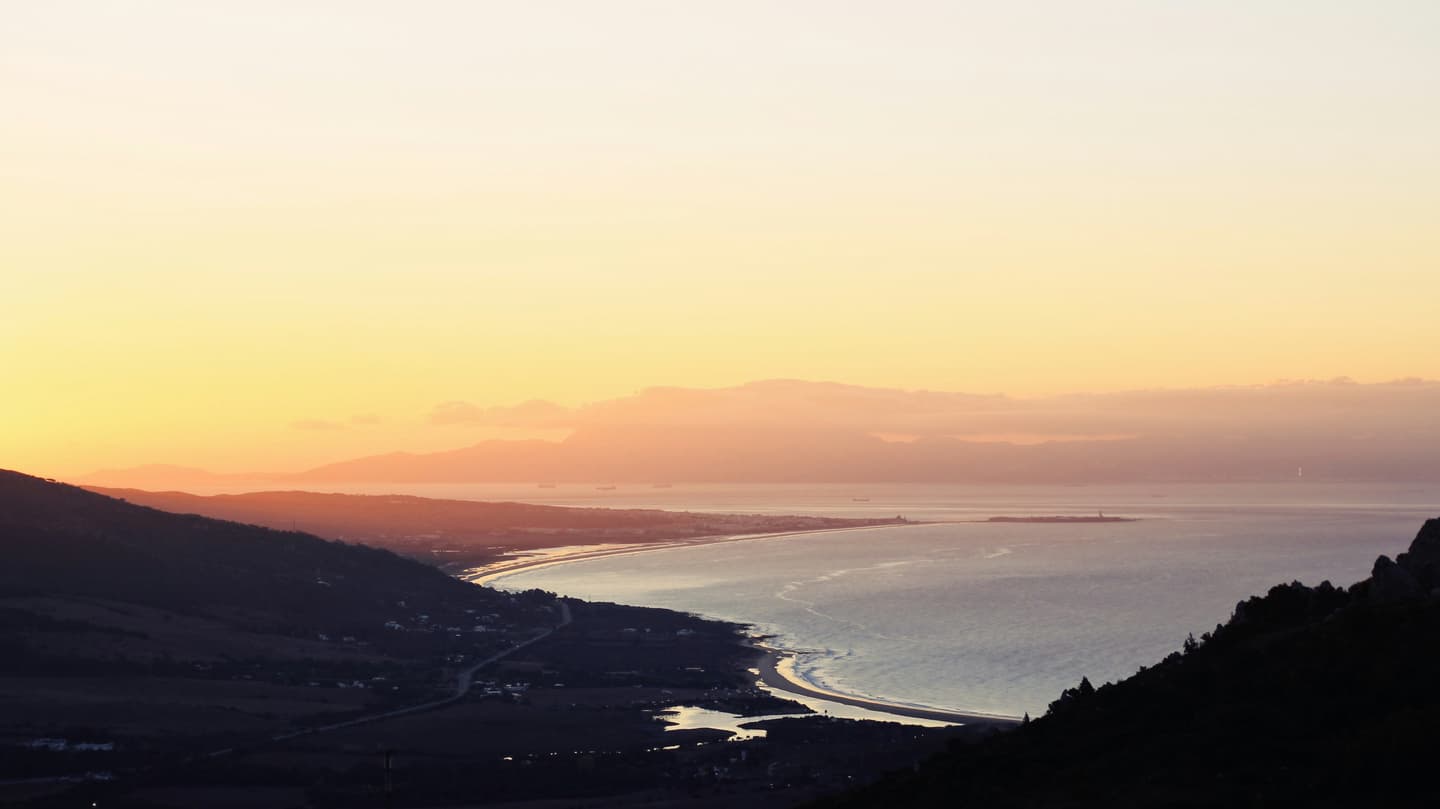
Tarifa sits at the southernmost tip of mainland Europe, where the Atlantic Ocean and Mediterranean Sea collide in the Strait of Gibraltar — just 14 kilometres from the Moroccan coast. Known as the wind and kitesurfing capital of Europe, with consistent winds blowing over 300 days a year, it draws wave riders and bohemian slow-travellers alike. The whitewashed Casco Antiguo, fresh-seafood tapas bars, and a year-round ferry to Tangier give it a uniquely cross-continental character that no other Andalusian town can match. Tarifa remains refreshingly unpolished: small, breezy, and addictive.
More cities for these months: Where to go in April · Where to go in May · Where to go in June · Where to go in September · Where to go in October
Insider tips · Wanderlust Pro
Practical tips on the sights and neighbourhoods in this Tarifaguide — when to go, what most visitors miss. Written with AI about the guide's own places; double-check details before you go. Pro members see every tip.
The quick answers travelers want before they commit to flights, neighborhoods, and how long to stay.
Tarifa has no airport or train station of its own. The closest airport is Gibraltar International (GIB), roughly a 45-minute drive, though it requires a border crossing into Spain. Jerez Airport (XRY) is about 90 minutes away and offers a smoother land connection; Málaga Airport (AGP) has the widest range of international flights at roughly a 2-hour drive. From Málaga Airport, travellers arriving by bus must change at Algeciras — the key regional hub 20 km from Tarifa — and take an onward connection into town. Direct buses from Seville take approximately 2.5–3 hours, and from Jerez around 1.5 hours. Renting a car is widely recommended, especially for day trips to Bolonia or the surrounding natural parks, as rail links are non-existent in Tarifa itself. There is also a year-round ferry connection from Tarifa Port to Tangier Ville, Morocco (see Get Around).
Tarifa's compact old town and port area are best explored on foot — the town is small enough that virtually everything is walkable. Taxis are available near the port for trips to the beach strip or further afield. There is no local urban bus network; for beaches north of town such as Valdevaqueros and Punta Paloma, a car, scooter, or taxi is needed. Regular bus services connect Tarifa with Algeciras, Cádiz, and Seville for regional day trips. The star transport highlight is the ferry to Tangier: operators Baleària and Africa Morocco Link (AML) run around 10 daily crossings year-round (up to ~108 per week in peak summer), with the crossing taking approximately 54–60 minutes and tickets starting at around €40 per person. Note that as of May 2025, DFDS ceased operating on the Tarifa–Tangier Ville route; Baleària and AML now serve the line. Travellers should arrive at the port at least 90 minutes before departure (3 hours during peak season or for first-time EU Entry/Exit System biometric registration).
Tarifa's climate is unlike anywhere else in southern Spain. The Strait of Gibraltar creates a natural wind tunnel — the Venturi Effect — funnelling both the eastern Levante and western Ponente winds through a narrow gap, producing gusts of 80 km/h or more even in summer. This is a gift for kitesurfers and windsurfers but can make beach days challenging for non-sports visitors.
The sweet spots are April–June and September–October. Temperatures sit at a comfortable 18–25°C, crowds thin out significantly versus the July–August peak, and wind conditions are at their most consistent — locals from KitePassion Tarifa call these months '100% kitesurfing.' Whale-watching tours also resume in spring, with pilot whales and dolphins visible most of the year, sperm whales from May through July, and orcas in July and August.
July and August bring peak tourist pressure: cars queue for hours to enter the old town, accommodation prices spike, and the beaches are packed. That said, it's the driest period (July averages just 1.8 mm of rainfall) and warmest, with August highs around 28°C.
Autumn (September–November) is arguably the best-kept secret: the summer heat softens to 20–25°C, the sea stays warm enough to swim in through November, tourist numbers drop sharply, and the old town reverts to its authentic local rhythm. Winter is mild by European standards (average January high ~17°C) with occasional heavy rain and strong wind, but ideal for hiking the surrounding natural parks at low prices.
Enter the Casco Antiguo through the 13th-century Puerta de Jerez and spend the morning wandering its labyrinthine whitewashed streets. Visit the Castle of Guzmán el Bueno (€4 adults, €2.50 children) for panoramic views across the Strait to Morocco.
Walk the causeway out to Isla de las Palomas — Punta de Tarifa — the southernmost point of mainland Europe and the entire European continent. On a clear day, the Moroccan coastline is visible just 14 km away. Stop at the Mirador del Estrecho on the way back for the best panoramic shot of Africa from Europe.
Settle into the old town for tapas and fresh seafood — try the chiringuitos along the main street. Watch kitesurfers riding the last light off Playa de los Lances from a café terrace.
Head north along the coast to Bolonia (20 minutes by car) to explore the remarkably well-preserved Roman ruins of Baelo Claudia — free for EU citizens, €1.50 for others — dating back to the 2nd century BC, including a theatre, basilica, forum, and fish-salting factory.
Spend the afternoon on Bolonia Beach, a stunning 4 km stretch of golden sand backed by a giant sand dune. If the wind is up, this is one of Europe's top kitesurfing and windsurfing spots — book a lesson or rental with one of the 30-plus schools around Tarifa.
Return to Tarifa and browse the bohemian boutiques of the Casco Antiguo — Moroccan Home for ceramics and rugs, and the artisan shops tucked into the back streets. Dinner at a restaurant in the old town squares.
Catch an early ferry from Tarifa Port to Tangier Ville (operated by Baleària or AML; ~€40 per person, ~54–60 minute crossing, ~10 daily departures year-round). Arrive at the heart of Tangier's port — no extra transfer needed — and head straight into the medina and Kasbah. Bring a valid passport as you are crossing an international border.
Explore the labyrinthine Medina, sample a tagine or couscous lunch with mint tea, and browse the vibrant souks for crafts and ceramics. Consider a guided walking tour of the historic Kasbah for context.
Catch an early-evening return ferry back to Tarifa — leaving 6–8 hours to explore gives a satisfying taste of Morocco without an overnight stay. Wind down in Tarifa with a glass of local wine and fresh tuna, a regional speciality.
Real coworking spaces, laptop-friendly cafés, and libraries mapped near the center of the city — the closest, best-rated desks first.
No coworking-ready spots surfaced for this city yet.
Pick a different category or check back once we’ve indexed more desks for this city.
Ask for cafés, quiet neighborhoods, date-night spots, or a first 48-hour plan.
Mention calls, Wi-Fi needs, or how much of the day has to stay laptop-friendly.
Get faster answers on where to stay, when to move neighborhoods, and what to skip.
Written by signed-in Wanderlust members. We don't check that a reviewer has visited.
No reviews of Tarifa yet.
Tell the planner your dates, who's coming, your budget and pace, and it drafts a day-by-day itinerary you can edit.
Wanderlust Pro
Insider tips for Tarifa, unlimited AI-built itineraries, and travel companions you can invite to plan a trip together. From $5.00/month, billed annually.
Insider tips · Wanderlust Pro
Practical tips on the sights and neighbourhoods in this Tarifaguide — when to go, what most visitors miss. Written with AI about the guide's own places; double-check details before you go. Pro members see every tip.