City guide · Updated June 2026
EuropeSpain39.6° · 2.7°
Mallorca,Mallorca.
Spain's sun-drenched Balearic gem — where dramatic Tramuntana mountains meet 262 pristine beaches.
Mallorca · ES
MallorcaSpain
★
Palma de Mallorca Airport (PMI)NEAREST AIRPORT
Population
417,150
Total residents
Global rank
#15
Wanderlust index
Best time
Spring (April–June) and early…
Peak window
Time zone
Europe/Madrid
Local time
Currency
EUR
Money in use
Language
Spanish (Castilian); Mallorquín (Catalan dialect) also widely spoken
Spoken locally
01 · Overview
About Mallorca
Spain's sun-drenched Balearic gem — where dramatic Tramuntana mountains meet 262 pristine beaches.
Mallorca is the largest of Spain's Balearic Islands, a Mediterranean paradise of crystal-clear coves, rugged mountain villages, and a cosmopolitan capital in Palma. The island balances world-class beach resorts with UNESCO-listed landscapes, rich Mallorcan cuisine, and a fast-growing remote-work community. With year-round flights from across Europe, reliable infrastructure, and around 300 sunny days a year, it appeals equally to short-break sun-seekers, slow travelers, and long-stay digital nomads.
02 · Wanderlust scorecard
How Mallorca scores
Ratings run 0 to 5 unless marked. They come from our AI-assisted research and are refreshed on a rolling basis.
3
/ 5
Cost of living
Affordability, 0–5. Higher means cheaper.
5
/ 5
Leisure
Leisure rating, 0–5.
50
Mbps
Connectivity
Median internet speed.
4.5
/ 5
Safety
Safety rating, 0–5. Higher is safer.
4
/ 5
Overall livability
Overall rating, 0–5.
4.5
/ 5
Air quality
Air-quality rating, 0–5. Higher is cleaner.
8.6
index
Index score
Wanderlust ranking, 0–10: overall, safety, internet, cost, leisure and air quality, weighted.
03 · Weather & when to go
Best time to visit Mallorca
Current weather and the forecast, and the months our research rates best for a visit.
Month by month
Best months Either side Other months
Jan
Feb
Mar
Apr
May
Jun
Jul
Aug
Sep
Oct
Nov
Dec
Sweet spot: Spring (April–June) and early autumn (September–October) offer the best balance of warm weather, manageable crowds, and competitive prices..
More cities for these months: Where to go in April · Where to go in May · Where to go in June · Where to go in September · Where to go in October
04 · Things to do
Things to do in Mallorca
Top sights from our AI-assisted research, and other places we have photos of.
Top sight
Serra de Tramuntana (UNESCO World Heritage mountains)
Photo: No machine-readable author provided. Cybertoni assumed (based on copyright claims). · Public domain
Top sight
Top sight
Cap de Formentor
Top sight
Top sight
Valldemossa village
Top sight
Top sight
Cala d'Or & hidden coves
Top sight
Top sight
Alcúdia Old Town
Top sight
Top sight
Sóller & the vintage train from Palma
05 · Monthly cost of living
Cost of living in Mallorca
Estimated monthly totals in USD from our AI-assisted research, one per profile. Treat them as a starting point for a budget, not a quote.
$2,400
estimated monthly spend · USDProfileExpat
Price references — vs. profile benchmarks
Nomadmonthly spend · USD
$3,200
+33%
Expatmonthly spend · USD
$2,400
baseline
Familymonthly spend · USD
$4,277.2
+78%
Localmonthly spend · USD
$1,108.8
-54%
Median fiber speeddownload · Mbps
50
Mbps
06 · Neighborhoods
Where to stay in Mallorca
Neighborhoods our AI-assisted research lists as popular with visitors.
Old Town (Casco Antiguo), Palma
Santa Catalina, Palma
Portixol, Palma
Sóller
07 · Insider tips
Sights and neighbourhoods, with a tip each.
Practical tips on places from this Mallorca guide, written with AI. One is free; Pro members see the rest. Double-check details before you go.
Insider tips · Wanderlust Pro
Practical tips on the sights and neighbourhoods in this Mallorcaguide — when to go, what most visitors miss. Written with AI about the guide's own places; double-check details before you go. Pro members see every tip.
08 · Practical notes
Practical information for Mallorca
The essentials from this guide's data, in one place.
01
Getting there
- Nearest airport — Palma de Mallorca Airport (PMI)
02
Money
- Currency — EUR
- Affordability — 3/5 on the Wanderlust index (higher is cheaper)
03
Internet
- Median speed — 50 Mbps
- Internet score — 5/5
04
Safety
- Safety score — 4.5/5 from our AI-assisted research
05
Language
- Primary language — Spanish (Castilian); Mallorquín (Catalan dialect) also widely spoken
06
Timing
- Best window — Spring (April–June) and early autumn (September–October) offer the best balance of warm weather, manageable crowds, and competitive prices.
- Time zone — Europe/Madrid
Questions
Frequently asked, plainly answered.
The quick answers travelers want before they commit to flights, neighborhoods, and how long to stay.
Is Mallorca safe for travelers?+
Mallorca has a safety rating of 4.5 out of 5.
What is the best time to visit Mallorca?+
The best time to visit Mallorca is Spring (April–June) and early autumn (September–October) offer the best balance of warm weather, manageable crowds, and competitive prices..
How expensive is Mallorca?+
Mallorca has an affordability score of 3 out of 5, where 5 is most affordable.
What is the internet speed in Mallorca?+
Mallorca has an average internet speed of 50 Mbps.
What currency does Mallorca use?+
The currency used in Mallorca is EUR.
What language is spoken in Mallorca?+
The primary language spoken in Mallorca is Spanish (Castilian); Mallorquín (Catalan dialect) also widely spoken.
Researched city guide
Getting there, getting around and when to go
Written with AI-assisted web research. Where we have sources, they are listed under each part.
What works
- Over 262 beaches and coves spanning every style, from busy resort sands to secluded cliff-backed inlets
- Excellent air connectivity — direct budget flights from most European cities keep access affordable
- UNESCO-listed Serra de Tramuntana offers world-class hiking and cycling
- Free public bus travel in Palma with the Intermodal card (since 2025)
- Around 300 sunny days a year with mild, liveable winters
- Growing digital nomad infrastructure: coworking spaces, Spain's remote-work visa, and a strong expat community
What to weigh
- Peak-season crowds (July–August) overwhelm popular beaches and drive accommodation prices sharply higher
- Renting a car is near-essential for exploring beyond Palma, adding cost and logistical overhead
- Long-term rental market is tight and increasingly expensive — Palma rents hit ~€18/m² in 2025
- Many resort hotels and some restaurants close entirely in winter
- Tourist saturation is creating political tension around short-term rentals and visitor caps
Getting in
How to arrive
Mallorca is served by Palma de Mallorca Airport (PMI), one of Spain's busiest airports. Budget carriers including Ryanair, EasyJet, and Wizz Air operate direct flights from most major European cities, making access cheap and frequent. A dedicated airport bus (line A2) links PMI directly to Palma city centre for around €5 — a fast, affordable option. Taxis from the airport to central Palma take roughly 15 minutes and cost approximately €28 during the day or €37 at night, including the airport surcharge. Ferries connect Mallorca to Barcelona, Valencia, Ibiza, and Menorca for those preferring a scenic sea crossing.
Getting around
Moving through the city
Palma's compact historic centre is easily walkable. Beyond the city, the island has two main transit networks: EMT city buses in Palma, and TIB interurban buses covering the whole island from the Serra de Tramuntana to coastal towns like Alcúdia and Cala d'Or. Since 2025, regular EMT bus journeys are free of charge when using the Intermodal or Single Public Transport Card. SFM trains run from Palma's Estació Intermodal to Inca, Sa Pobla, and Manacor; one-way fares range from €1.60–€4.10 depending on distance. Taxis are regulated — the 2025 unified fare is €1.20/km on weekdays, with a €2.50 flag fall and a €4.65 airport/port supplement. For maximum flexibility, particularly outside Palma, car hire is strongly recommended. Scooters and bikes are also popular in Palma.
When to go
Timing your trip
Mallorca rewards travellers who time their visit well. Spring (April–June) is widely considered the sweet spot: temperatures climb to a pleasant 18–23°C, the countryside bursts into bloom, and summer crowds have yet to arrive. September earns high praise from locals — warm and sunny at an average 27°C, with beaches noticeably quieter than July and August and prices starting to ease. Summer (July–August) is peak season: sea temperatures are perfect, but tourist numbers are intense and accommodation prices hit their highs. Autumn (October) extends the good weather into a blue-sky shoulder season ideal for hiking. Winter is quiet — many resort hotels close — but Palma stays lively with Christmas markets, festivals, and mild sunny days that attract a growing cohort of slow travellers and remote workers looking for off-season bargains.
Plan your trip
3 days in Mallorca: a sample itinerary
A ready-made starting point. Make it your own — clone it into an editable journey and reshape every stop.
Day 01
Day 1 – Palma: History, Markets & Waterfront
Morning
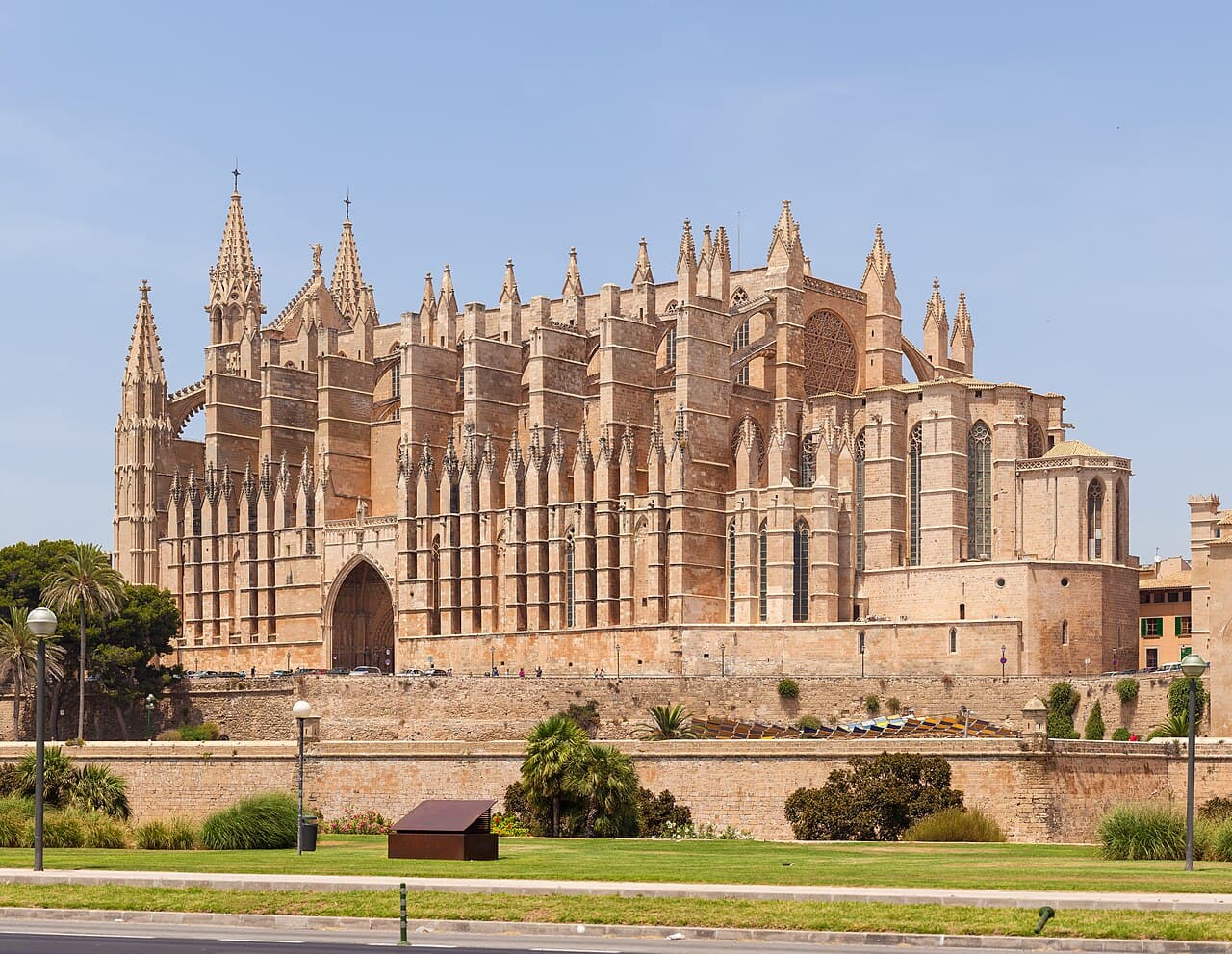
Begin at the iconic Palma Cathedral (La Seu) and walk next door to the Royal Palace of La Almudaina. Explore the labyrinthine stone lanes of the Old Town (Casco Antiguo) and discover hidden courtyards like Can Vivot.
Afternoon
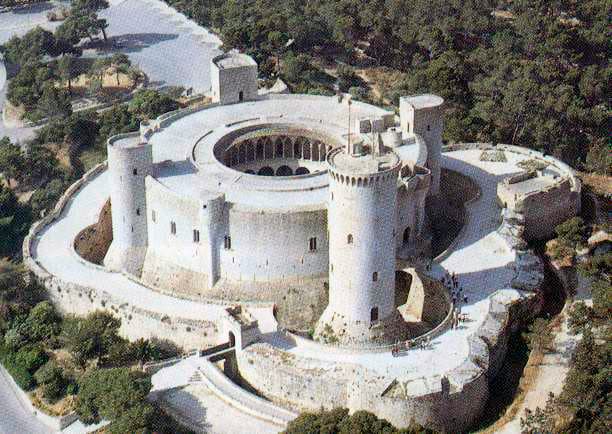
Head to Mercat de l'Olivar or Mercat de Santa Catalina for a lunch of pa amb oli (bread with olive oil) and local wine. Browse the artisan district of Sa Gerreria, then climb up to Bellver Castle for panoramic views over Palma Bay.
Evening
Stroll through the Santa Catalina neighbourhood — Palma's most vibrant dining quarter — for dinner at one of its acclaimed restaurants, followed by cocktails at the marina.
Day 02
Day 2 – Tramuntana Mountains & Village Magic
Morning
Take the vintage wooden train from Palma's Estació Intermodal to Sóller (roughly 1 hour), winding through orange groves and mountain tunnels. Explore Sóller's pretty main square and Modernista architecture.
Afternoon
Drive or taxi north to the hilltop village of Valldemossa, famous for its charming stone streets and royal monastery. Continue to the village of Deià, beloved by artists and writers, for lunch at a terrace restaurant with mountain-sea views.
Evening
Return to Palma via the scenic MA-10 coastal road. Stop at a mirador along the way to catch golden hour over the Mediterranean, then dine at a traditional Mallorcan restaurant in the Old Town.
Day 03
Day 3 – Formentor & North Coast Beaches
Morning
Drive northeast to Cap de Formentor — one of the most dramatic capes in the Mediterranean — for sweeping clifftop views. Arrive early to beat the crowds and enjoy the scenic road along the peninsula.
Afternoon
Head to the Alcúdia Old Town, enclosed by 14th-century walls, for a wander and lunch. Then spend the afternoon on the wide, sandy Playa de Muro beach, a long Blue Flag stretch with clear shallow water.
Evening
Explore the lively port of Alcúdia or Pollença town for sundowner drinks. Return to Palma with a final dinner showcasing fresh Mallorcan seafood.
Work-ready layer
Coworking spots and laptop-friendly anchors.
Real coworking spaces, laptop-friendly cafés, and libraries mapped near the center of the city — the closest, best-rated desks first.
Spots surfaced0
Categories—
Mapped0
No coworking-ready spots surfaced for this city yet.
Map pending
No mapped workspace points yet.
Pick a different category or check back once we’ve indexed more desks for this city.
Concierge
Ask the Mallorca concierge.
Share your travel style, must-see spots, or work schedule and the concierge will help turn this guide into something personal.
Personal trip brief
Tell it what kind of trip you're trying to have, and it will tighten the plan.
01
Travel style
Ask for cafés, quiet neighborhoods, date-night spots, or a first 48-hour plan.
02
Work constraints
Mention calls, Wi-Fi needs, or how much of the day has to stay laptop-friendly.
03
Real tradeoffs
Get faster answers on where to stay, when to move neighborhoods, and what to skip.
Traveler reviews
Reviews of Mallorca
Written by signed-in Wanderlust members. We don't check that a reviewer has visited.
No reviews of Mallorca yet.
Plan a trip to Mallorca.
Tell the planner your dates, who's coming, your budget and pace, and it drafts a day-by-day itinerary you can edit.
Wanderlust Pro
Insider tips for Mallorca, unlimited AI-built itineraries, and travel companions you can invite to plan a trip together. From $5.00/month, billed annually.