Top sight
Top sight
The Balearics' quietest gem — a UNESCO Biosphere Reserve of turquoise coves, prehistoric sites, and slow Mediterranean living.
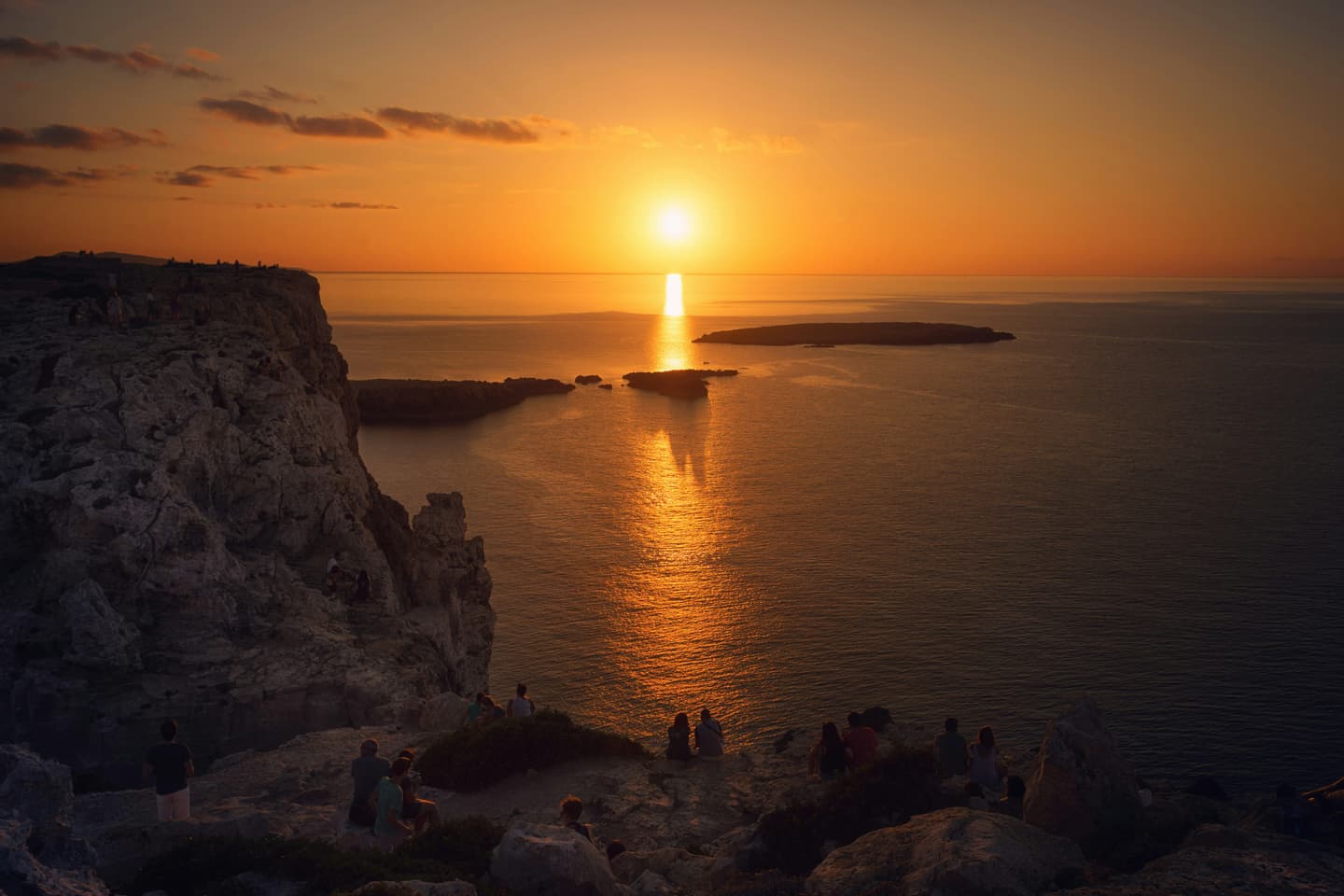
Menorca is the second-largest of Spain's Balearic Islands, a UNESCO Biosphere Reserve renowned for its pristine beaches, crystalline waters, and unhurried pace of life. Unlike its livelier neighbours Mallorca and Ibiza, the island trades wild nightlife for whitewashed villages, sheltered coves, and 3,000-year-old Talayotic monuments. The capital Mahón boasts one of the world's largest natural harbours, while the medieval streets of Ciutadella rival any city in Spain for beauty. With over 100 bays to discover and a 185 km coastal trail circling the whole island, Menorca rewards travellers who take it slow.
More cities for these months: Where to go in May · Where to go in June · Where to go in September · Where to go in October
Insider tips · Wanderlust Pro
Practical tips on the sights and neighbourhoods in this Menorcaguide — when to go, what most visitors miss. Written with AI about the guide's own places; double-check details before you go. Pro members see every tip.
The quick answers travelers want before they commit to flights, neighborhoods, and how long to stay.
The main gateway is Menorca Airport (MAH), located just 4.5 km southwest of the island capital Mahón. It is a compact single-terminal airport with flights from across Spain and dozens of European cities — budget carriers make it an affordable weekend escape for most Europeans. The fastest way into Mahón city centre is by taxi (around 15 minutes). Bus route L10 connects the airport to Mahón's central bus station and is the most economical option, though services stop before midnight in off-peak season. Note: there is no train service anywhere on the island, and Uber/Cabify are not licensed on Menorca. From the airport to western resorts like Ciutadella, private transfers take 40–70 minutes depending on traffic. Ferries also serve Menorca from mainland Spain (Barcelona, Valencia) and from Mallorca — a scenic alternative for those travelling without a flight.
Menorca has no railway network, so getting around means buses, taxis, rental cars, or bikes. Renting a car is highly recommended — the island is only about an hour end-to-end by car, and a vehicle is the only practical way to reach the more remote northern coves and inland sites. Public buses run between major towns and popular beaches, with Mahón and Ciutadella serving as the two main hubs; expect to change buses if travelling the island's length. Buses run more frequently in summer. Taxis are plentiful outside the airport arrivals hall during the day (06:00–21:00) and represent good value for up to 4 passengers heading to resorts within 20 km. Inside resort areas, local cabs can ferry you around town, though expect a premium for cross-region journeys. Ride-sharing apps (Uber, Cabify) are not available on the island.
Menorca has a classic Mediterranean climate — hot, dry summers and mild, occasionally wet winters — but with one twist: it is the windiest of the Balearic Islands, exposed to the northerly Tramontana wind that can whip up rough conditions from October through April. The sweet spots are late May–June and September–October. In June, temperatures sit around 20–28°C with very low rainfall and up to 15 hours of sunshine, the sea is warm enough to swim, and the beaches haven't yet hit peak-season density. September is arguably the finest month: sea temperatures peak (warmest between late July and September), crowds thin noticeably after the August rush, and both Ciutadella and Mahón host their biggest fiestas — the Sant Joan equestrian festival in June and the Mare de Déu de Gràcia in September respectively. July and August bring the hottest days (up to 31°C) and the busiest beaches; book accommodation well in advance and arrive at popular coves early, as car parks fill by 10–11 am. Spring (April–May) is ideal for hiking and cycling before the heat builds; wildflowers carpet the hillsides and prices are lower. Winter is quiet — many resorts close from November to March — but Mahón and Ciutadella remain open and offer a peaceful, cultural visit.
Arrive into Mahón Airport (MAH) and pick up your rental car. Head straight into Mahón's old town to explore the world's second-largest natural harbour on foot. Walk the waterfront, visit the Church of Santa Maria and its renowned baroque organ, and browse the Mercat del Claustre del Carme (open Mon–Sat).
Take a glass-bottomed boat tour of Mahón Harbour, passing historic fortresses and the quarantine island of Lazareto (built 1793). In the afternoon, drive 15 minutes to the whitewashed fishing village of Binibeca Vell for a stroll through its labyrinthine alleyways and a swim at the cove.
Return to Mahón for dinner in the harbour-side restaurants. Try local specialities: Mahón cheese, caldereta de llagosta (lobster stew), and a Xoriguer gin and tonic — Menorca's signature drink, a legacy of British occupation.
Drive 45 minutes west to Ciutadella, Menorca's former capital and most beautiful historic town. Spend the morning wandering the medieval streets radiating from Plaça des Born, admiring the 14th-century Gothic Cathedral of Menorca and the noble palaces lining the old town.
Head south from Ciutadella to Cala Macarella and its twin cove Cala Macarelleta — two of the most photographed beaches in Spain, with powder-white sand, pine-clad cliffs, and turquoise water. Access is via a scenic 20-minute walking trail from the nearest car park. Arrive early to secure a spot.
Explore Ciutadella's harbour promenade at sunset, then dine at one of the terrace restaurants overlooking the port — fresh seafood and Menorcan menus are the order of the evening.
Start early with a visit to the Naveta des Tudons near Ciutadella — one of Europe's oldest known structures, a 3,400-year-old Bronze Age tomb shaped like an upturned boat. Continue inland to Monte Toro (358 m), the island's highest point, for panoramic views of the entire island and a visit to the Mare de Déu del Toro sanctuary.
Head to the north coast for a contrasting landscape: rust-red cliffs, wild rock formations, and the rugged, uncrowded beach of Cala Pregonda with its distinctive red sand. Walk a section of the Camí de Cavalls coastal trail from here for sweeping sea views.
Drive to the fishing village of Fornells on the north coast for dinner — it's famous for caldereta de llagosta. Stop for a final sunset drink at the harbourside before the drive back to Mahón.
Real coworking spaces, laptop-friendly cafés, and libraries mapped near the center of the city — the closest, best-rated desks first.
No coworking-ready spots surfaced for this city yet.
Pick a different category or check back once we’ve indexed more desks for this city.
Ask for cafés, quiet neighborhoods, date-night spots, or a first 48-hour plan.
Mention calls, Wi-Fi needs, or how much of the day has to stay laptop-friendly.
Get faster answers on where to stay, when to move neighborhoods, and what to skip.
Written by signed-in Wanderlust members. We don't check that a reviewer has visited.
No reviews of Menorca yet.
Tell the planner your dates, who's coming, your budget and pace, and it drafts a day-by-day itinerary you can edit.
Wanderlust Pro
Insider tips for Menorca, unlimited AI-built itineraries, and travel companions you can invite to plan a trip together. From $5.00/month, billed annually.
Insider tips · Wanderlust Pro
Practical tips on the sights and neighbourhoods in this Menorcaguide — when to go, what most visitors miss. Written with AI about the guide's own places; double-check details before you go. Pro members see every tip.