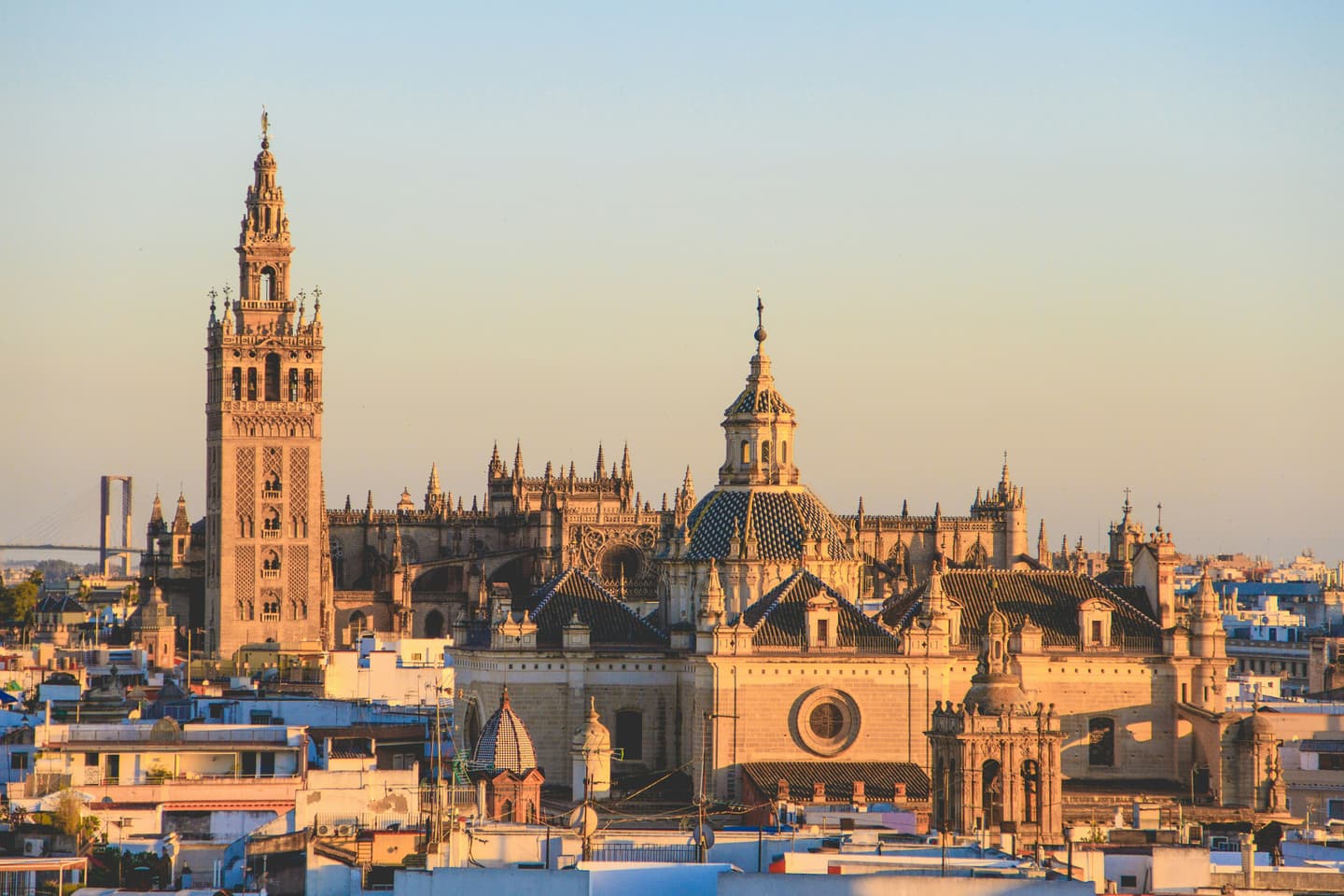
 City postcard
Seville
Andalusia's sun-drenched capital where flamenco, Moorish palaces, and tapas culture ignite every sense.
Andalusia's sun-drenched capital where flamenco, Moorish palaces, and tapas culture ignite every sense.
Seville is the vibrant capital of Andalusia, set on the banks of the Guadalquivir River in southern Spain. It dazzles visitors with a UNESCO-listed cathedral, the legendary Royal Alcázar, and orange-tree-lined streets that hum with flamenco. A walkable, relatively flat city, Seville rewards slow exploration — from its labyrinthine barrios to its riverfront promenades and world-class tapas scene. Steeped in centuries of Moorish, Jewish, and Spanish heritage, it remains one of Europe's most captivating and culturally rich destinations.
City postcardAndalusia's sun-drenched capital where flamenco, Moorish palaces, and tapas culture ignite every sense.
 Top sight
A signature stop locals and returning travelers point to in Seville.
 Top sight
A signature stop locals and returning travelers point to in Seville.
 Top sight
A signature stop locals and returning travelers point to in Seville.
A signature stop locals and returning travelers point to in Seville.
A signature stop locals and returning travelers point to in Seville.
A signature stop locals and returning travelers point to in Seville.
Photo: Carlos Delgado · CC BY-SA 4.0
A signature stop locals and returning travelers point to in Seville.
Photo: Anual · CC BY-SA 3.0
A signature stop locals and returning travelers point to in Seville.
A signature stop locals and returning travelers point to in Seville.
A signature stop locals and returning travelers point to in Seville.
A visual anchor inside Seville worth building into the route.
A pocket of Seville with its own temperament — worth a deliberate detour when you're in the area.
A pocket of Seville with its own temperament — worth a deliberate detour when you're in the area.
A pocket of Seville with its own temperament — worth a deliberate detour when you're in the area.
A pocket of Seville with its own temperament — worth a deliberate detour when you're in the area.
The quick answers travelers want before they commit to flights, neighborhoods, and how long to stay.
Seville is served by Seville-San Pablo Airport (SVQ), located just 10 km northeast of the city centre. The EA AirportSpecial bus (operated by TUSSAM) is the only public transit link to the centre, running from 05:20 to ~01:00; a single ticket costs around €4–€6.85 and the journey takes approximately 30–35 minutes, stopping at Santa Justa station and Plaza de Armas. A taxi from SVQ to the centre takes about 15 minutes and costs €21–€25. Alternatively, travellers from Madrid can reach Seville in under 2.5 hours on the AVE high-speed train, and from Málaga in roughly 2 hours by direct train, arriving at the central Santa Justa station.
Seville's compact historic centre is best explored on foot — most major sights are within easy walking distance of each other. For longer journeys, TUSSAM operates an extensive network of 45+ bus routes plus the MetroCentro tram line (T1), which runs through the pedestrian historic core from Plaza Nueva toward the Nervión district. A single bus or tram ticket costs €1.40 bought onboard; the rechargeable Tarjeta Multiviaje drops fares to €0.69–€0.76 per trip. A Tourist Card (Tarjeta Turística) offers unlimited travel for €5 (1-day) or €10 (3-day). Taxis are white with a yellow stripe, metered with a base fare of €1.50 plus €1.03/km, and city-centre rides typically cost €5–€7. Uber and Cabify also operate in the city. Seville is also one of Spain's best cycling cities, with the Sevici bike-share network covering the main neighbourhoods.
Spring (March to May) is widely regarded as Seville's finest season: temperatures are warm and mild (15–25°C), orange trees bloom, and the city erupts with its two most iconic festivals — Semana Santa, with its dramatic candlelit processions, and the Feria de Abril, a whirlwind of flamenco dresses and sherry. Book accommodation months ahead for these events, as prices spike sharply. Early autumn (September–October) is an excellent alternative, with comfortable temperatures around 20–27°C, thinner crowds, and a strong local calendar. Avoid July and August unless you relish extreme heat — Seville is regularly the hottest city in Europe, with temperatures regularly exceeding 40°C (104°F), causing many locals to flee to the coast. Winter is mild and uncrowded, with highs rarely dropping below 15°C, and offers a relaxed, authentic experience of the city's historic sites without queues.
Start with an early visit to the Real Alcázar — arrive at opening to beat the crowds and wander the stunning Mudejar palace rooms and gardens. Book timed-entry tickets well in advance.
Head next door to the Seville Cathedral and climb La Giralda tower for panoramic views over the city. Fuel up on tapas in the Barrio de Santa Cruz — explore its maze of whitewashed lanes and flower-draped patios at a leisurely pace.
Stroll to El Arenal for dinner along the riverfront, then catch a live flamenco show at one of the city's intimate tablaos.
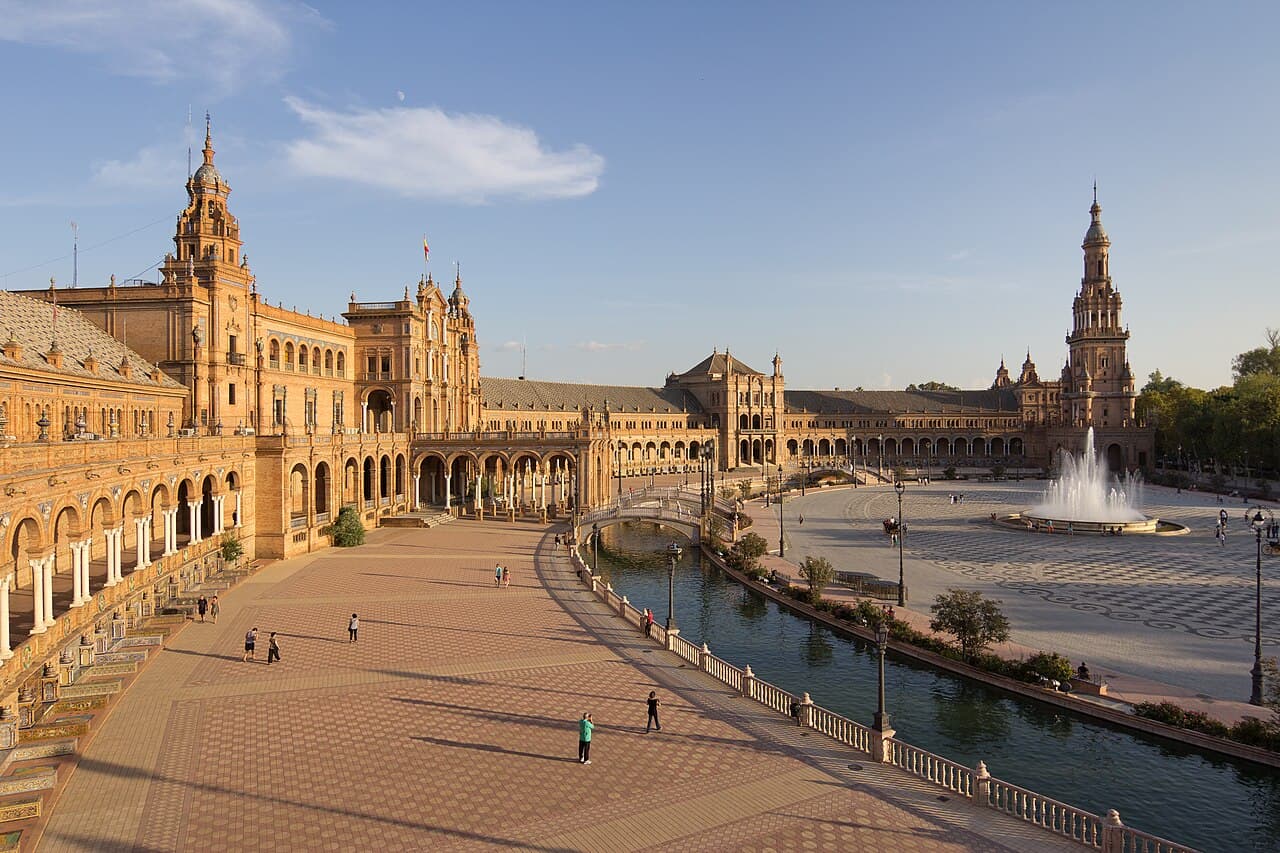
Begin at the magnificent Plaza de España in María Luisa Park — arrive early for the best light and to rent a rowboat on the canal. Wander the surrounding park's shaded paths.
Cross the Guadalquivir over the Triana Bridge and explore Seville's most authentic neighbourhood: browse the colourful ceramic shops, visit the Mercado de Triana, and discover the neighbourhood's rich flamenco heritage.
Settle in for a long dinner at a traditional Triana restaurant, then enjoy the lively bar scene along Calle Betis with river views.
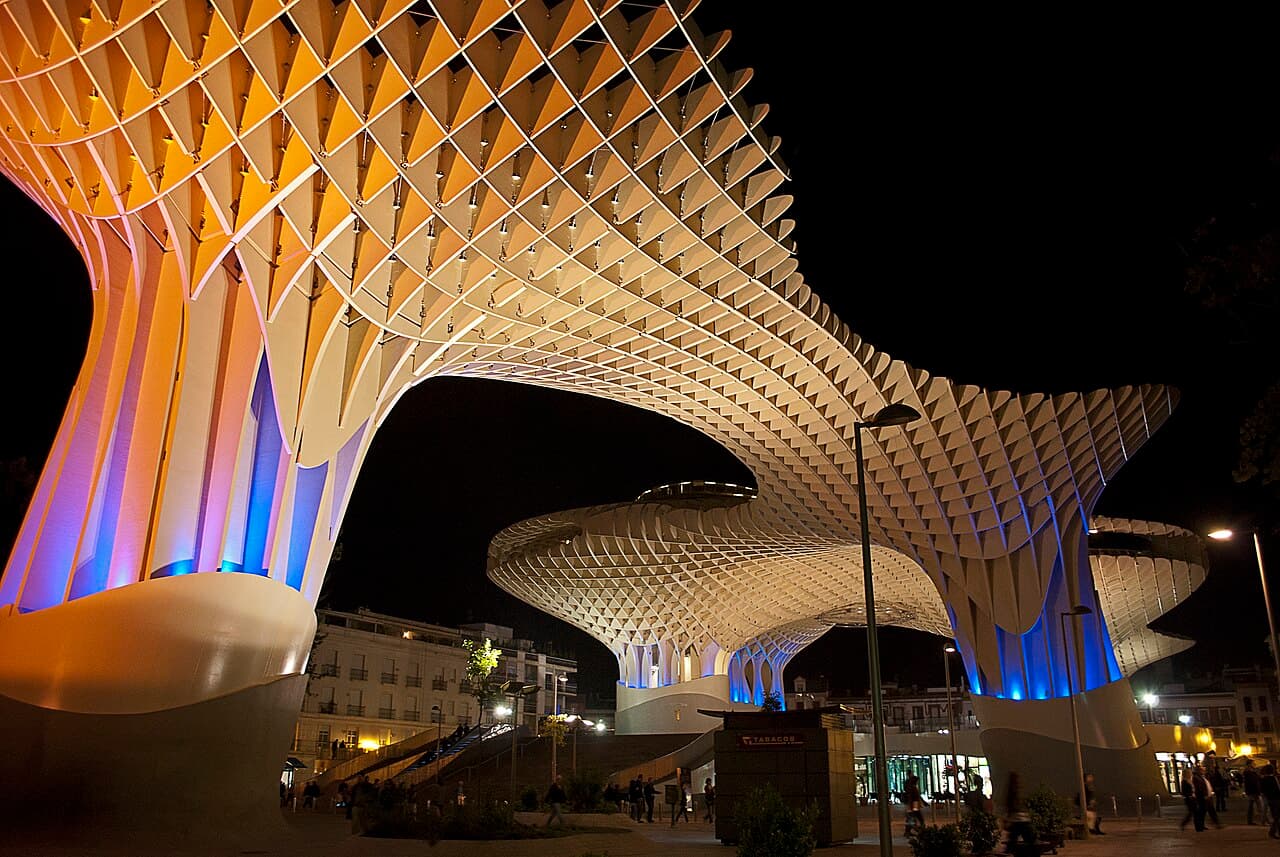
Head to the Metropol Parasol (Las Setas) — take the elevator up for sweeping rooftop views, then explore the Roman ruins in the basement museum. Browse the morning market stalls in the Plaza de la Encarnación below.
Explore the Macarena neighbourhood — visit the Basílica de la Macarena and walk the well-preserved remnants of the old city walls. Seek out lunch at a neighbourhood bar favoured by locals rather than tourists.
End your trip with a guided tapas crawl through El Centro, hopping between traditional bars for vermouth, jamón, and montaditos before a late farewell dinner under the orange trees.
Real coworking spaces, laptop-friendly cafés, and libraries mapped near the center of the city — the closest, best-rated desks first.
No coworking-ready spots surfaced for this city yet.
Pick a different category or check back once we’ve indexed more desks for this city.
Ask for cafés, quiet neighborhoods, date-night spots, or a first 48-hour plan.
Mention calls, Wi-Fi needs, or how much of the day has to stay laptop-friendly.
Get faster answers on where to stay, when to move neighborhoods, and what to skip.
There aren’t any, yet!
Block off the weeks you're free. Wanderlust turns this dossier — flights, lodging, neighborhoods, timing — into a single draft itinerary in about ninety seconds.
Wanderlust Pro
Go deeper than the highlights — premium Seville intel with hidden gems, top stays, and offline access on the ground. From $5.00/month, billed annually.