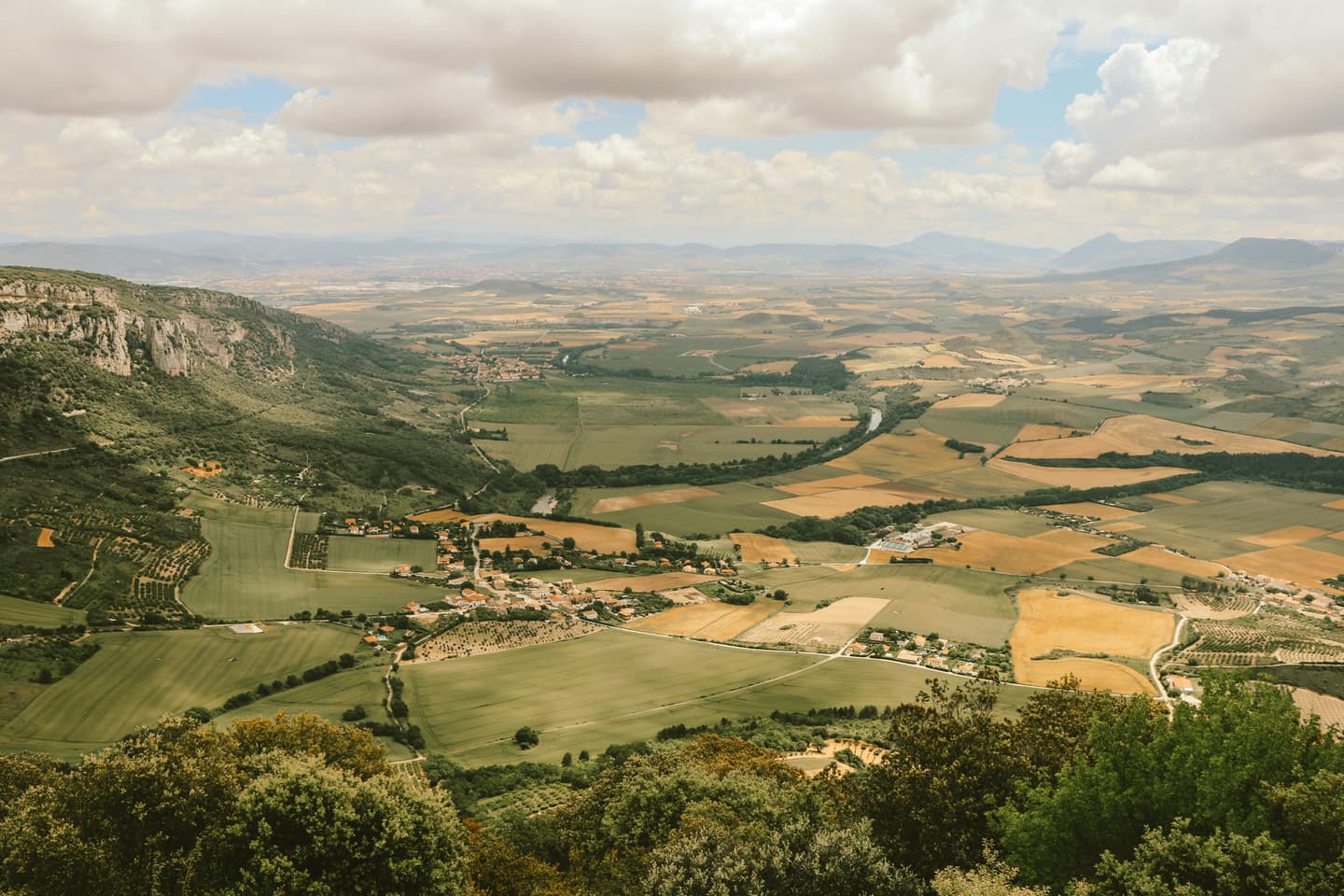
 City postcard
Pamplona
Navarre's proud capital: medieval walls, world-famous bull runs, and an irresistible pintxo culture.
Navarre's proud capital: medieval walls, world-famous bull runs, and an irresistible pintxo culture.
Pamplona (Basque: Iruña) is the historic capital of the Kingdom of Navarre, set in the fertile Arga River plain at the foot of the Pyrenees. Known globally for the Fiesta de San Fermín and its Running of the Bulls each July, the city offers far more year-round: a beautifully preserved Gothic cathedral, Renaissance-era citadel, lush parks, and a buzzing old-town bar scene built on pintxos and Navarrese wine. With its compact, largely pedestrianised Casco Antiguo and high quality of life, Pamplona is equally rewarding as a quick weekend stopover or a slow-travel base for exploring northern Spain.
City postcardNavarre's proud capital: medieval walls, world-famous bull runs, and an irresistible pintxo culture.
A signature stop locals and returning travelers point to in Pamplona.
A signature stop locals and returning travelers point to in Pamplona.
A signature stop locals and returning travelers point to in Pamplona.
A signature stop locals and returning travelers point to in Pamplona.
A signature stop locals and returning travelers point to in Pamplona.
A signature stop locals and returning travelers point to in Pamplona.
A signature stop locals and returning travelers point to in Pamplona.
A signature stop locals and returning travelers point to in Pamplona.
A pocket of Pamplona with its own temperament — worth a deliberate detour when you're in the area.
A pocket of Pamplona with its own temperament — worth a deliberate detour when you're in the area.
A pocket of Pamplona with its own temperament — worth a deliberate detour when you're in the area.
A pocket of Pamplona with its own temperament — worth a deliberate detour when you're in the area.
The quick answers travelers want before they commit to flights, neighborhoods, and how long to stay.
Pamplona Airport (PNA) sits just 6 km south of the city centre in the village of Noáin. Taxi to the centre costs approximately €20–25 and takes around 10 minutes; bus Line 9 (Autobús Comarca de Pamplona) departs every 10–15 minutes and costs around €2. For international travellers, flying into Bilbao (approx. 2 hrs by bus, ~€10) or Madrid (approx. 3 hrs by train, €25–60 via Renfe Alvia) is often more practical given PNA's limited international routes. From Barcelona, trains take around 4 hours (€35–60). Long-distance buses are another strong option: San Sebastián is 1 hour (~€9.20) and Madrid is 6 hours (~€25) by coach. The centrally located bus station sits next to the Ciudadela; the Renfe train station is in the San Jorge neighbourhood, served by city bus Line 9.
Pamplona is a walker's city. The Historic Centre (Casco Antiguo) is almost entirely pedestrianised, with all major sights within a short stroll of each other. The city bus network — locally called 'Villavesas' — is operated by TUC/Mancomunidad de la Comarca de Pamplona and runs 25 daytime lines plus 10 night routes; a single ticket costs €1.50 (or as low as €0.77 with a rechargeable bus card, available at tobacconists). Line 9 is the key route linking the airport area, train station, and city centre. Taxis are plentiful at official stands throughout the city and a 24-hour service is available. For cyclists, Pamplona boasts over 60 km of dedicated cycle paths. Driving into the old town is discouraged due to restricted access zones.
The sweet spot for visiting Pamplona is May, June, or September, when temperatures hover between 20–24°C — perfect for wandering the old town, hiking the Pyrenean foothills, and eating on outdoor terraces without the crush of festival crowds. October is a lovely shoulder month, cooler but still mild, with Navarrese wine-harvest energy in the air. July 6–14 is a different proposition entirely: the Fiesta de San Fermín transforms the city into one giant street party, with the daily 8am encierro (bull run) drawing participants and spectators from around the world. It's a bucket-list experience, but hotels fill up months in advance and prices spike significantly. If the festival is your goal, book accommodation early. If you want Pamplona's history, gastronomy, and parks largely to yourself, come any other time — you'll find a welcoming, sane, and thoroughly enjoyable city.
Start at Plaza del Castillo, the heart of the city, for coffee at the historic Café Iruña. Walk the medieval lanes of the Casco Antiguo to the Cathedral of Santa María la Real — arrive before 10:15 for free entry, or book the 11:15am bell-tower tour to see Spain's largest working bell, María.
Explore the Museo de Navarra for a journey from prehistory to 21st-century art. Stroll to the Baroque Ayuntamiento (Town Hall) and the Gothic Church of San Saturnino, then walk Calle Estafeta — the most famous stretch of the bull-run route.
Head to Calle San Nicolás for a classic pintxo crawl. On Thursdays, many bars run the 'Juevintxo' deal: a free pintxo with every beer. Finish with a glass of Navarra rosé and a shot of local pacharán liqueur.
Walk the 3 km circuit of the 16th-century city walls, starting at the Monumento al Encierro bronze sculpture near Santo Domingo, past the Plaza de Toros bullring and the Hemingway monument, and along to the Bastión de Labrit for panoramic views.
Relax in the Jardines de la Taconera — Pamplona's oldest park, home to free-roaming peacocks and deer — then visit the Parque de la Ciudadela, the Renaissance star-fort now serving as a cultural park and exhibition space.
Dine at a restaurant serving classic Navarrese dishes: lamb al chilindrón, asparagus from the valley, or piquillo peppers. Explore the Primer Ensanche neighbourhood's elegant early 20th-century cafés and bars for an after-dinner drink.
Take a short drive or bus to the 12th-century octagonal Romanesque chapel of Santa María de Eunate, one of the most atmospheric stops on the entire Camino de Santiago, surrounded by cornfields and wildflowers.
Continue to Puente la Reina (5 km west of Eunate) to see its iconic medieval multi-arched bridge spanning the Arga river — a pilgrimage landmark for centuries. Return to Pamplona and visit the Jorge Oteiza Museum Foundation in nearby Alzuza (10 km north), housing the celebrated Basque sculptor's Grand Prix-winning works.
Back in Pamplona, head to the Rincón del Caballo Blanco lookout behind the cathedral for golden-hour views over the Rochapea and Chantrea neighbourhoods against the San Cristóbal mountain backdrop. End the trip with a Michelin-star dinner at Restaurant Europa, next to Plaza del Castillo.
Real coworking spaces, laptop-friendly cafés, and libraries mapped near the center of the city — the closest, best-rated desks first.
No coworking-ready spots surfaced for this city yet.
Pick a different category or check back once we’ve indexed more desks for this city.
Ask for cafés, quiet neighborhoods, date-night spots, or a first 48-hour plan.
Mention calls, Wi-Fi needs, or how much of the day has to stay laptop-friendly.
Get faster answers on where to stay, when to move neighborhoods, and what to skip.
There aren’t any, yet!
Block off the weeks you're free. Wanderlust turns this dossier — flights, lodging, neighborhoods, timing — into a single draft itinerary in about ninety seconds.
Wanderlust Pro
Go deeper than the highlights — premium Pamplona intel with hidden gems, top stays, and offline access on the ground. From $5.00/month, billed annually.