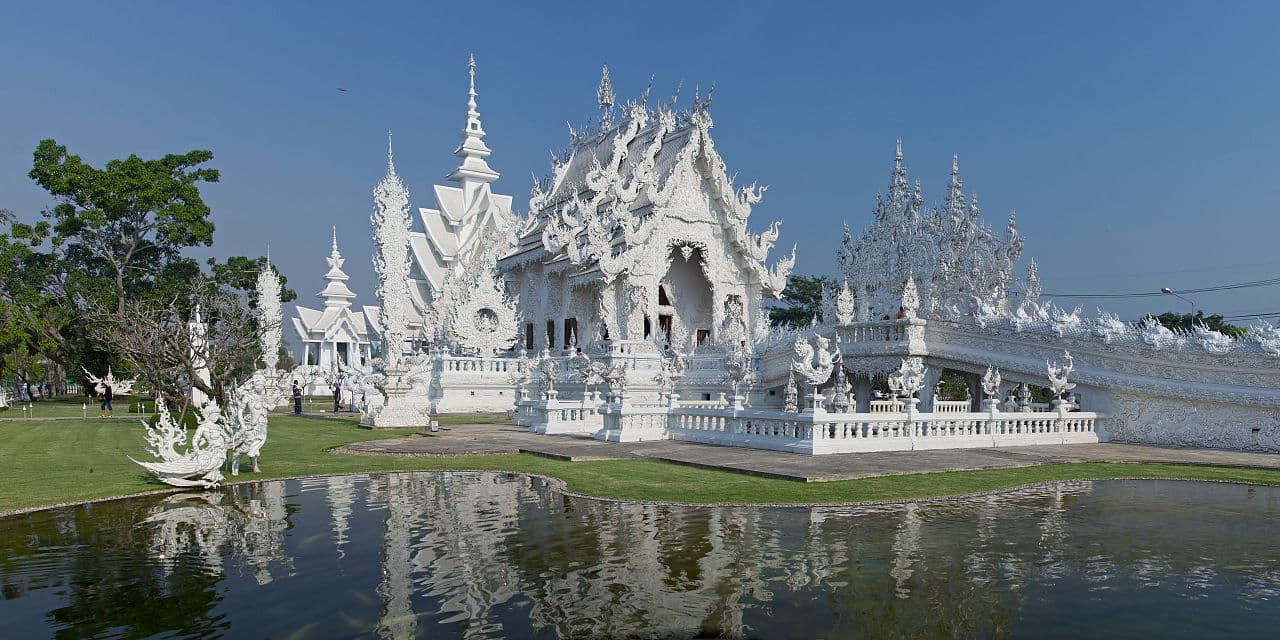
Top sight
Wat Rong Khun (White Temple)
Photo: JJ Harrison ( https://www.jjharrison.com.au/ ) · CC BY-SA 3.0
Northern Thailand's artistic soul — misty mountains, iconic temples, and an unhurried pace that Chiang Mai lost long ago.
Chiang Rai is the northernmost major city in Thailand, nestled among forested hills, tea plantations, and the rivers that converge at the famed Golden Triangle. Smaller and calmer than Chiang Mai, it rewards slow travelers with world-class temple art, vibrant night markets, and easy access to remote hill-tribe villages and border towns. The city's creative identity — anchored by the White Temple, Black House, and Blue Temple — makes it an unlikely hub of contemporary Thai art set against a deeply traditional backdrop. Affordable, safe, and genuinely charming, Chiang Rai is Northern Thailand's best-kept open secret.
More cities for these months: Where to go in January · Where to go in February · Where to go in November · Where to go in December
Photo: JJ Harrison ( https://www.jjharrison.com.au/ ) · CC BY-SA 3.0
Insider tips · Wanderlust Pro
Practical tips on the sights and neighbourhoods in this Chiang Raiguide — when to go, what most visitors miss. Written with AI about the guide's own places; double-check details before you go. Pro members see every tip.
The quick answers travelers want before they commit to flights, neighborhoods, and how long to stay.
Chiang Rai is served by Mae Fah Luang – Chiang Rai International Airport (CEI), located about 8 km north of the city centre. Major domestic carriers including AirAsia, Bangkok Airways, Nok Air, Thai Lion Air, and Thai Vietjet Air operate regular flights from Bangkok (approx. 1.5 hrs). From the airport, metered taxis to the city cost around 160–200 baht (~$5–6 USD), while tuk-tuks run under 100 baht. The budget option is the CR Bus linking the airport to the city centre and main bus terminals for just 20 baht per person. Alternatively, the Chiang Rai Bus Terminal 1 offers frequent coach connections from Chiang Mai (approx. 3 hours; Green Bus air-con coaches depart from Chiang Mai's Arcade Bus Station throughout the day).
The backbone of city transport is the songthaew — a covered pickup truck that doubles as a shared or chartered ride — cheap and ubiquitous for in-city hops. Tuk-tuks are plentiful for shorter distances; always agree on the fare before boarding. Grab operates in Chiang Rai but with less consistent coverage than in larger Thai cities, so treat it as a backup rather than a primary option. For day trips to the Golden Triangle, Doi Mae Salong tea hills, or remote border villages, renting a motorbike (typically 150–300 baht/day) or car is the most practical choice, as public transit doesn't reliably serve most outlying attractions. Southbound local buses from Terminal 1 drop passengers directly outside Wat Rong Khun for just 20 baht.
The undisputed sweet spot is November through February — Chiang Rai's cool season. Temperatures dip to a pleasant 13–28°C (55–82°F), humidity is low, and skies stay clear, making it ideal for temple-hopping, mountain trekking, and exploring the tea-draped hills of Doi Mae Salong. This period coincides with Loy Krathong in November and the festive Christmas–New Year window, so expect higher accommodation prices and a livelier atmosphere. March through mid-April brings the notorious 'burning season', when widespread agricultural fires push AQI readings above 150, temperatures spike toward 40°C (104°F), and haze smothers mountain views — this window is best avoided. The rainy season (June–October) brings lush green landscapes and far fewer crowds, with prices dropping noticeably; heavy showers are mostly brief afternoon affairs in town, though landslide risk rises in mountain areas during August and September.
Start at Wat Rong Khun (White Temple) at opening time to beat the crowds — the mirrored mosaics and surreal architecture demand unhurried exploration.
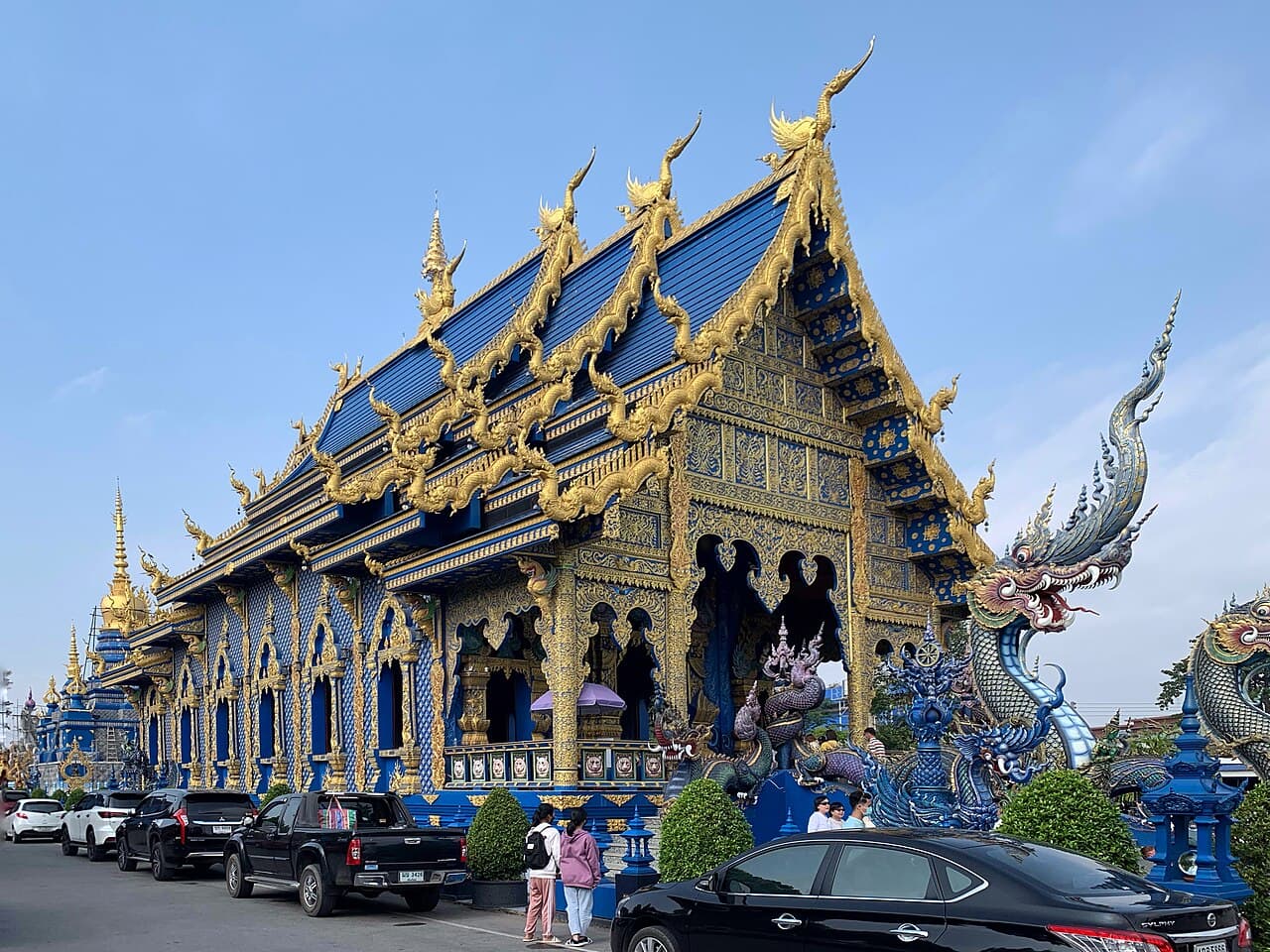
Head to Wat Rong Suea Ten (Blue Temple) on the east side of town, then stop at the ornate 9-storey Wat Huay Pla Kang for panoramic views over the city.
Stroll the Night Bazaar for Northern Thai street food, then walk two minutes to the Chiang Rai Clock Tower for the 7 PM or 8 PM light and music show.
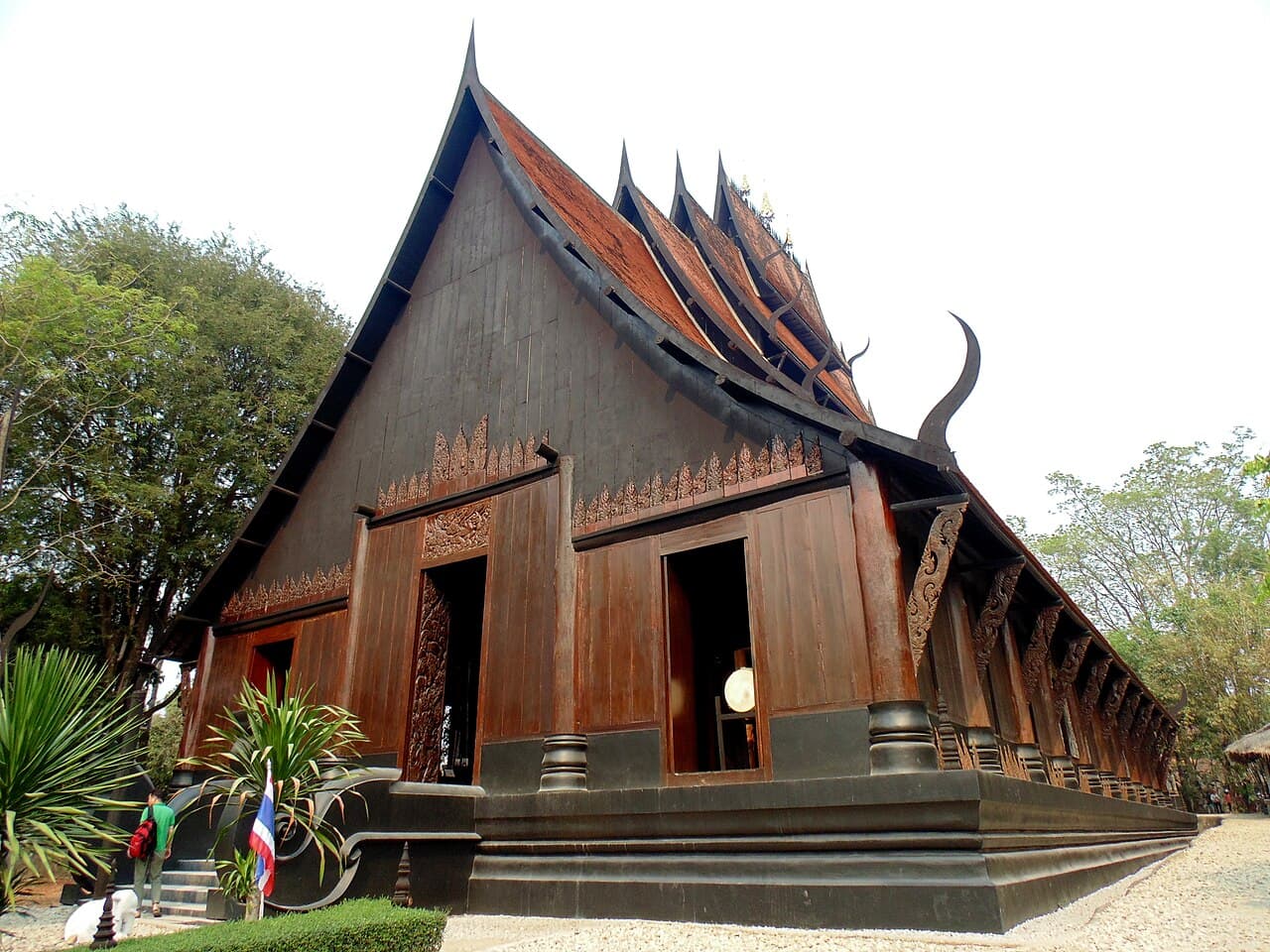
Visit Baan Dam Museum (Black House) — artist Thawan Duchanee's provocative dark counterpoint to the White Temple, set across multiple structures in a lush garden.
Drive north to explore the hill-tribe villages around Mae Chan or take the scenic road up to Doi Mae Salong for panoramic views over the tea plantations.
Dine on Yunnan-style cuisine in Doi Mae Salong town, a legacy of the Chinese Nationalist soldiers who settled here — or head back to the city's Saturday Walking Street.
Drive northeast to the Golden Triangle — the confluence of the Mekong and Ruak rivers at the tri-border of Thailand, Laos, and Myanmar. Visit the Hall of Opium museum for a fascinating history of the region's opium trade.
Continue to Mae Sai, Thailand's northernmost town, for border market browsing and lunch. Alternatively, cross to Chiang Saen for riverside temples and the Chiang Saen National Museum.
Return to Chiang Rai for a final meal of khao soi or sai ua (Northern Thai sausage) at one of the city's local restaurants before heading out.
Real coworking spaces, laptop-friendly cafés, and libraries mapped near the center of the city — the closest, best-rated desks first.
No coworking-ready spots surfaced for this city yet.
Pick a different category or check back once we’ve indexed more desks for this city.
Ask for cafés, quiet neighborhoods, date-night spots, or a first 48-hour plan.
Mention calls, Wi-Fi needs, or how much of the day has to stay laptop-friendly.
Get faster answers on where to stay, when to move neighborhoods, and what to skip.
Written by signed-in Wanderlust members. We don't check that a reviewer has visited.
No reviews of Chiang Rai yet.
Tell the planner your dates, who's coming, your budget and pace, and it drafts a day-by-day itinerary you can edit.
Wanderlust Pro
Insider tips for Chiang Rai, unlimited AI-built itineraries, and travel companions you can invite to plan a trip together. From $5.00/month, billed annually.
Insider tips · Wanderlust Pro
Practical tips on the sights and neighbourhoods in this Chiang Raiguide — when to go, what most visitors miss. Written with AI about the guide's own places; double-check details before you go. Pro members see every tip.