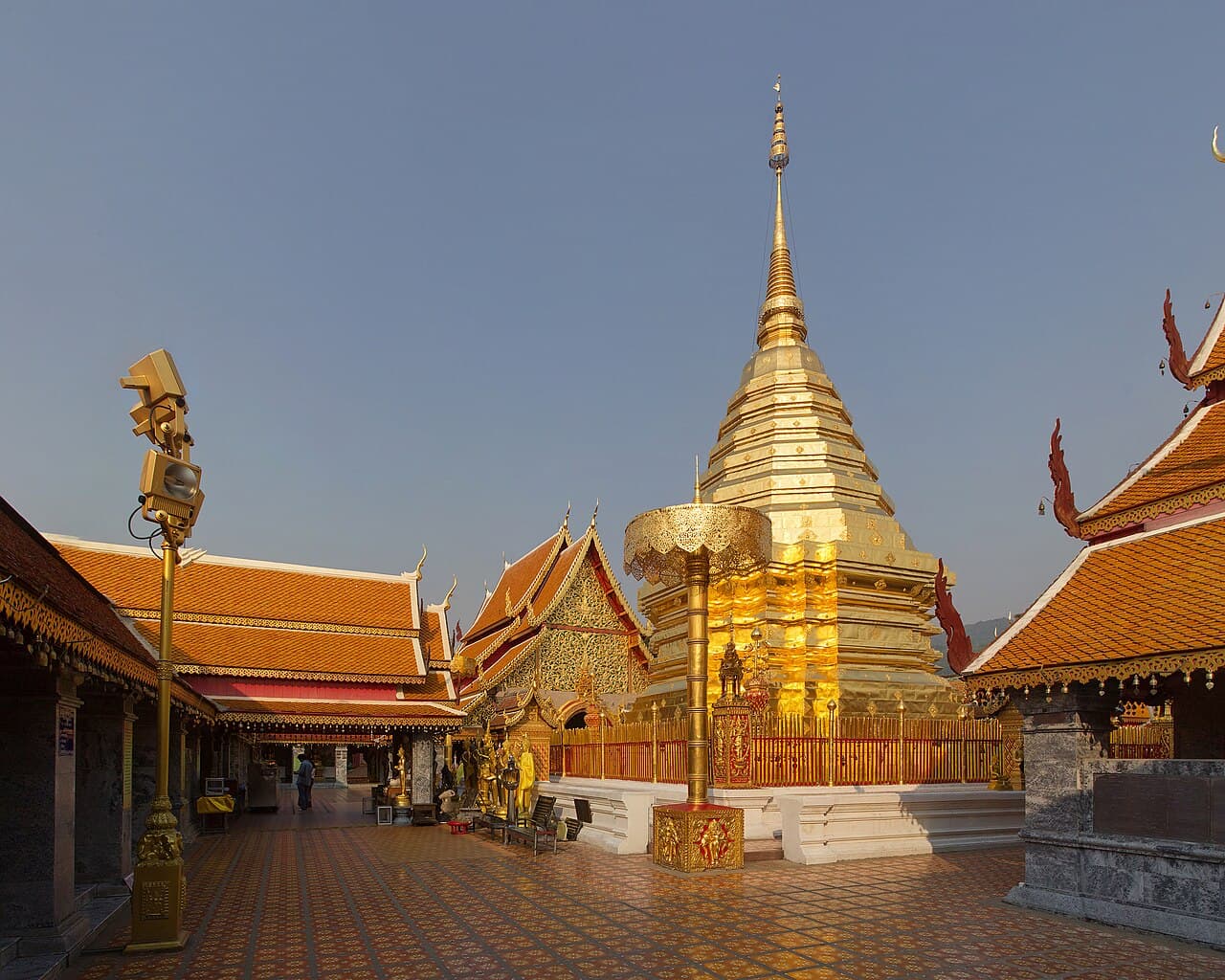
Top sight
Wat Phra That Doi Suthep
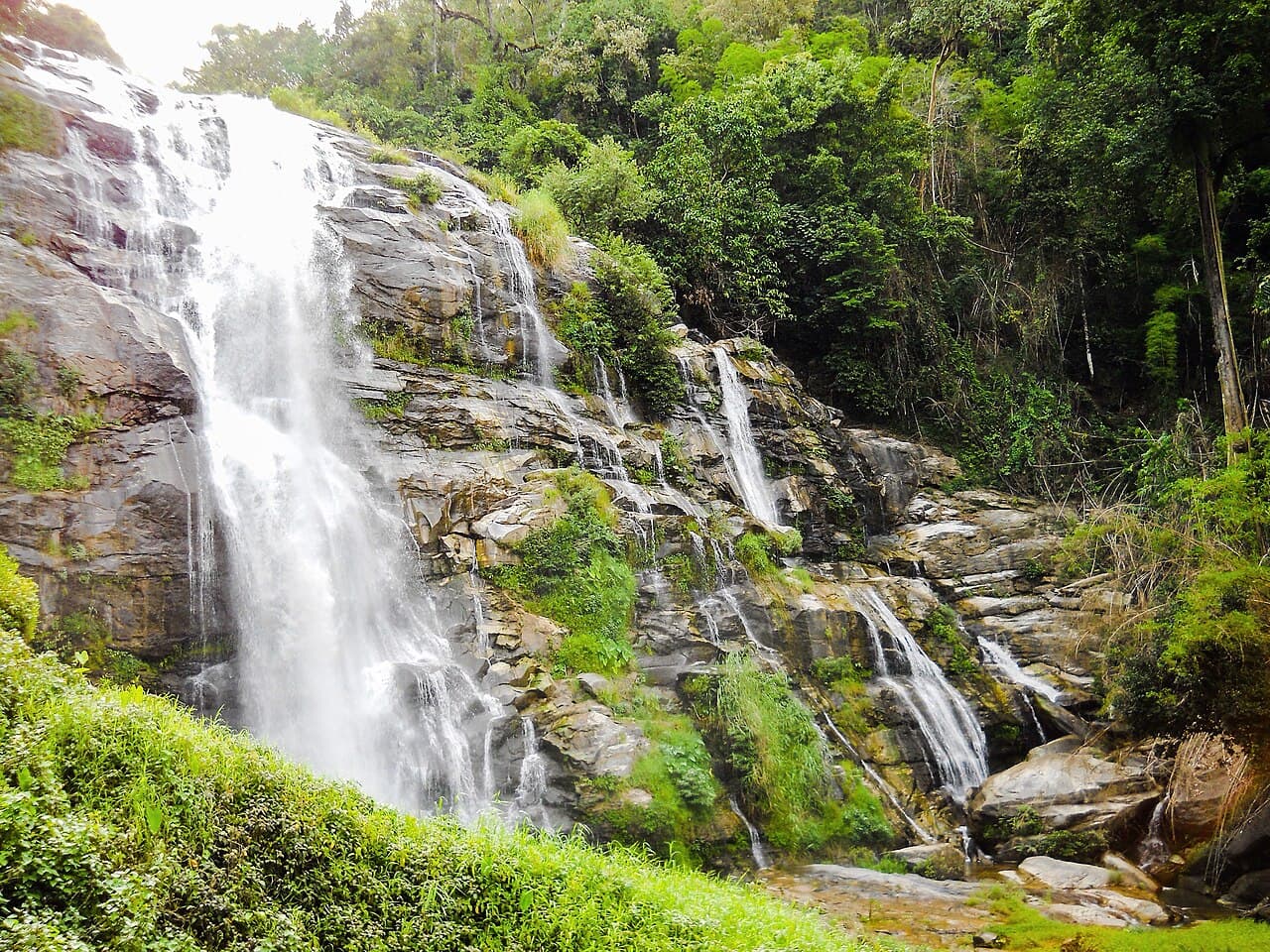
Photo: JJ Harrison ( https://www.jjharrison.com.au/ ) · CC BY-SA 3.0
Northern Thailand's cultural capital — ancient temples, misty mountains, and a world-class digital nomad scene.
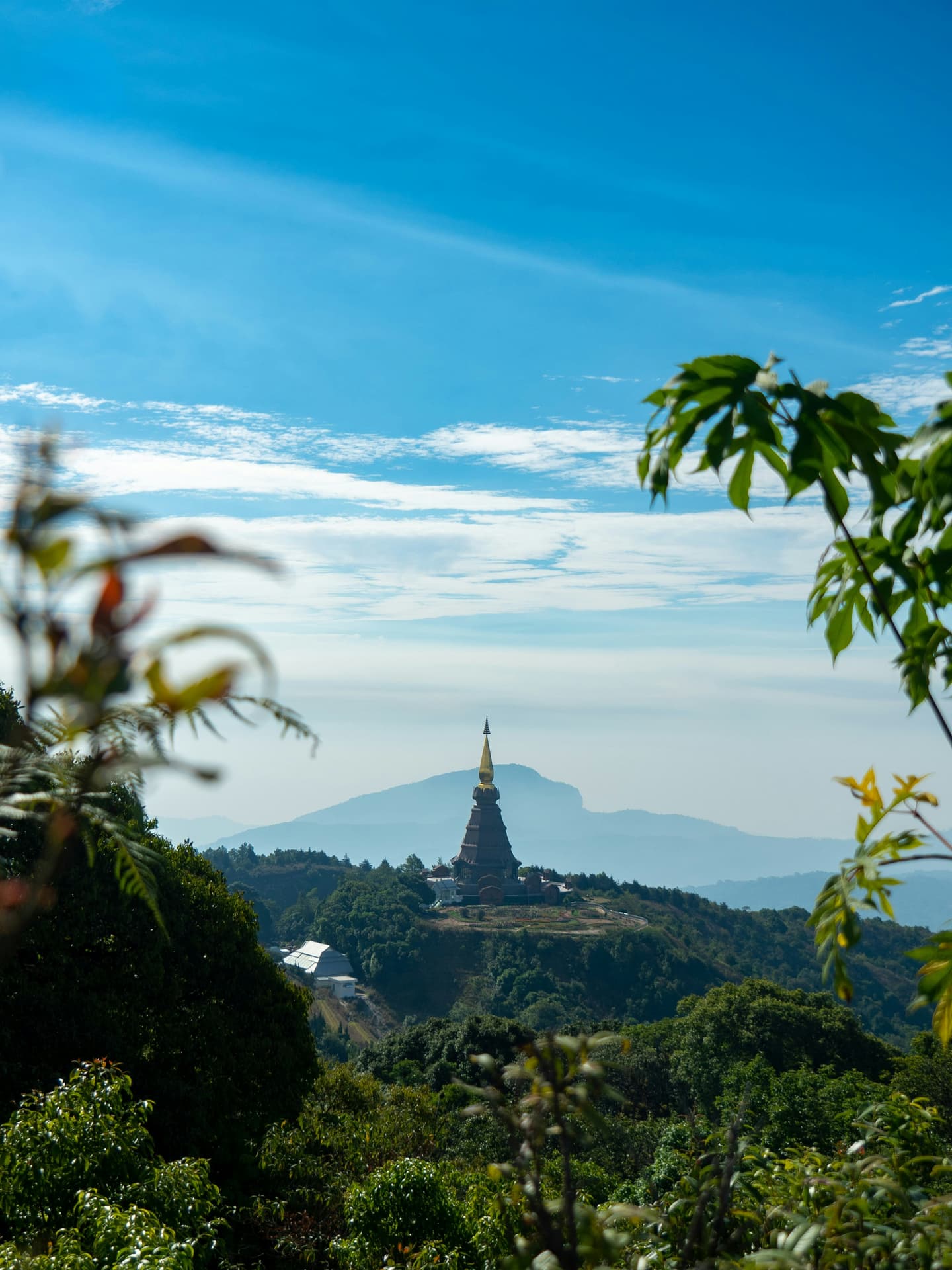
Chiang Mai, the "Rose of the North," sits in the mountainous heart of Northern Thailand as the former capital of the Lanna Kingdom. Its walled Old City is packed with hundreds of ancient temples, while buzzing night markets, world-renowned cooking schools, and ethical elephant sanctuaries fill out a rich activity roster. The city pairs a deeply relaxed lifestyle with a thriving café and coworking culture, making it one of Southeast Asia's most beloved bases for long-term travelers and remote workers alike.
More cities for these months: Where to go in January · Where to go in February · Where to go in November · Where to go in December
Photo: JJ Harrison ( https://www.jjharrison.com.au/ ) · CC BY-SA 3.0
The Lantern Festival is the most famous festivals in Thailand. Although the Lantern Festival is celebrated everywhere in Thailand, Chiang Mai will have the best (and most famous) views of thousands of lanterns being released into the sky all at once.
Insider tips · Wanderlust Pro
Practical tips on the sights and neighbourhoods in this Chiang Maiguide — when to go, what most visitors miss. Written with AI about the guide's own places; double-check details before you go. Pro members see every tip.
The quick answers travelers want before they commit to flights, neighborhoods, and how long to stay.
Chiang Mai International Airport (CNX) is the main gateway, located just 10–15 minutes from the Old City. Grab and Bolt both operate at CNX; a Grab ride to the Old City costs around 140–180 THB (~$4–5 USD). Budget travelers can take the city songthaew (red shared truck) from the airport for a 30 THB flat fare. Official metered airport taxis are also available at the terminal. Alternatively, the overnight train from Bangkok (Hua Lamphong or Bang Sue) is a scenic option taking 11–13 hours; the Chiang Mai railway station sits 3.3 km east of the Old City, with songthaews and tuk-tuks waiting outside. Buses from Bangkok's Mo Chit terminal are a cheap option (~7–9 hours).
The iconic red songthaew (shared open-air pickup truck) is the backbone of local transport — flag one down, tell the driver your destination, and pay a negotiated flat fare (typically 30–50 THB within the city). Grab, Bolt, and InDrive all operate in Chiang Mai with upfront pricing and card payment; note that Uber is not available. The RTC City Bus charges a 30 THB flat fare across its routes — use the CM TRANSIT app for live route maps. For greater freedom, motorbike rentals (150–250 THB/day) are extremely popular. The Old City itself is compact and walkable. For attractions outside the city such as elephant sanctuaries and national parks, hire a songthaew for the day or use Grab.
The cool, dry season from November to mid-February is Chiang Mai's sweet spot. Daytime temperatures hover around 26–28°C, evenings cool to 13–15°C, and skies are brilliantly clear — ideal for temple-hopping, mountain trekking, and exploring night markets. November is the most magical month, coinciding with the Yi Peng Sky Lantern Festival and Loi Krathong. February brings the vibrant Chiang Mai Flower Festival. Avoid March through early May: this is burning season, when agricultural fires blanket the region in smoke and air quality deteriorates sharply. The rainy season (June–October) brings lush green landscapes, fewer crowds, and lower prices, but expect afternoon downpours. Budget travelers often find June–August the most affordable time to visit.
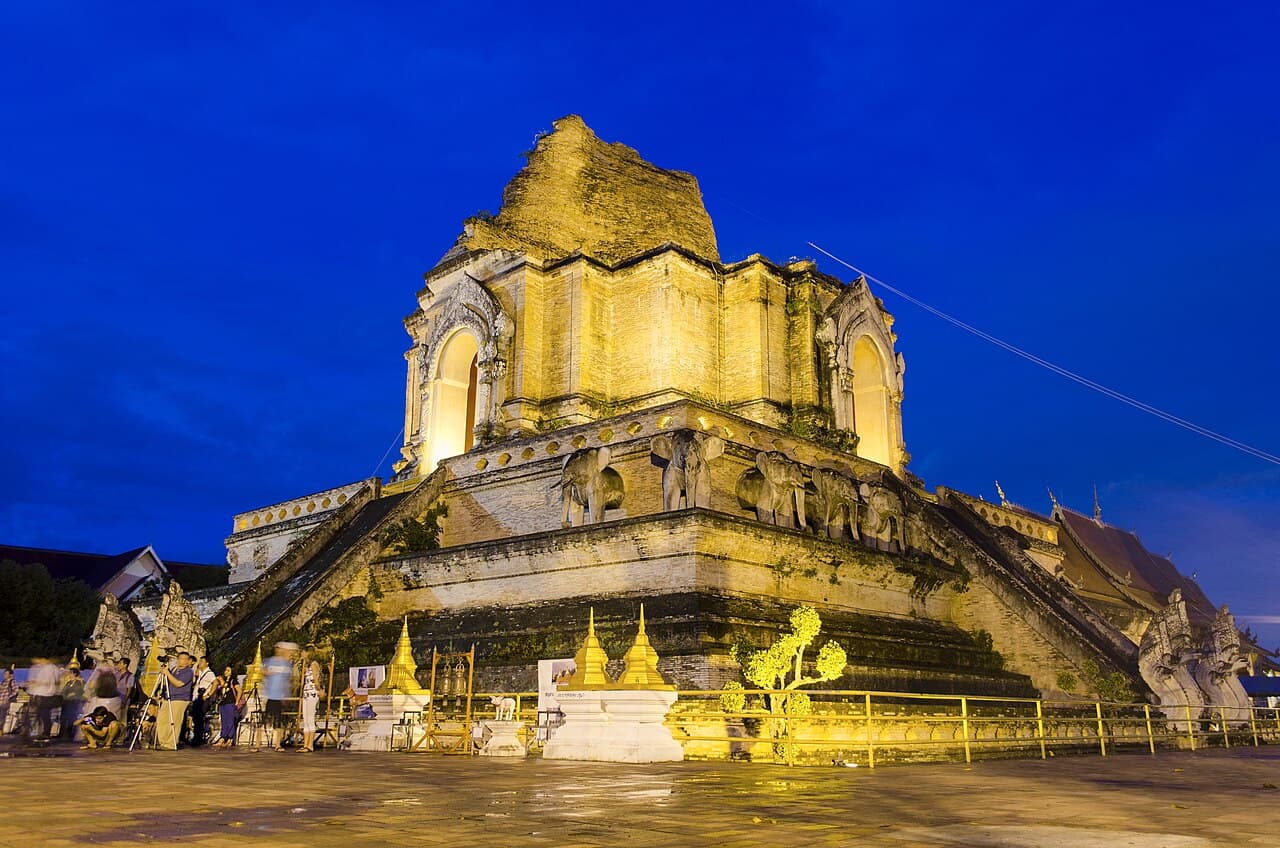
Start with Wat Chedi Luang (entrance ~50 THB for foreigners) in the heart of the Old City, then wander to nearby Wat Phra Singh. Grab a traditional khao tom breakfast at a local shophouse.
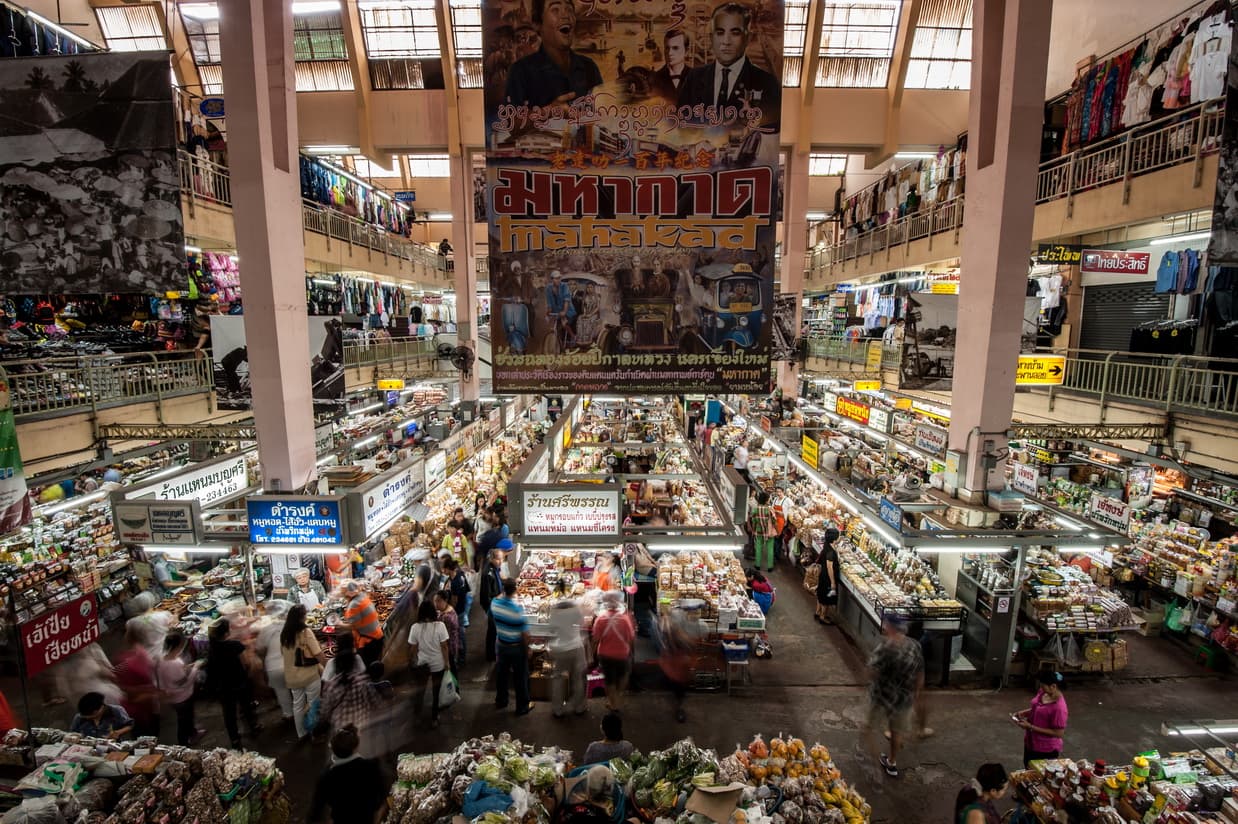
Explore the Old City's labyrinth of lanes and stop at Tha Phae Gate for photos. Pick up local handicrafts at the Warorot Market (Kad Luang) and refuel with a Thai iced tea.
Head to the legendary Sunday Night Market (Walking Street) if visiting on a weekend, or the Saturday Night Market on Wualai Road for street food, artisan goods, and live music.
Take a songthaew up to Wat Phra That Doi Suthep for panoramic city views and golden temple spires. Arrive early to beat crowds and catch the cooler mountain air.
Return to the city and spend the afternoon on Nimmanahaeminda Road — browse boutique shops, specialty coffee roasters, and design-forward galleries.
Dine at one of Nimman's acclaimed restaurants then join a craft cocktail bar or rooftop bar for the neighborhood's cosmopolitan nightlife.
Take a half-day ethical elephant sanctuary experience outside the city — observe, feed, and bathe rescued elephants without riding. Book in advance as spots fill quickly.
On the return, detour to Bua Thong Sticky Waterfall — the unique calcified limestone lets you climb the falls barefoot. Bring a change of clothes.
End your trip with a hands-on Thai cooking class, offered at schools throughout the city, where you'll prepare classic dishes like Tom Kha Gai and Pad Thai to take home as a skill.
Real coworking spaces, laptop-friendly cafés, and libraries mapped near the center of the city — the closest, best-rated desks first.
No coworking-ready spots surfaced for this city yet.
Pick a different category or check back once we’ve indexed more desks for this city.
Ask for cafés, quiet neighborhoods, date-night spots, or a first 48-hour plan.
Mention calls, Wi-Fi needs, or how much of the day has to stay laptop-friendly.
Get faster answers on where to stay, when to move neighborhoods, and what to skip.
Written by signed-in Wanderlust members. We don't check that a reviewer has visited.
No reviews of Chiang Mai yet.
Tell the planner your dates, who's coming, your budget and pace, and it drafts a day-by-day itinerary you can edit.
Wanderlust Pro
Insider tips for Chiang Mai, unlimited AI-built itineraries, and travel companions you can invite to plan a trip together. From $5.00/month, billed annually.
Insider tips · Wanderlust Pro
Practical tips on the sights and neighbourhoods in this Chiang Maiguide — when to go, what most visitors miss. Written with AI about the guide's own places; double-check details before you go. Pro members see every tip.