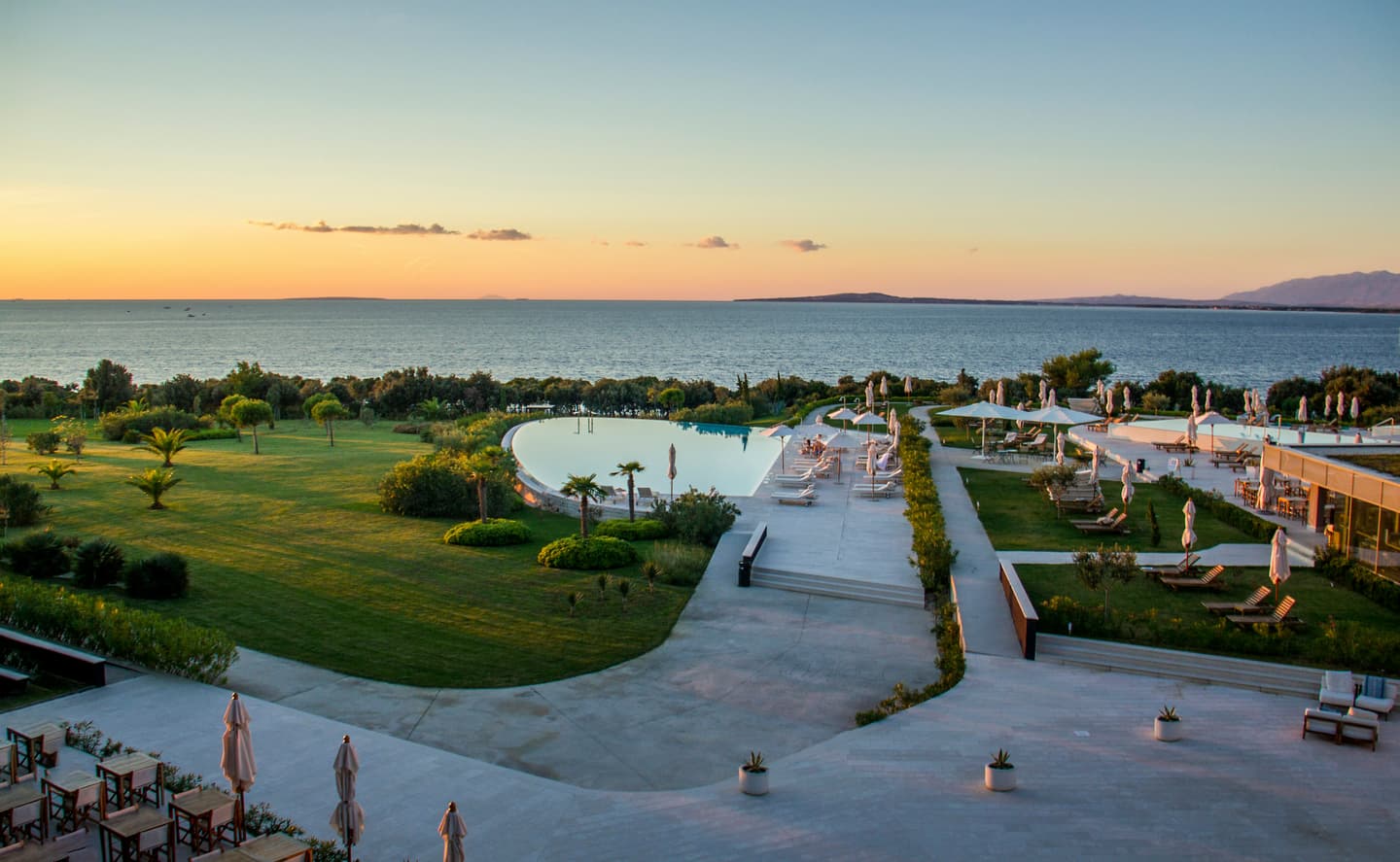
 City postcard
Zadar
Croatia's oldest city: Roman ruins, a musical sea, and Adriatic sunsets that even Alfred Hitchcock called the best in the world.
Croatia's oldest city: Roman ruins, a musical sea, and Adriatic sunsets that even Alfred Hitchcock called the best in the world.
Zadar is the oldest continuously inhabited city in Croatia, occupying a compact, fully pedestrianised peninsula on the Dalmatian coast. It blends 2,000-year-old Roman stones, Venetian-era city walls, and bold contemporary waterfront art—most famously the wave-powered Sea Organ and the solar-lit Greeting to the Sun installation. Less crowded than Dubrovnik or Split, it punches above its weight as a base for island-hopping, national-park day trips, and relaxed Adriatic living. Its growing café and coworking scene makes it equally attractive to digital nomads and longer-stay expats.
City postcardCroatia's oldest city: Roman ruins, a musical sea, and Adriatic sunsets that even Alfred Hitchcock called the best in the world.
A signature stop locals and returning travelers point to in Zadar.
A signature stop locals and returning travelers point to in Zadar.
A signature stop locals and returning travelers point to in Zadar.
A signature stop locals and returning travelers point to in Zadar.
A signature stop locals and returning travelers point to in Zadar.
A signature stop locals and returning travelers point to in Zadar.
A signature stop locals and returning travelers point to in Zadar.
A signature stop locals and returning travelers point to in Zadar.
A pocket of Zadar with its own temperament — worth a deliberate detour when you're in the area.
A pocket of Zadar with its own temperament — worth a deliberate detour when you're in the area.
A pocket of Zadar with its own temperament — worth a deliberate detour when you're in the area.
A pocket of Zadar with its own temperament — worth a deliberate detour when you're in the area.
The quick answers travelers want before they commit to flights, neighborhoods, and how long to stay.
Zadar Airport (ZAD) is the easiest entry point, located just 8 km (5 mi) from the city centre. The official airport shuttle bus costs €5 one-way (baggage included) and takes approximately 20 minutes to the Old Town; tickets are bought on board. A taxi from the airport to the centre costs around €20. Ride-sharing apps Bolt and Uber also operate in Zadar, with Bolt having broader coverage. By bus, Zadar is well-connected to the rest of Croatia and neighbouring countries—Flixbus and domestic coaches serve routes from Zagreb, Split, Ljubljana, and beyond, all arriving at the main Zadar bus station, from which you can connect onwards. Zadar Airport handles over 1.6 million passengers a year and serves airlines including Ryanair, easyJet, Croatia Airlines, Eurowings, Lufthansa, Transavia, and Vueling.
Zadar's Old Town peninsula is fully pedestrianised—walking is the primary and most enjoyable way to see the historic core, with all major sights within easy reach on foot. For the wider city, Liburnija runs the public bus network; a single-journey ticket bought from the driver costs €1.59, or roughly 20% less via the Zadar City / SmartCity app. The airport shuttle (€5) uses the same network and your ticket stays valid for 90 minutes of onward city travel. Taxis are significantly pricier—expect €10–€15 for short city hops and €25–€35 for airport runs—while Bolt and Uber offer a competitive middle ground. For island day trips, Jadrolinija ferries run from the Old Port to Ugljan (Preko) for €4–€5 each way (25-min crossing), and car ferries from Gaženica terminal reach Dugi Otok in about 1h 40min. TP Line catamarans serve Sali, Silba, Premuda, and other islands seasonally.
Zadar sits on the Adriatic with a classic Mediterranean rhythm: hot, dry summers and mild, wet winters. July and August deliver guaranteed sunshine and a buzzing waterfront scene, but also the peak of Dalmatian crowds—accommodation fills fast and prices spike. The sweet spots are May–June and September–October, when sea temperatures are still inviting, the Riva promenade is relaxed, and national parks like Kornati and Paklenica are far less busy. Autumn is particularly rewarding: the light turns golden, restaurant menus shift to seasonal fish and local wines, and you can often walk the Roman Forum or climb St. Anastasia's Bell Tower without queuing. Winter is quiet and very affordable—few tourists, cheaper long-term rentals, and a genuinely local pace—though some island ferries run reduced schedules.
Start at the Roman Forum, the largest on the eastern Adriatic, then duck inside the pre-Romanesque Church of St. Donatus. Climb the adjacent Cathedral of St. Anastasia's Bell Tower for panoramic views over the peninsula and islands.
Stroll Kalelarga, the pedestrian-only main street, browsing local craft shops. Stop at Narodni Trg (People's Square) for a coffee under the Renaissance City Loggia. Explore the Venetian Land Gate and city walls.
Head to the Riva promenade at golden hour to experience the Sea Organ's haunting tidal chords, then linger for the Greeting to the Sun light show after dark. Dinner at a konoba in the Old Town—try fresh Dalmatian fish and local pošip white wine.
Take the Jadrolinija ferry from the Old Port to Preko on the island of Ugljan (€4–€5, ~25 min). Rent a bike on arrival and cycle to the hilltop Venetian fortress of St. Michael for sweeping views back to Zadar.
Return to Zadar and explore the covered market near the Old Town for local cheeses, olive oil, and Maraschino liqueur. Visit the Museum of Ancient Glass or the Gold and Silver of Zadar treasury.
Sundowner drinks at a Riva terrace bar. Try a boat-tour dinner excursion into the Kornati archipelago if booked in advance, or keep it local with a seafood dinner near the marina.
Early bus or car to Paklenica National Park (~40 min), one of Croatia's premier climbing and hiking destinations. Walk the dramatic Velika Paklenica canyon gorge through karst cliffs.
Return to Zadar by early afternoon. Decompress at Kolovare Beach just south of the Old Town walls—a family-friendly pebble beach with clear Adriatic water and a waterside café.
Final evening on the Riva—pick up local Maraschino cherry liqueur as a gift, then enjoy a leisurely dinner and nightcap at one of the terrace bars overlooking the harbour and the last of the setting Adriatic sun.
Real coworking spaces, laptop-friendly cafés, and libraries mapped near the center of the city — the closest, best-rated desks first.
No coworking-ready spots surfaced for this city yet.
Pick a different category or check back once we’ve indexed more desks for this city.
Ask for cafés, quiet neighborhoods, date-night spots, or a first 48-hour plan.
Mention calls, Wi-Fi needs, or how much of the day has to stay laptop-friendly.
Get faster answers on where to stay, when to move neighborhoods, and what to skip.
There aren’t any, yet!
Block off the weeks you're free. Wanderlust turns this dossier — flights, lodging, neighborhoods, timing — into a single draft itinerary in about ninety seconds.
Wanderlust Pro
Go deeper than the highlights — premium Zadar intel with hidden gems, top stays, and offline access on the ground. From $5.00/month, billed annually.