 City postcard
Osijek
Slavonia's baroque gem on the Drava — authentic, affordable, and rapidly reinventing itself.
Slavonia's baroque gem on the Drava — authentic, affordable, and rapidly reinventing itself.
Osijek is Croatia's fourth-largest city and the cultural and economic capital of the Slavonia region, set along the right bank of the Drava River near its confluence with the Danube. Layered with Roman, Ottoman, and Habsburg history, the city is best known for its well-preserved baroque Tvrđa fortress district, a sweeping 10.5 km riverside promenade, and some of the most hearty, distinctive cuisine in all of Croatia. A growing student population, a landmark €100 million public-transport overhaul, and some of the lowest living costs in the country are quietly transforming Osijek into one of inland Europe's most compelling off-the-beaten-path destinations.
City postcardSlavonia's baroque gem on the Drava — authentic, affordable, and rapidly reinventing itself.
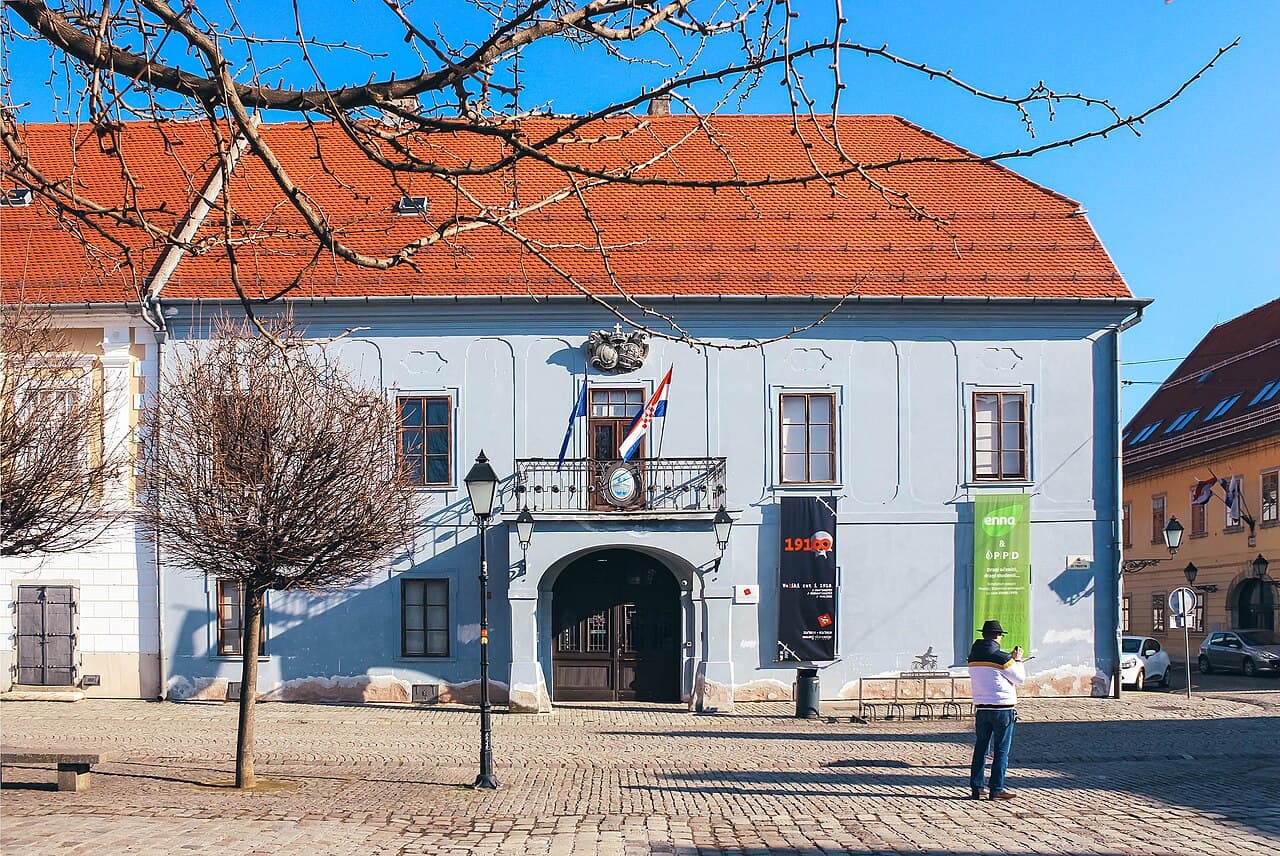 Top sight
A signature stop locals and returning travelers point to in Osijek.
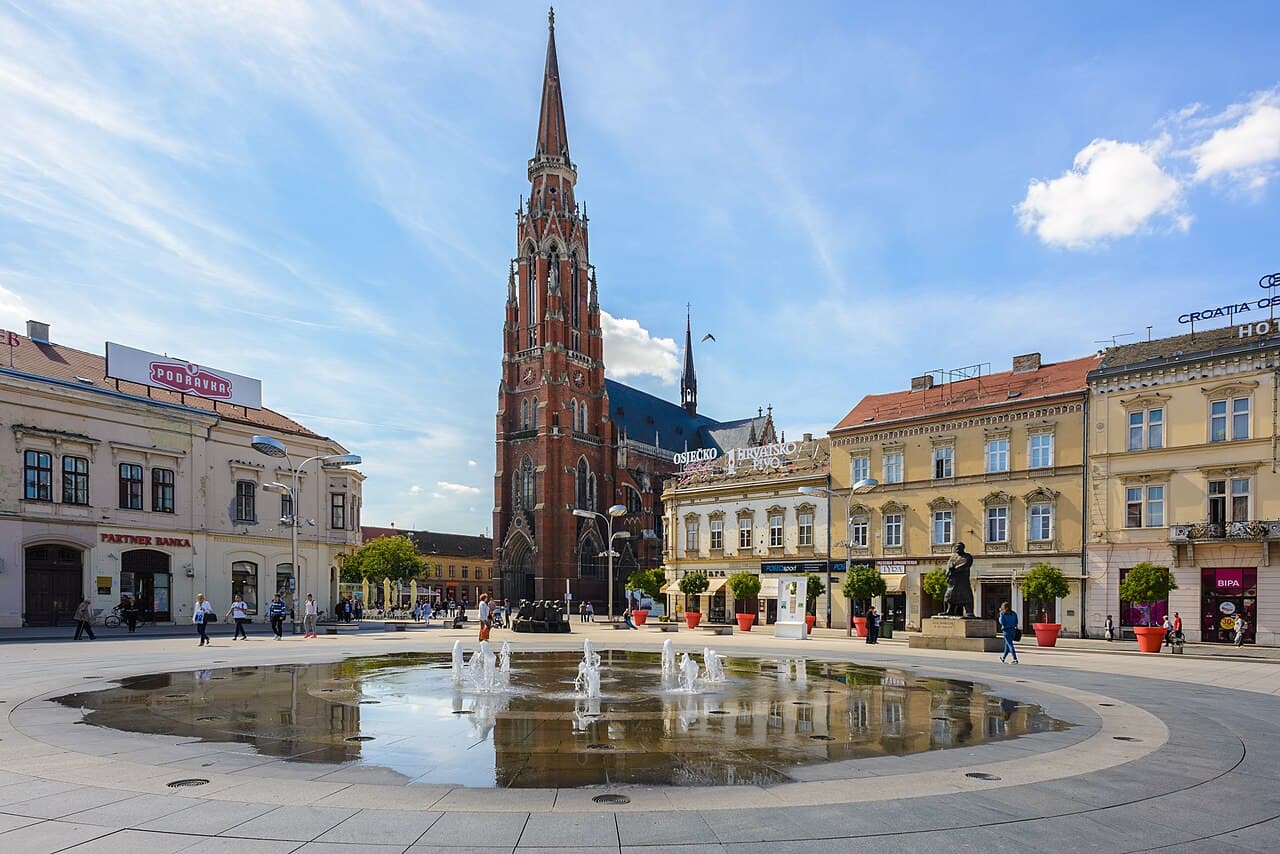 Top sight
A signature stop locals and returning travelers point to in Osijek.
A signature stop locals and returning travelers point to in Osijek.
A signature stop locals and returning travelers point to in Osijek.
Photo: Roko Poljak · CC BY-SA 4.0
A signature stop locals and returning travelers point to in Osijek.
A signature stop locals and returning travelers point to in Osijek.
A signature stop locals and returning travelers point to in Osijek.
A signature stop locals and returning travelers point to in Osijek.
A signature stop locals and returning travelers point to in Osijek.
A signature stop locals and returning travelers point to in Osijek.
A pocket of Osijek with its own temperament — worth a deliberate detour when you're in the area.
A pocket of Osijek with its own temperament — worth a deliberate detour when you're in the area.
A pocket of Osijek with its own temperament — worth a deliberate detour when you're in the area.
A pocket of Osijek with its own temperament — worth a deliberate detour when you're in the area.
The quick answers travelers want before they commit to flights, neighborhoods, and how long to stay.
The most direct air option is Osijek Airport (OSI), located ~20 km southeast of the city center. Ryanair operates a year-round route from London Stansted, Croatia Airlines flies from Munich (year-round) and seasonally from Split and Dubrovnik, while domestic carrier Trade Air links Osijek with Zagreb, Pula, and Rijeka. A taxi from OSI to the city center costs roughly €4–6 per km via Osijecki Taxi; a public bus (line 35) also connects the airport to the city. By rail, high-speed tilt trains connect Zagreb to Osijek in around 3 hours, with multiple daily departures. By bus, Zagreb–Osijek takes roughly 4 hours with numerous daily services; Split is ~11–11.5 hours (2 daily buses). International buses serve Sarajevo, Novi Sad, Belgrade, Budapest, and Maribor. Drivers can use the A5 (Slavonika) motorway from Zagreb or the E73 corridor from Budapest, with Osijek approximately 3 hours from both cities.
Osijek is one of only two Croatian cities with a tram network (alongside Zagreb), operated by GPP Osijek. The system runs two lines intersecting at Ante Starčević Square, connecting the railway station, Tvrđa, and city borders. A single ticket costs €1.46 and is valid for 60 minutes; a universal BUTRA card offers unlimited bus and tram riding. Buses run every 10–15 minutes within the city. Crucially, the entire tram fleet and 10 km of track are being replaced as part of a landmark ~€100 million EU-funded upgrade: 10 brand-new low-floor Končar TMK 2500 trams (each carrying 135 passengers) entered service in 2025, with a further 10 due by July 2027. The central bus station (adjacent to the train station) is also being renovated. Taxis are widely available; Bolt operates in the city for app-based rides. The city is also flat and walkable, with over 17 parks and extensive riverside paths ideal for cycling.
Osijek rewards visitors who time their trip to match its seasons. Spring (April to June) is arguably the finest window: temperatures are mild, the city's 17+ parks burst into bloom, and outdoor café culture returns in full force. Easter celebrations add a local flavour worth catching. Early autumn — September and October — brings cooling temperatures, golden light on the baroque facades of Tvrđa, and the harvest season across the surrounding Slavonian wine country, when local kulen and regional whites are at their best. Summer (July–August) is hot and can be humid, but the Drava's Copacabana/Kopika beach becomes the social heartbeat of the city, and the river promenade — now stretching 10.5 km through Upper and Lower Towns and Tvrđa — is animated well into the evening. Winter is quiet and cold, but hotel rates drop sharply and the city's café scene is warmly authentic without any tourist pressure.
Start in Tvrđa, Osijek's well-preserved baroque fortress quarter. Wander the cobbled Trg Svetog Trojstva (Holy Trinity Square), visit the Museum of Slavonia — the largest general museum in Croatia — and peek into the Church of St. Anthony built over the remains of a Turkish minaret.
Walk or tram west along the newly extended 10.5 km Drava riverside promenade to Gornji Grad (Upper Town). Visit the towering Co-Cathedral of St. Peter and Paul, whose 90-metre Neo-Gothic bell tower is the second highest in Croatia, with 40 stained-glass windows inside.
Settle into a local konoba near Ante Starčević Square for classic Slavonian dishes: kulen (spicy sausage), cobanac stew, or fis paprikas. Pair with a glass of Graševina from the nearby Baranja wine region.
Take a short bus or taxi ride (approximately 10 km) to Kopački Rit Nature Park, one of Europe's largest wetland reserves and a premier birdwatching destination. Join a boat tour through the flooded forest to spot white-tailed eagles, black storks, and cormorants.
Return to Osijek and visit the city's Zoo — Croatia's largest, home to around 650 animals across 80 species, including giraffes, African lions, and chimpanzees. The zoo is set in a spacious green area northwest of the city centre.
In summer, head to Copacabana (Kopika) beach on the Drava for drinks at a riverside bar. Otherwise, explore Osijek's growing craft beer scene — several bars near Tvrđa stock excellent Croatian micro-brews.
Travel ~40 minutes by bus or car to Vukovar on the Danube. Visit the sobering Vukovar Water Tower (symbol of the city's resilience) and the Homeland War Memorial — an essential and moving piece of recent Croatian history.
Just outside Vukovar, tour the Vučedol Culture Museum, built into the Danube cliffside. It tells the story of the Vučedol civilisation (3000–2200 BC) and houses the famous Vučedol Dove, one of the oldest known ceremonial vessels in Europe.
Return to Osijek and round off the trip with dinner at one of the restored Habsburg-era restaurants in Tvrđa, perhaps sampling Slavonian rakija — the region's powerful fruit brandy — as a send-off.
Real coworking spaces, laptop-friendly cafés, and libraries mapped near the center of the city — the closest, best-rated desks first.
No coworking-ready spots surfaced for this city yet.
Pick a different category or check back once we’ve indexed more desks for this city.
Ask for cafés, quiet neighborhoods, date-night spots, or a first 48-hour plan.
Mention calls, Wi-Fi needs, or how much of the day has to stay laptop-friendly.
Get faster answers on where to stay, when to move neighborhoods, and what to skip.
There aren’t any, yet!
Block off the weeks you're free. Wanderlust turns this dossier — flights, lodging, neighborhoods, timing — into a single draft itinerary in about ninety seconds.
Wanderlust Pro
Go deeper than the highlights — premium Osijek intel with hidden gems, top stays, and offline access on the ground. From $5.00/month, billed annually.