Top sight
Top sight
China's ancient imperial capital where 13 dynasties, the Silk Road, and incredible street food converge.
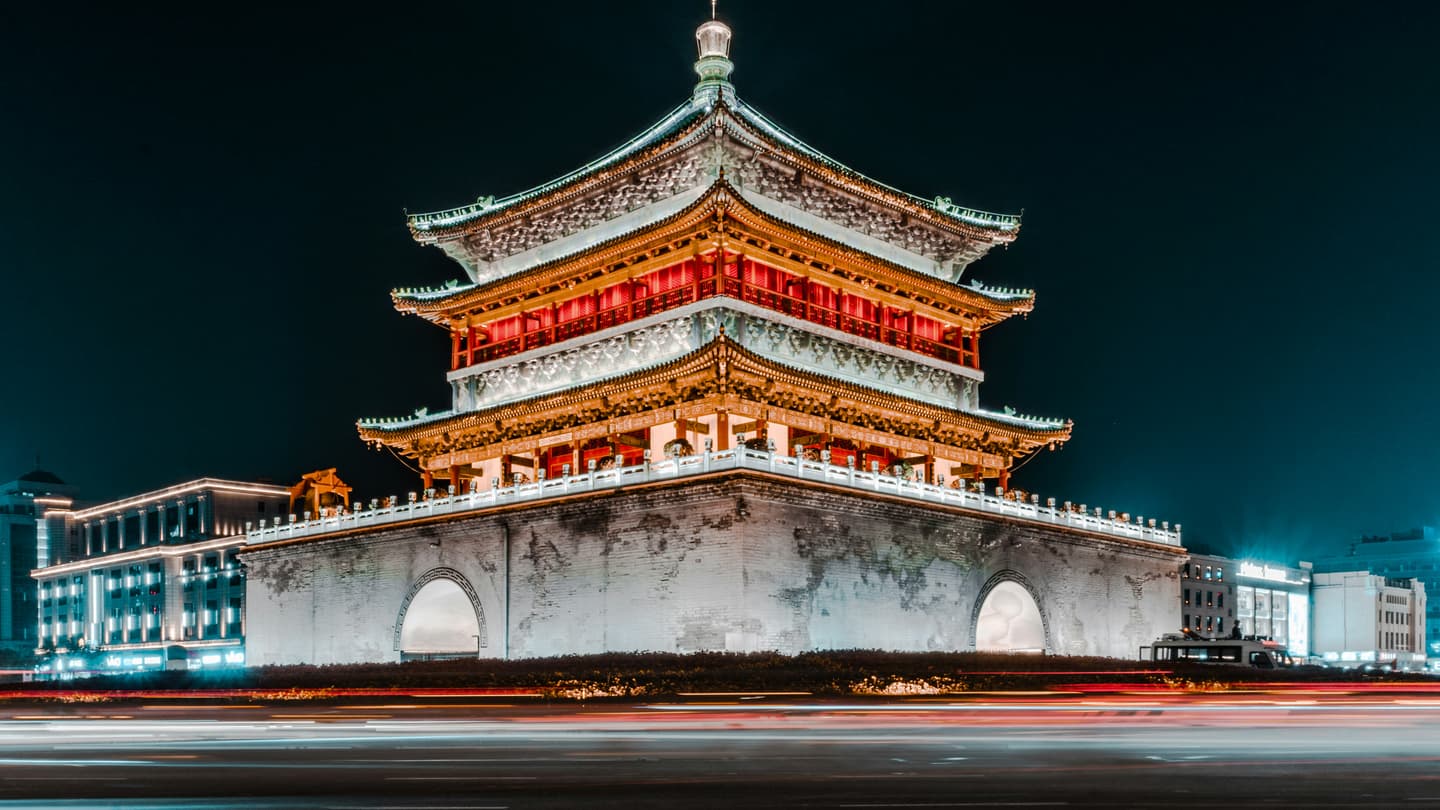
Xi'an is one of the world's great historical cities — a UNESCO-designated World Historic City that served as the capital for 13 dynasties and the eastern terminus of the Silk Road. Home to the legendary Terracotta Army, an intact Ming-era City Wall, and a vibrant Muslim Quarter, it offers unrivalled depth for history lovers. Today the city blends this extraordinary heritage with a booming food culture, a modern metro network, and rapid urban growth as a major hub in central-western China.
More cities for these months: Where to go in April · Where to go in May · Where to go in September · Where to go in October
Insider tips · Wanderlust Pro
Practical tips on the sights and neighbourhoods in this Xi Anguide — when to go, what most visitors miss. Written with AI about the guide's own places; double-check details before you go. Pro members see every tip.
The quick answers travelers want before they commit to flights, neighborhoods, and how long to stay.
Xi'an Xianyang International Airport (XIY) sits approximately 35–40 km northwest of the city centre and handles both domestic and international flights — with direct services from Bangkok, Seoul, Singapore, Paris, and London, plus frequent connections from Beijing (~2 hrs by air), Shanghai (~2.5 hrs), and Guangzhou. Terminal 3 is the main hub for most carriers; Terminal 5 (opened February 2025) serves additional routes. Three transport options connect the airport to downtown: (1) Metro Line 14 is the most economical — take it to Xi'an North Station, transfer to Line 2, and ride to Bell Tower Station; the journey takes roughly 75–90 minutes and costs around CNY 8–9. (2) Airport shuttle buses run 6 routes to the city centre, departing every 20–40 minutes (roughly 08:00–20:00) for a flat CNY 25 fare, reaching the Bell Tower in 50–90 minutes. A night shuttle (N1) operates 23:00–05:30 for CNY 25. (3) Taxis take about 1 hour to the city centre and cost approximately CNY 70–100; avoid peak hours (07:00–09:00 and 17:00–19:00). By rail, Xi'an North Railway Station is the high-speed hub: bullet trains connect Beijing (4–6 hrs), Shanghai (6–8 hrs), and Chengdu (3–4 hrs), with Line 2 metro providing onward city access in ~30 minutes for CNY 4.
Xi'an has an efficient and growing metro network — the backbone of local transport. Key lines for tourists include Line 2 (Bell Tower, City Wall, Xi'an North Station) and Line 3 (Big Wild Goose Pagoda). Line 14 connects the airport directly into the network. Fares are low (typically CNY 2–9 per trip) and stations are clearly signed. Ride-hailing via DiDi is widely available and affordable; taxis also operate throughout the city but can face rush-hour congestion on weekdays (07:00–09:00 and 17:00–19:00). Shared bicycles (via Meituan or Hellobike) are useful for short hops within the walled city. Use the Alipay or WeChat Pay apps for seamless transit payments. Note: Google Maps has very limited usability in China — rely on Apple Maps (Chinese version) or Baidu Maps instead.
Xi'an has a warm temperate semi-humid continental monsoon climate with four distinct seasons. Spring (March–May) is the sweet spot: pleasantly warm and breezy with minimal rainfall, cherry and magnolia blossoms adding colour to parks and temple grounds. Autumn (September–November) runs a close second, with cool, comfortable temperatures and spectacular golden ginkgo trees around the Dacien Temple and Guanyin Zen Temple. Summer (June–August) is hot and rainy — manageable with air-conditioning everywhere, but July and August bring school-holiday crowds that make the Terracotta Warriors especially busy; book tickets well in advance for these months. Winter (December–February) is cold and dry, yet the ancient City Wall and Big Wild Goose Pagoda take on a haunting beauty under snow. Avoid the National Day Golden Week (first week of October) and Chinese New Year if crowds are a concern, as Xi'an becomes one of China's most visited cities during these periods.
Start at the Xi'an City Wall — rent a bicycle and ride the full 13.7 km circuit for panoramic views of ancient and modern Xi'an. Visit the South Gate (Yongning Gate) up close before heading down.
Walk north to the Bell Tower and Drum Tower plaza — both date to the Ming Dynasty and sit at the city's historic axis. Cross into the Muslim Quarter (Huimin Street) for lunch: try Roujiamo (Xi'an's famous 'burger'), Yangrou Paomo (lamb flatbread soup), and Biangbiang noodles from street stalls.
Explore the Great Mosque (one of China's largest and oldest) tucked behind the Quarter's lanes. Return to the Bell Tower at dusk to catch the illuminated facade, then enjoy the music fountain show on the north square of the Big Wild Goose Pagoda.
Head early to the Museum of the Terracotta Army (book tickets in advance — they sell out). Arrive by 08:30 when it opens to beat the crowds. Allow at least 3–4 hours to explore Pits 1, 2, and 3 plus the Lishan Garden chariot museum included in the ticket.
Return to the city and visit the Shaanxi History Museum — one of China's finest, with artefacts spanning the Zhou, Qin, Han, and Tang dynasties. Nearby, the Big Wild Goose Pagoda (Dayanta) is a Tang Dynasty Buddhist icon worth seeing up close.
Stroll the Great Tang All Day Mall (Datang Everbright City) — an immersive Tang-themed pedestrian street where performers in period costume bring the dynasty to life. Excellent for dinner and souvenirs.
Take an early high-speed train or pre-booked car (~2 hrs drive) to Mount Huashan (Huashan), one of China's Five Sacred Mountains at 2,160 m. Take the cable car up to the North Peak, then hike the ridge trails — the narrow plank walk on the South Peak is legendary.
Continue along the ridge to the East, West, or South peaks (full circuit takes 4–6 hrs; allow more time if attempting the plank walk). The dramatic cliff-face scenery is unlike anything in central China.
Return to Xi'an by late afternoon and wind down with a final dinner in the Muslim Quarter. Pick up local specialities — pomegranate juice, persimmon cakes, and handmade cloth shoes — as gifts before departing.
Real coworking spaces, laptop-friendly cafés, and libraries mapped near the center of the city — the closest, best-rated desks first.
No coworking-ready spots surfaced for this city yet.
Pick a different category or check back once we’ve indexed more desks for this city.
Ask for cafés, quiet neighborhoods, date-night spots, or a first 48-hour plan.
Mention calls, Wi-Fi needs, or how much of the day has to stay laptop-friendly.
Get faster answers on where to stay, when to move neighborhoods, and what to skip.
Written by signed-in Wanderlust members. We don't check that a reviewer has visited.
No reviews of Xi An yet.
Tell the planner your dates, who's coming, your budget and pace, and it drafts a day-by-day itinerary you can edit.
Wanderlust Pro
Insider tips for Xi An, unlimited AI-built itineraries, and travel companions you can invite to plan a trip together. From $5.00/month, billed annually.
Insider tips · Wanderlust Pro
Practical tips on the sights and neighbourhoods in this Xi Anguide — when to go, what most visitors miss. Written with AI about the guide's own places; double-check details before you go. Pro members see every tip.