Top sight
Top sight
Poland's royal capital — medieval grandeur, buzzing café culture, and unbeatable value in the heart of Europe.
Kraków is Poland's most captivating city, blending a perfectly preserved medieval Old Town with a vibrant Jewish quarter, world-class museums, and a thriving university scene. Once the royal capital of Poland, it remains the country's cultural and intellectual heart, set on the banks of the Vistula River beneath the dramatic Wawel Castle. Compact and walkable, it rewards slow exploration with hidden courtyards, Gothic churches, and some of Central Europe's best-value food and nightlife. Day trips to Auschwitz-Birkenau and the Wieliczka Salt Mine make it an essential anchor for any Central European itinerary.
More cities for these months: Where to go in May · Where to go in June · Where to go in September · Where to go in October
Insider tips · Wanderlust Pro
Practical tips on the sights and neighbourhoods in this Krakówguide — when to go, what most visitors miss. Written with AI about the guide's own places; double-check details before you go. Pro members see every tip.
The quick answers travelers want before they commit to flights, neighborhoods, and how long to stay.
Kraków is served by John Paul II Kraków-Balice International Airport (KRK), located approximately 15 km from the city centre. The fastest and most cost-effective option is the SKA1 regional train (operated by Koleje Małopolskie), which connects the airport terminal directly to Kraków Główny (Main Station) in around 20–25 minutes; trains run approximately every 30 minutes during the day, with tickets costing around PLN 20. Buses (routes 300, 209, and night bus 902) are the cheapest option at roughly PLN 6–8 per ride but take about 45 minutes depending on traffic. Taxis charge a flat rate of around PLN 90–120 (~€20–28) to the city centre in 25–30 minutes; Bolt is the most widely used ride-hail app. Kraków Główny station also has excellent intercity rail links to Warsaw (~2.5 hrs by express), Wrocław, and Gdańsk, as well as international trains to Vienna, Prague, and Budapest.
Kraków's historic centre is compact and largely car-free, making it ideal for walking. Beyond the Old Town, the city operates an extensive integrated tram and bus network running from approximately 05:00 to 23:00, with reduced night services after that. The tram system is the backbone — with 27 lines covering nearly 400 stops — and is generally faster than buses as many lines have dedicated lanes. Kraków uses a timed ticket system: a single 20-min ride costs around PLN 4–6, a 90-min transfer ticket around PLN 6, and a monthly pass around PLN 98. Tickets can be purchased at stop machines, on-board, or via apps (JakDoJade, iMKA, SkyCash). Always validate your ticket immediately on boarding — inspectors are active and fines are steep. The Kraków Tourist Card includes unlimited tram and bus travel plus entry to 37 attractions. Bolt and Uber are widely available for taxis. City bikes and e-scooters are growing in popularity for neighbourhood-to-neighbourhood hops.
Kraków rewards visitors in every season, but May–June and September–October stand out as the sweet spot. Temperatures are comfortable, the Old Town and Kazimierz are at their most beautiful, and crowds are noticeably thinner than in peak summer. July and August bring the warmest weather (19–26°C) and a packed festival calendar — including the Jewish Culture Festival and street concerts on the Main Market Square — but also maximum tourist numbers and higher accommodation prices. Winter (November–February) is cold, sometimes bitterly so, but the city transforms into a photogenic wonderland; prices drop, museums are crowd-free, and the Kraków Christmas Market fills Rynek Główny with twinkling lights in December. Spring arrivals in March–April get a quieter, budget-friendly city as it slowly wakes up — ideal for museum-hopping before the summer rush.
Start at the Main Market Square (Rynek Główny), Europe's largest medieval square. Climb the tower of St. Mary's Basilica and catch the famous trumpeter's hourly call. Browse the Renaissance Cloth Hall for local crafts and visit the underground Rynek Underground Museum for medieval archaeology.
Walk south to Wawel Hill to explore the Royal Castle and Cathedral — the spiritual heart of Poland, packed with royal tombs, Renaissance courtyards, and a climbable bell tower with panoramic views over the Vistula.
Return to the Old Town for dinner at one of the many milk bars (Bar Mleczny) or a mid-range Polish restaurant around the square. End the evening with a craft beer in one of the atmospheric vaulted cellar bars on Floriańska Street.
Head to Kazimierz, Kraków's historic Jewish quarter, to explore its synagogues, the Old Jewish Cemetery, and the lively Plac Nowy market square. Stop for a bagel (obwarzanek) — said to have been invented here.
Cross the Vistula into Podgórze to visit Schindler's Factory (Oskar Schindler's Emalia), now a compelling museum covering the Nazi occupation of Kraków. Walk the nearby Eagle Pharmacy and see the preserved remnants of the Kraków Ghetto wall.
Back in Kazimierz, explore the neighbourhood's trendy bar and restaurant scene — it's the epicentre of Kraków's nightlife and café culture, with excellent Jewish and Polish cuisine side by side.
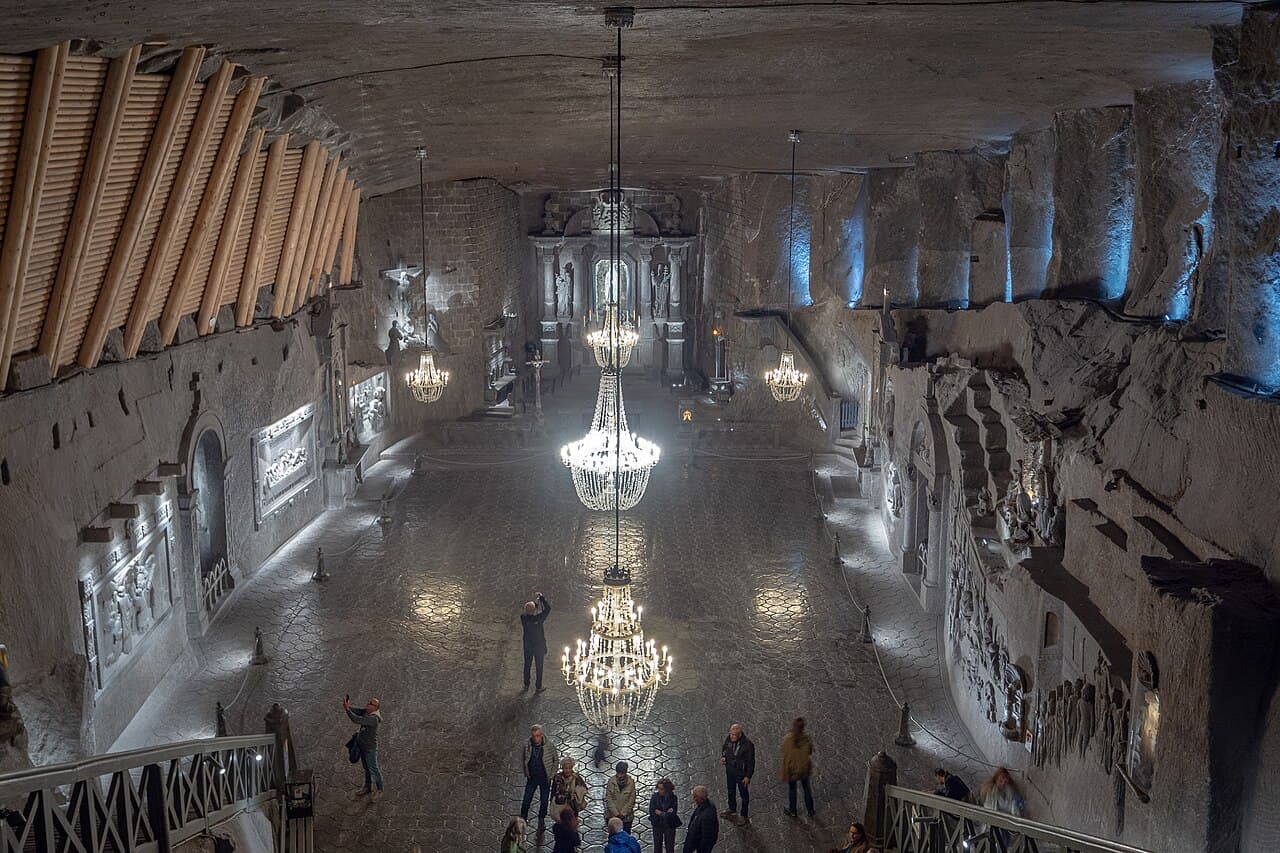
Take the SKA1 train or a bus from Kraków Główny to the Wieliczka Salt Mine (~30 min). Arrive early to beat the crowds. Join a guided tour through the extraordinary subterranean chambers, chapels, and lakes carved entirely from salt — a UNESCO World Heritage Site.
Return to Kraków for lunch, then visit the National Museum or the Czartoryski Museum (home to Leonardo da Vinci's 'Lady with an Ermine'). Alternatively, stroll through Planty Park, the green ring circling the entire Old Town.
Farewell dinner at a restaurant in Kazimierz or the Old Town. Consider catching a classical concert at one of the historic churches — performances run most evenings year-round.
Real coworking spaces, laptop-friendly cafés, and libraries mapped near the center of the city — the closest, best-rated desks first.
No coworking-ready spots surfaced for this city yet.
Pick a different category or check back once we’ve indexed more desks for this city.
Ask for cafés, quiet neighborhoods, date-night spots, or a first 48-hour plan.
Mention calls, Wi-Fi needs, or how much of the day has to stay laptop-friendly.
Get faster answers on where to stay, when to move neighborhoods, and what to skip.
Written by signed-in Wanderlust members. We don't check that a reviewer has visited.
No reviews of Kraków yet.
Tell the planner your dates, who's coming, your budget and pace, and it drafts a day-by-day itinerary you can edit.
Wanderlust Pro
Insider tips for Kraków, unlimited AI-built itineraries, and travel companions you can invite to plan a trip together. From $5.00/month, billed annually.
Insider tips · Wanderlust Pro
Practical tips on the sights and neighbourhoods in this Krakówguide — when to go, what most visitors miss. Written with AI about the guide's own places; double-check details before you go. Pro members see every tip.