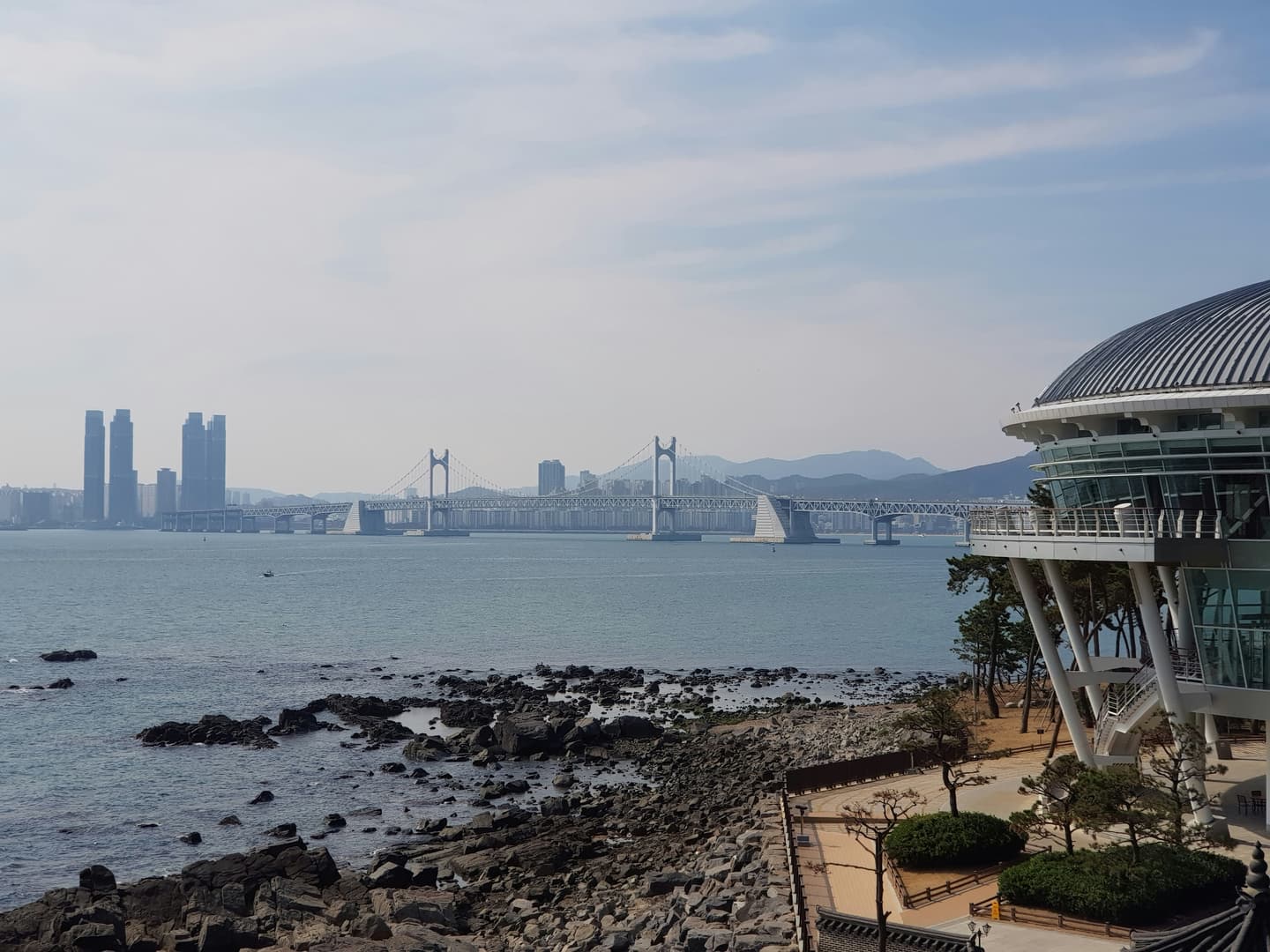
 City postcard
Busan
South Korea's coastal gem — where sandy beaches, hillside art villages, and world-class seafood collide.
South Korea's coastal gem — where sandy beaches, hillside art villages, and world-class seafood collide.
Busan is South Korea's second-largest city and only major metropolis on the coast, offering a rare blend of sandy beaches, dramatic mountains, ancient Buddhist temples, and buzzing seafood markets. Unlike Seoul, the pace here is relaxed yet electric — beach bars at Gwangalli, rainbow alleys in Gamcheon, and fresh hoe at Jagalchi Market form the backbone of daily life. It's a city that rewards slow exploration: every neighborhood has its own character, and the sea is never far away.
City postcardSouth Korea's coastal gem — where sandy beaches, hillside art villages, and world-class seafood collide.
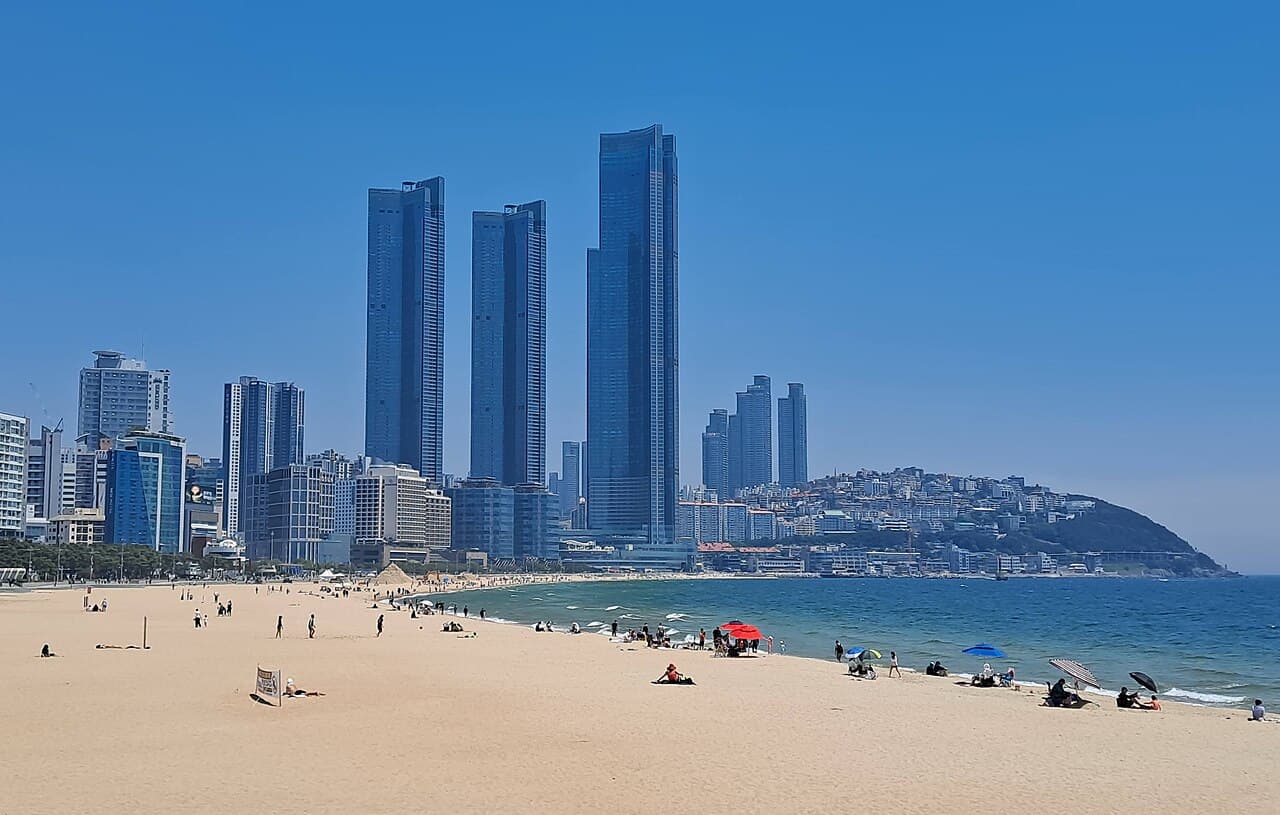 Top sight
A signature stop locals and returning travelers point to in Busan.
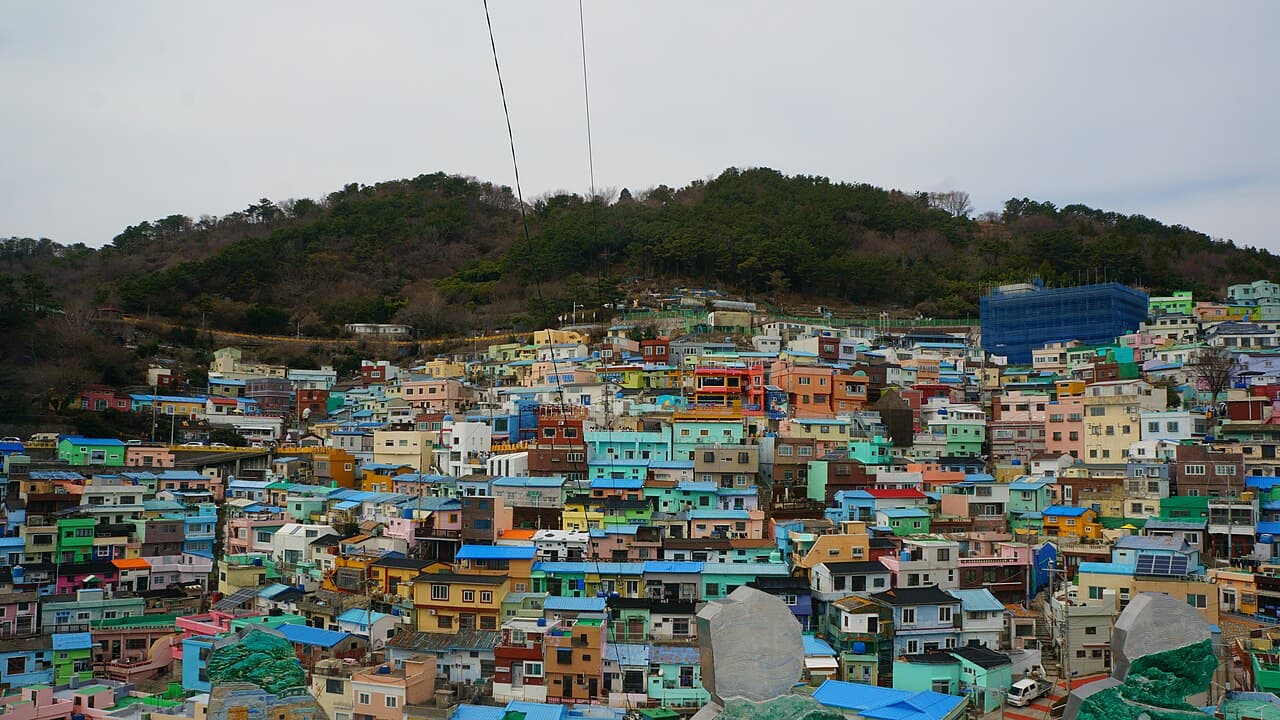 Top sight
A signature stop locals and returning travelers point to in Busan.
A signature stop locals and returning travelers point to in Busan.
Photo: Brit in Seoul · CC BY-SA 4.0
A signature stop locals and returning travelers point to in Busan.
A signature stop locals and returning travelers point to in Busan.
Photo: Bl00dnFl4mes · CC BY-SA 4.0
A signature stop locals and returning travelers point to in Busan.
A signature stop locals and returning travelers point to in Busan.
A signature stop locals and returning travelers point to in Busan.
A signature stop locals and returning travelers point to in Busan.
A signature stop locals and returning travelers point to in Busan.
A pocket of Busan with its own temperament — worth a deliberate detour when you're in the area.
A pocket of Busan with its own temperament — worth a deliberate detour when you're in the area.
A pocket of Busan with its own temperament — worth a deliberate detour when you're in the area.
A pocket of Busan with its own temperament — worth a deliberate detour when you're in the area.
Wanderlust Pro
Pro members see insider tips for Busan: a short list of restaurants, cafés and sights, picked by AI as local suggestions to double-check before you go.
The quick answers travelers want before they commit to flights, neighborhoods, and how long to stay.
Busan is served by Gimhae International Airport (PUS), which handles direct flights from Tokyo, Osaka, and other Asian cities — no need to transit through Seoul. From the airport, the Busan-Gimhae Light Rail (BGL) runs directly to Sasang Station, where you transfer to Metro Line 2 into central Busan. From Seoul, the KTX high-speed train is the most popular option, covering the 325 km journey in approximately 2.5 hours from Seoul Station to Busan Station; economy class fares start around ₩59,800 (~$45 USD). Long-distance express buses also connect major Korean cities to Busan's Nopo or Seobu bus terminals and are the most budget-friendly option.
Busan's metro is the backbone of city transport, with 6 lines (Lines 1–4, the BGL airport connector, and the Donghae coastal line) covering over 127 stations. Metro fares start at ₩1,300 KRW (~$1) for the first 10 km with a T-money card; a 1-Day Pass costs ₩5,000 KRW. Cash single-use tickets cost ₩1,400–1,600 KRW. Station signage is in Korean, English, Japanese, and Chinese. Buses fill gaps to cliffside villages, coastal parks, and mountain temples not served by the subway — tap your T-money card on and off for free transfers between metro and bus. Taxis are metered from a base of ~₩4,800 KRW for the first 2 km; Kakao T is the recommended ride-hailing app, with English support and upfront fare estimates. Download Naver Maps for accurate real-time routing across all modes.
Busan is genuinely a year-round destination, but two windows stand out. Autumn — especially September through October — is the sweet spot: temperatures sit between 15°C and 25°C, skies are clear, humidity drops, and the city hosts its biggest events. September still offers warm enough water for swimming without the August crowds, while October brings the Busan International Film Festival (BIFF), Asia's largest, centered around Haeundae. Spring (April–May) is the strong secondary pick: cherry blossoms peak in late March to early April — earlier than anywhere else in Korea — and a packed festival calendar follows. Summer (July–August) draws beach crowds and is peak domestic tourism season, but expect high humidity and concentrated rainfall. Winters are mild compared to the rest of Korea, making Busan a good cold-weather escape for hot seafood soups and uncrowded market visits.
Start at Haeundae Beach for a morning stroll along Korea's most famous stretch of sand, then ride the Haeundae Blueline Park sky capsule for panoramic coastal views.
Head to Gwangalli Beach for lunch at a seafront café, then explore the hip beachside strip and grab a paddleboard. Visit Millak Raw Fish Town nearby for a fresh sashimi fix.
Stay at Gwangalli after dark to watch Gwangan Bridge light up in spectacular color — beach bars and rooftop lounges keep the night going.
Take the metro to Gamcheon Culture Village early to beat the crowds. Wander the rainbow-painted alleys, find the Little Prince statue, and browse local art installations.
Head down to Nampo-dong for lunch at BIFF Square street stalls, then lose yourself in Jagalchi Fish Market — pick your live catch and have it prepared upstairs.
Explore Yongdusan Park and climb Busan Tower for panoramic city views at sunset, then dine in Nampo-dong's buzzing back alleys.
Make the trip to Haedong Yonggungsa Temple, one of Korea's only seaside temples, perched on dramatic ocean cliffs — arrive early for atmospheric solitude.
Head inland to Beomeosa Temple at the foot of Geumjeongsan Mountain for a contrast of forest tranquility and ancient Buddhist architecture. Hike part of the mountain trail if time allows.
Return to Seomyeon — Busan's central entertainment district — for Korean BBQ, craft beer, and an evening out in the city's liveliest nightlife hub.
Real coworking spaces, laptop-friendly cafés, and libraries mapped near the center of the city — the closest, best-rated desks first.
No coworking-ready spots surfaced for this city yet.
Pick a different category or check back once we’ve indexed more desks for this city.
Ask for cafés, quiet neighborhoods, date-night spots, or a first 48-hour plan.
Mention calls, Wi-Fi needs, or how much of the day has to stay laptop-friendly.
Get faster answers on where to stay, when to move neighborhoods, and what to skip.
There aren’t any, yet!
Block off the weeks you're free. Wanderlust turns this dossier — flights, lodging, neighborhoods, timing — into a single draft itinerary in about ninety seconds.
Wanderlust Pro
Insider tips for Busan, unlimited AI-built itineraries, and travel companions you can invite to plan a trip together. From $5.00/month, billed annually.
Wanderlust Pro
Pro members see insider tips for Busan: a short list of restaurants, cafés and sights, picked by AI as local suggestions to double-check before you go.