City guide · Updated June 2026
AsiaIndia16.5° · 80.6°
Vijayawada,India.
Andhra Pradesh's City of Victory — where ancient caves, sacred temples, and a mighty river converge.
Vijayawada · IN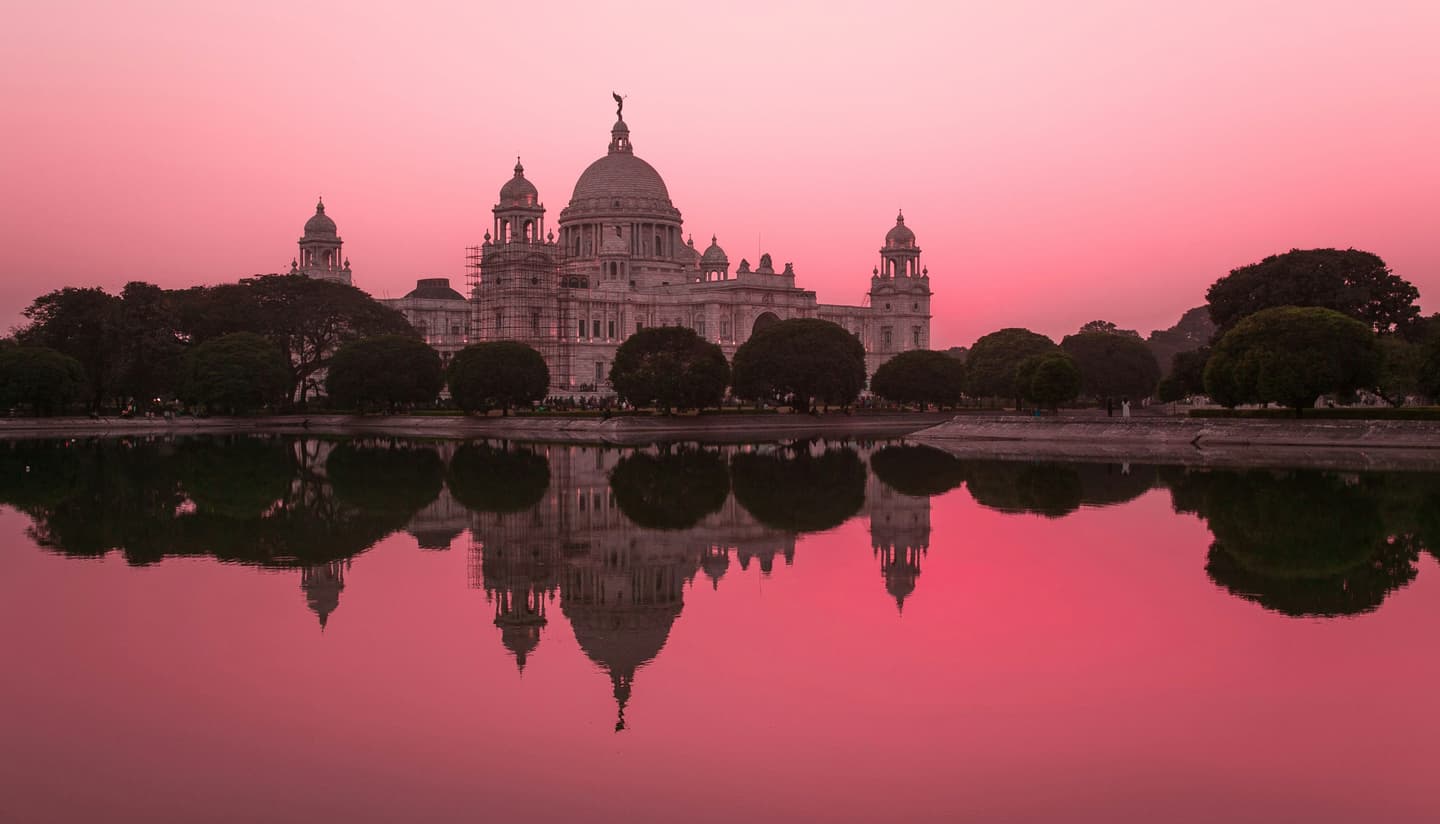
VijayawadaIndia
★
Vijayawada Airport (VGA) — Gannavaram Airport, ~18 km from city centerNEAREST AIRPORT
Population
876,820.5
Total residents
Global rank
#537
Wanderlust index
Best time
October to March, when cooler and…
Peak window
Time zone
Asia/Kolkata
Local time
Currency
Indian Rupee (INR)
Money in use
Language
Telugu (English widely understood in commercial areas)
Spoken locally
01 · Overview
About Vijayawada
Andhra Pradesh's City of Victory — where ancient caves, sacred temples, and a mighty river converge.
Vijayawada, the commercial and cultural capital of Andhra Pradesh, sits on the banks of the Krishna River flanked by the scenic Indrakeeladri Hills. Steeped in over 14 centuries of history shaped by the Satavahanas, Pallavas, and Chalukyas, the city blends towering temple gopurams and ancient rock-cut caves with a fast-growing modern metropolis. It boasts one of the largest railway junctions in South India and has been recognized as a 'Global City of the Future' by McKinsey Quarterly. Spicy Andhra cuisine, vibrant festivals, and a buzzing commercial scene round out the experience.
02 · Wanderlust scorecard
How Vijayawada scores
Ratings run 0 to 5 unless marked. They come from our AI-assisted research and are refreshed on a rolling basis.
5
/ 5
Cost of living
Affordability, 0–5. Higher means cheaper.
2.5
/ 5
Leisure
Leisure rating, 0–5.
11
Mbps
Connectivity
Median internet speed.
3.9
/ 5
Safety
Safety rating, 0–5. Higher is safer.
3
/ 5
Overall livability
Overall rating, 0–5.
4
/ 5
Air quality
Air-quality rating, 0–5. Higher is cleaner.
6.9
index
Index score
Wanderlust ranking, 0–10: overall, safety, internet, cost, leisure and air quality, weighted.
03 · Weather & when to go
Best time to visit Vijayawada
Current weather and the forecast, and the months our research rates best for a visit.
Month by month
Best months Either side Other months
Jan
Feb
Mar
Apr
May
Jun
Jul
Aug
Sep
Oct
Nov
Dec
Sweet spot: October to March, when cooler and drier weather makes sightseeing comfortable and coincides with major regional festivals..
More cities for these months: Where to go in January · Where to go in February · Where to go in March · Where to go in October · Where to go in November · Where to go in December
04 · Things to do
Things to do in Vijayawada
Top sights from our AI-assisted research, and other places we have photos of.
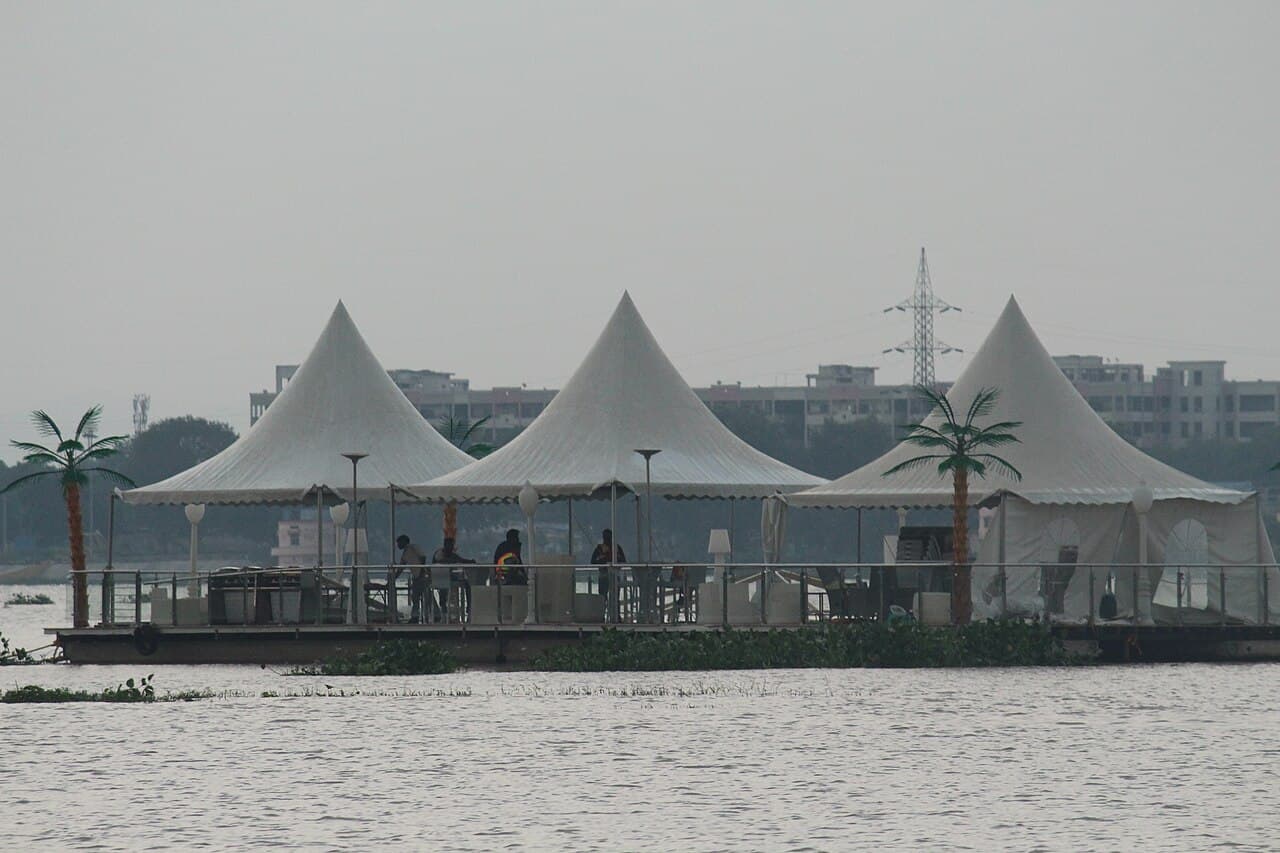
Top sight
Top sight
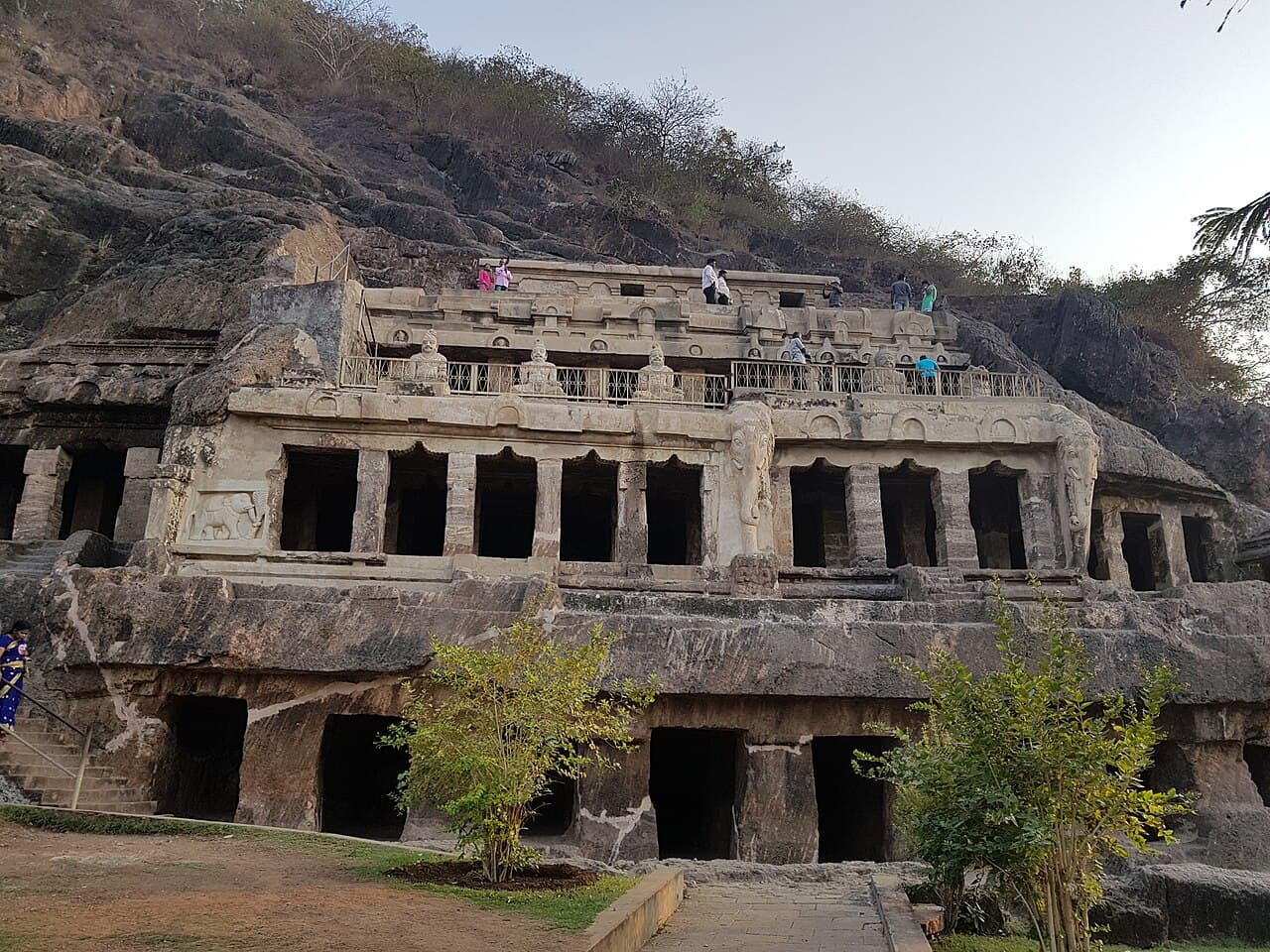
Mogalarajapuram Caves
Top sight
Top sight
Gandhi Hill & Stupa
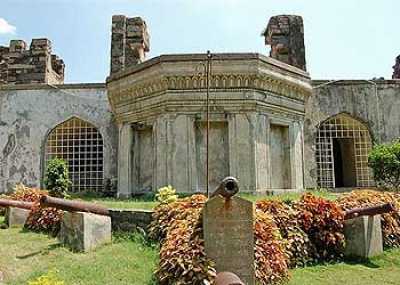
Top sight
Top sight
Victoria Museum
05 · Monthly cost of living
Cost of living in Vijayawada
Estimated monthly totals in USD from our AI-assisted research, one per profile. Treat them as a starting point for a budget, not a quote.
$1,531
estimated monthly spend · USDProfileExpat
Price references — vs. profile benchmarks
Nomadmonthly spend · USD
$1,245
-19%
Expatmonthly spend · USD
$1,531
baseline
Familymonthly spend · USD
$3,408.6
+123%
Localmonthly spend · USD
$860.5
-44%
Median fiber speeddownload · Mbps
11
Mbps
06 · Neighborhoods
Where to stay in Vijayawada
Neighborhoods our AI-assisted research lists as popular with visitors.
Benz Circle
Governorpet
Labbipet
MG Road
07 · Insider tips
Sights and neighbourhoods, with a tip each.
Practical tips on places from this Vijayawada guide, written with AI. One is free; Pro members see the rest. Double-check details before you go.
Insider tips · Wanderlust Pro
Practical tips on the sights and neighbourhoods in this Vijayawadaguide — when to go, what most visitors miss. Written with AI about the guide's own places; double-check details before you go. Pro members see every tip.
08 · Practical notes
Practical information for Vijayawada
The essentials from this guide's data, in one place.
01
Getting there
- Nearest airport — Vijayawada Airport (VGA) — Gannavaram Airport, ~18 km from city center
02
Money
- Currency — Indian Rupee (INR)
- Affordability — 5/5 on the Wanderlust index (higher is cheaper)
03
Internet
- Median speed — 11 Mbps
- Internet score — 2.7/5
04
Safety
- Safety score — 3.9/5 from our AI-assisted research
05
Language
- Primary language — Telugu (English widely understood in commercial areas)
06
Timing
- Best window — October to March, when cooler and drier weather makes sightseeing comfortable and coincides with major regional festivals.
- Time zone — Asia/Kolkata
Questions
Frequently asked, plainly answered.
The quick answers travelers want before they commit to flights, neighborhoods, and how long to stay.
Is Vijayawada safe for travelers?+
Vijayawada has a safety rating of 3.9 out of 5.
What is the best time to visit Vijayawada?+
The best time to visit Vijayawada is October to March, when cooler and drier weather makes sightseeing comfortable and coincides with major regional festivals..
How expensive is Vijayawada?+
Vijayawada has an affordability score of 5 out of 5, where 5 is most affordable.
What is the internet speed in Vijayawada?+
Vijayawada has an average internet speed of 11 Mbps.
What currency does Vijayawada use?+
The currency used in Vijayawada is Indian Rupee (INR).
What language is spoken in Vijayawada?+
The primary language spoken in Vijayawada is Telugu (English widely understood in commercial areas).
Researched city guide
Getting there, getting around and when to go
Written with AI-assisted web research. Where we have sources, they are listed under each part.
What works
- Extremely affordable cost of living (~$1,245/month for a nomad)
- Rich heritage — ancient rock-cut caves, hilltop temples, and colonial-era museums
- One of South India's most connected railway hubs for onward travel
- Vibrant Andhra cuisine scene with legendary street food and local specialties
- Reasonably safe city with a welcoming local community
- Fast-growing smart city with improving infrastructure and renewable energy use
What to weigh
- Scorching summers (April–June) make outdoor sightseeing uncomfortable
- Heavy monsoon rainfall can disrupt plans from July to September
- Limited international flight connectivity; VGA is primarily a domestic airport
- Telugu is the dominant language; communication can be challenging for non-speakers
- Busy commercial areas and temple zones can get very crowded
- Leisure and nightlife options are limited compared to larger Indian metros
Getting in
How to arrive
The main entry point is Vijayawada Airport (VGA), also known as Gannavaram Airport, located approximately 18 km from the city center on National Highway 5. A taxi from the airport to the city takes around 22 minutes and costs roughly $5–7. FlixBus India runs buses from the Airport Road stop to the RTC Bus Stand three times a day; tickets cost $1–2 and the journey takes about 50 minutes. An airport shuttle also connects to the airport bus stand (2.2 km away), from where APSRTC state buses run into the city. Auto-rickshaws and private car rentals are available at the terminal. Vijayawada Junction is one of the largest railway stations in South India, making the city highly accessible by train from Chennai, Hyderabad, Kolkata, and other major cities — train tickets from the nearest station to Vijayawada Jn run $1–10.
Getting around
Moving through the city
Vijayawada has a well-developed road network spanning over 1,264 km of city roads. Auto-rickshaws are the most convenient option for short trips around town and are widely available; always negotiate or insist on the meter. Uber and Ola ride-hailing apps operate in the city, offering a more predictable fare. APSRTC city buses cover most areas and are very affordable. The city was among the first in India to introduce a Rapid Bus Transit System (BRTS). Benz Circle is the central transport hub, connecting major arteries including MG Road, NH16, and Bandar Road, making it the best landmark to orient yourself. For day trips to Undavalli Caves (~8–10 km) or Kondapalli, auto-rickshaws or app-based cabs are easiest.
When to go
Timing your trip
The best time to visit Vijayawada is October through March, when temperatures are pleasantly mild and the air is drier. This window also coincides with major regional festivals and cultural events, adding vibrancy to any itinerary. Summers (April–June) are brutally hot and humid — daytime temperatures can push well above 40°C — and are best avoided for sightseeing. The monsoon season (July–September) brings heavy rainfall that can occasionally disrupt travel plans, though the Krishna River swells dramatically and the Prakasam Barrage becomes a particularly photogenic sight. Pilgrims flock to the Kanaka Durga Temple year-round, so expect larger crowds during Navratri (September/October) and other Hindu festivals.
Plan your trip
3 days in Vijayawada: a sample itinerary
A ready-made starting point. Make it your own — clone it into an editable journey and reshape every stop.
Day 01
Day 1 — Sacred Hills & the Krishna Riverfront
Morning
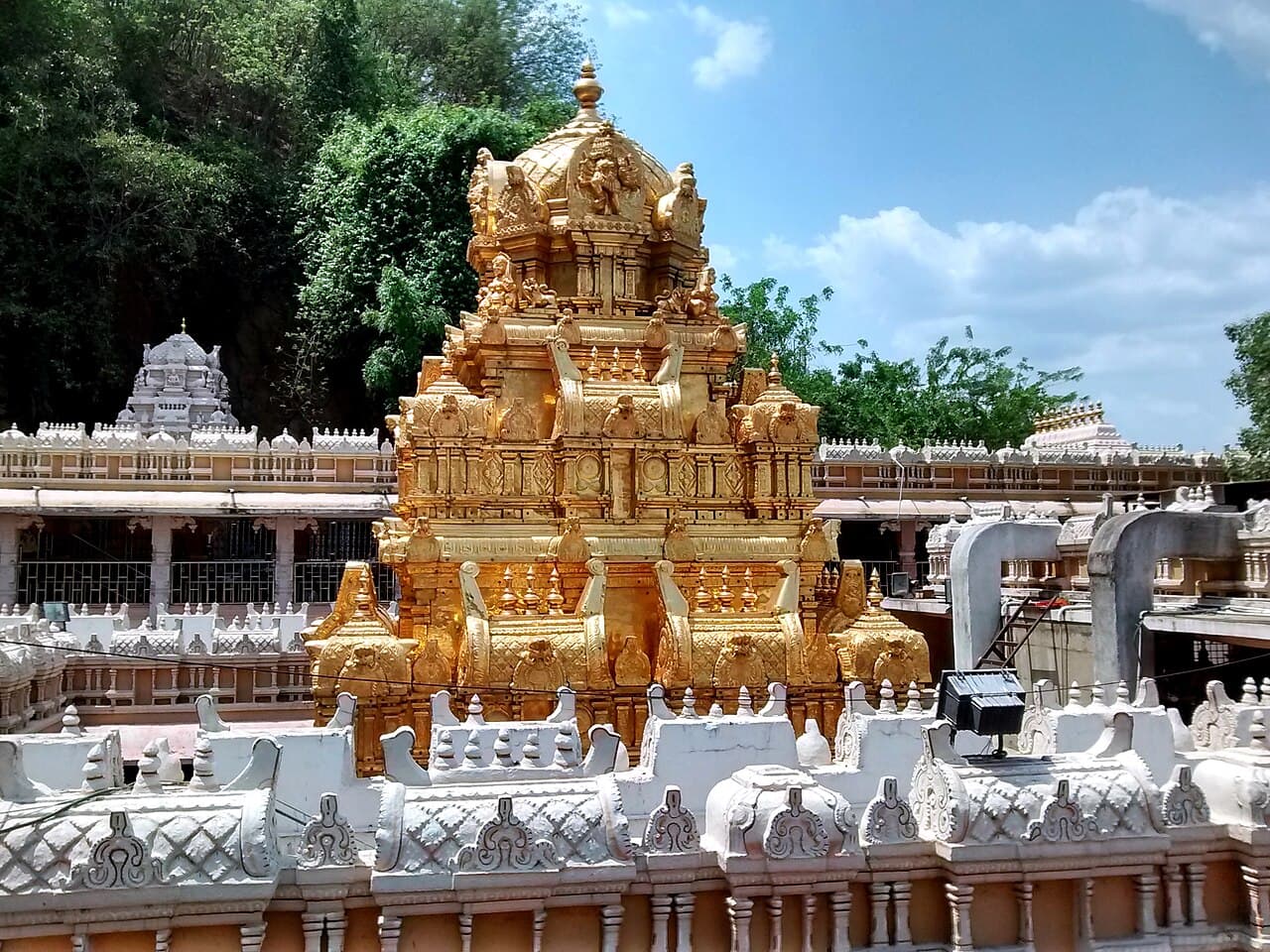
Start with an early visit to the Kanaka Durga Temple on Indrakeeladri Hill — arrive by 7 AM to beat the crowds and catch sunrise views over the Krishna River.
Afternoon
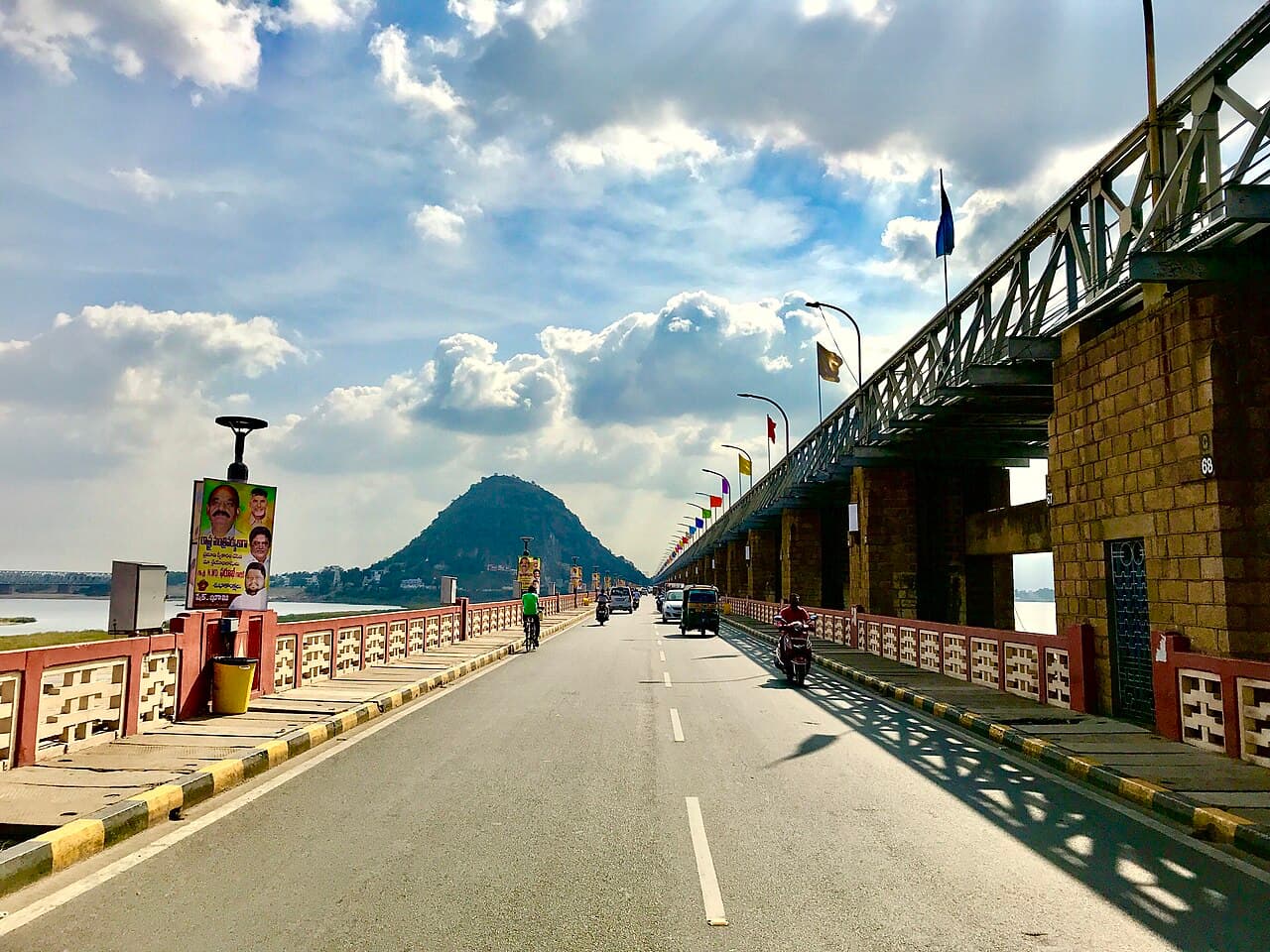
Walk down to the Prakasam Barrage, the iconic 1-km-long bridge spanning the Krishna River, for riverside views and photography. Stroll through Rajiv Gandhi Park nearby for a relaxed lunch break.
Evening
Head to Gandhi Hill for panoramic city views at dusk, then explore the illuminated Prakasam Barrage at night. Wind down with a classic Andhra meal — try Gongura Pachadi and Pesarattu at a local restaurant.
Day 02
Day 2 — Caves, Forts & Island Escapes
Morning
Drive ~8 km to the Undavalli Caves, a stunning 4th-century rock-cut complex housing a massive reclining Vishnu statue carved from a single block of granite. Arrive when they open at 9 AM.
Afternoon
Head to Bhavani Island — a 50-hectare river island in the middle of the Krishna — reachable by ferry. Enjoy boating, zip-lining, and picnic-style leisure on the island.
Evening
Return to the city and visit the Mogalarajapuram Caves at the base of Indrakeeladri Hills, then browse Benz Circle's bustling Trendset Mall for shopping and a relaxed dinner.
Day 03
Day 3 — History, Handicrafts & Hidden Gems
Morning
Take a morning trip to Kondapalli Fort (~15 km), a medieval hillfort with commanding views, followed by a visit to the Kondapalli village famous for its world-renowned lacquered wooden toys.
Afternoon
Return to the city for the Victoria Museum to explore the region's archaeological and artistic heritage. Finish at the Akkana Madanna Caves, 7th-century rock-cut temples dedicated to the Hindu trinity.
Evening
Explore the local street food scene around MG Road and Governorpet — pick up Andhra Biryani, mirchi bajji, and local sweets before wrapping up your Vijayawada stay.
Work-ready layer
Coworking spots and laptop-friendly anchors.
Real coworking spaces, laptop-friendly cafés, and libraries mapped near the center of the city — the closest, best-rated desks first.
Spots surfaced0
Categories—
Mapped0
No coworking-ready spots surfaced for this city yet.
Map pending
No mapped workspace points yet.
Pick a different category or check back once we’ve indexed more desks for this city.
Concierge
Ask the Vijayawada concierge.
Share your travel style, must-see spots, or work schedule and the concierge will help turn this guide into something personal.
Personal trip brief
Tell it what kind of trip you're trying to have, and it will tighten the plan.
01
Travel style
Ask for cafés, quiet neighborhoods, date-night spots, or a first 48-hour plan.
02
Work constraints
Mention calls, Wi-Fi needs, or how much of the day has to stay laptop-friendly.
03
Real tradeoffs
Get faster answers on where to stay, when to move neighborhoods, and what to skip.
Traveler reviews
Reviews of Vijayawada
Written by signed-in Wanderlust members. We don't check that a reviewer has visited.
No reviews of Vijayawada yet.
Plan a trip to Vijayawada.
Tell the planner your dates, who's coming, your budget and pace, and it drafts a day-by-day itinerary you can edit.
Wanderlust Pro
Insider tips for Vijayawada, unlimited AI-built itineraries, and travel companions you can invite to plan a trip together. From $5.00/month, billed annually.