 City postcard
Texel
The Netherlands' sunniest island — unspoiled dunes, wild beaches, and a slower pace of life just 20 minutes from the mainland.
The Netherlands' sunniest island — unspoiled dunes, wild beaches, and a slower pace of life just 20 minutes from the mainland.
Texel is the largest and most accessible of the Dutch Wadden Islands, sitting just off the North Holland coast in the UNESCO-listed Wadden Sea. Famous for logging more sunshine hours than anywhere else in the Netherlands, the island draws visitors with its pristine beaches, vast dune national park, and seven charming villages. A haven for cyclists, birdwatchers, water sports enthusiasts, and families, Texel balances nature conservation with a lively local food and craft scene — from award-winning cheese and lamb to its own brewery and vineyard.
City postcardThe Netherlands' sunniest island — unspoiled dunes, wild beaches, and a slower pace of life just 20 minutes from the mainland.
A signature stop locals and returning travelers point to in Texel.
A signature stop locals and returning travelers point to in Texel.
A signature stop locals and returning travelers point to in Texel.
A signature stop locals and returning travelers point to in Texel.
A signature stop locals and returning travelers point to in Texel.
A signature stop locals and returning travelers point to in Texel.
A signature stop locals and returning travelers point to in Texel.
A signature stop locals and returning travelers point to in Texel.
A pocket of Texel with its own temperament — worth a deliberate detour when you're in the area.
A pocket of Texel with its own temperament — worth a deliberate detour when you're in the area.
A pocket of Texel with its own temperament — worth a deliberate detour when you're in the area.
A pocket of Texel with its own temperament — worth a deliberate detour when you're in the area.
The quick answers travelers want before they commit to flights, neighborhoods, and how long to stay.
The gateway to Texel is the TESO car ferry from Den Helder, a 20-minute crossing that runs 365 days a year. Ferries depart hourly from Den Helder (first at 06:30, last at 21:30; Sundays one hour later), and every 30 minutes on busy days — no advance reservation required. In 2026, return fares are €3.00 per pedestrian, €6.00 with a bicycle, and €31.00–€46.50 per car (lower rate on Tue–Thu). The Texelstroom ferry is Europe's first to run on combined renewable energy sources. From Amsterdam, take a direct NS Intercity train to Den Helder (approx. 1 hr 17 min, departing twice hourly), then walk ~15 min or take Connexxion bus 33 to the ferry terminal. Buying a ferry ticket online in advance speeds up boarding, especially at peak weekends.
Cycling is the definitive way to explore Texel — the island is laced with dedicated bike paths and traffic is minimal. Bikes can be brought over on the ferry (€6 return) or rented on arrival near the 't Horntje terminal. E-bikes are strongly recommended for longer routes or northern stretches where wind can be relentless. For those without wheels, the Texelhopper minibus network covers 200+ stops islandwide and connects the ferry terminal to Den Burg, De Koog, and Oudeschild; book via app or phone in advance (€3.50/ride in 2026). Bus 28 is the most frequent fixed route, ideal for Den Burg and De Koog. Cars are permitted, with paid parking (€2.50/hr in 2026, or a Texel e-vignette at €10/day or €20/week) enforced 08:00–20:00 across all villages and beach entrances. For something different, Tuk Tuks are available to rent at around €150–160/day.
Texel enjoys the most sunshine hours of any location in the Netherlands, making it rewarding even outside the peak summer window. Late spring through early autumn (May–September) is the sweet spot: mild temperatures, long daylight hours, and calm enough seas for swimming and water sports. April and May bring an extra reward for nature lovers — migratory birds flood the island's reserves, and the fields fill with newborn lambs and foals. July and August are the busiest months; weekday ferry crossings are cheaper (€31 vs. €46.50 for cars on Fri–Mon) and noticeably less crowded. Autumn visits offer serene dune walks and a rich harvest of local produce — Texel lamb, cheese, and the island's own beers — without the summer crush. Winter is quiet and atmospheric but expect wind, rain, and limited ferry frequency.
Take the early TESO ferry from Den Helder (departs 06:30 or 07:30) and arrive at 't Horntje. Rent a bike at the terminal and cycle into Den Burg, Texel's main village. Explore the winding historic streets, browse local shops, and grab breakfast at Texelse Branding, a local bakery and coffee roaster in the town centre.
Cycle east to Oudeschild — widely regarded as Texel's most picturesque village. Visit the Kaap Skil Maritime & Beachcombers Museum, then stroll the harbour where the fishing fleet is moored. Stop at one of the harbourside seafood restaurants for fresh North Sea catch.
Return to Den Burg for dinner. Try local specialities: Texel lamb, island cheese, or Skuumkoppe beer brewed with dune-filtered water at the Texelse Bierbrouwerij. Check into your accommodation and enjoy the island's calm evening atmosphere.
Head west by bike to the Dunes of Texel National Park. Explore the vast dune landscape — the southern section is greener and more wooded, perfect for a peaceful morning ride. Stop at Ecomare, the seal and wildlife sanctuary set within the park, where injured seals are nursed back to health alongside porpoises, birds, and fish.
Continue north along the western coast to De Slufter — a raw, tidal salt-marsh inlet where the North Sea breaches the dunes unhindered. In summer, the surrounding land erupts in pink and purple sea lavender. Walk the marked trail through the reserve and enjoy the wild, ever-changing landscape.
Head to the beach at De Koog for sunset. The village has the island's most active dining and bar scene — pick a terrace restaurant and sample Texel wine from De Kroon van Texel vineyard, made from grapes grown at the edge of the national park.
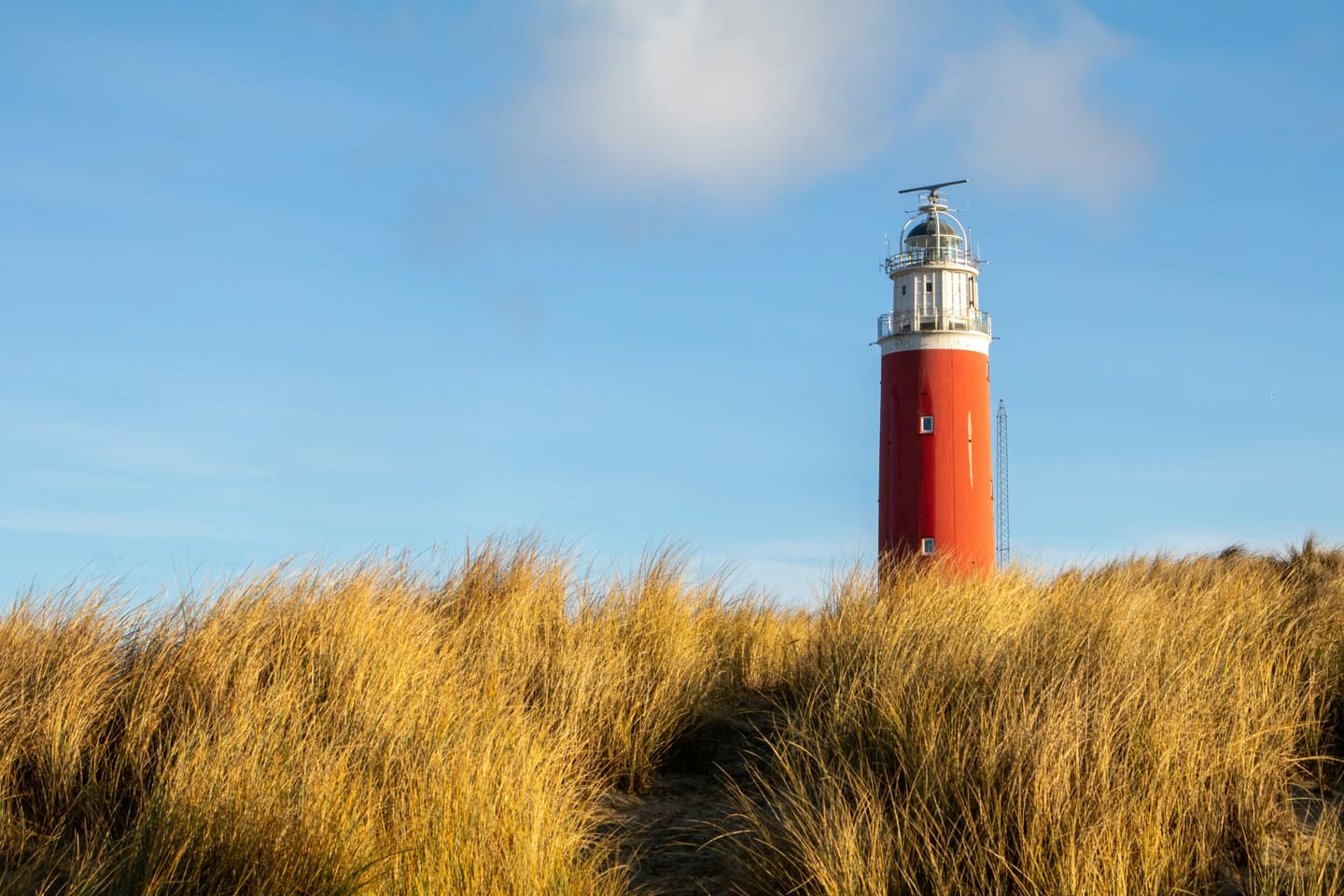
Make an early start north toward De Cocksdorp — take the Texelhopper or cycle, bearing in mind the wind can be strong on this stretch (e-bike recommended). Visit the iconic red-and-white Eierland Lighthouse at Texel's northern tip, climbing for panoramic views over the Wadden Sea and dunes.
Explore the wild northern sandplains near Vliehors and walk the windswept beach at Paal 19 — a quieter stretch favoured by kite flyers. Between May and September, a passenger boat runs from De Cocksdorp to Vlieland for those who want to island-hop along the Wadden chain.
Head back south to Den Hoorn — a quiet village full of artists, galleries, and a charming church. Browse the studios before making your way to 't Horntje to catch the return ferry to Den Helder (last boat from Texel at 21:00). Allow at least an hour buffer on busy weekends.
Real coworking spaces, laptop-friendly cafés, and libraries mapped near the center of the city — the closest, best-rated desks first.
No coworking-ready spots surfaced for this city yet.
Pick a different category or check back once we’ve indexed more desks for this city.
Ask for cafés, quiet neighborhoods, date-night spots, or a first 48-hour plan.
Mention calls, Wi-Fi needs, or how much of the day has to stay laptop-friendly.
Get faster answers on where to stay, when to move neighborhoods, and what to skip.
There aren’t any, yet!
Block off the weeks you're free. Wanderlust turns this dossier — flights, lodging, neighborhoods, timing — into a single draft itinerary in about ninety seconds.
Wanderlust Pro
Go deeper than the highlights — premium Texel intel with hidden gems, top stays, and offline access on the ground. From $5.00/month, billed annually.