City guide · Updated June 2026
AsiaIndonesia-7.3° · 112.7°
Surabaya,Indonesia.
Indonesia's proud "City of Heroes" — a gritty, authentic East Java metropolis of colonial history, volcanic day trips, and unbeatable street food.
Surabaya · ID
SurabayaIndonesia
★
Juanda International Airport (SUB)NEAREST AIRPORT
Population
2,848,451.6
Total residents
Global rank
#262
Wanderlust index
Best time
May to September (dry season)…
Peak window
Time zone
Asia/Jakarta
Local time
Currency
Indonesian Rupiah (IDR)
Money in use
Language
Indonesian (Bahasa Indonesia); Javanese widely spoken locally
Spoken locally
01 · Overview
About Surabaya
Indonesia's proud "City of Heroes" — a gritty, authentic East Java metropolis of colonial history, volcanic day trips, and unbeatable street food.
Surabaya is Indonesia's second-largest city and the capital of East Java, sitting on the northern shore of Java at the mouth of the Mas River. Known as the "City of Heroes" for its pivotal role in the 1945 independence battle against Dutch colonial forces, it blends colonial-era architecture, a multi-ethnic Arab and Chinese quarter, and a booming modern skyline. While often used as a gateway to Bali and Mount Bromo, Surabaya rewards those who linger with vibrant markets, iconic monuments, and one of Java's most celebrated culinary scenes.
02 · Wanderlust scorecard
How Surabaya scores
Ratings run 0 to 5 unless marked. They come from our AI-assisted research and are refreshed on a rolling basis.
5
/ 5
Cost of living
Affordability, 0–5. Higher means cheaper.
3
/ 5
Leisure
Leisure rating, 0–5.
26
Mbps
Connectivity
Median internet speed.
3.5
/ 5
Safety
Safety rating, 0–5. Higher is safer.
3
/ 5
Overall livability
Overall rating, 0–5.
3
/ 5
Air quality
Air-quality rating, 0–5. Higher is cleaner.
7.4
index
Index score
Wanderlust ranking, 0–10: overall, safety, internet, cost, leisure and air quality, weighted.
03 · Weather & when to go
Best time to visit Surabaya
Current weather and the forecast, and the months our research rates best for a visit.
Month by month
Best months Either side Other months
Jan
Feb
Mar
Apr
May
Jun
Jul
Aug
Sep
Oct
Nov
Dec
Sweet spot: May to September (dry season), with June–August being the peak months for clear skies and outdoor sightseeing..
More cities for these months: Where to go in May · Where to go in June · Where to go in July · Where to go in August · Where to go in September
04 · Things to do
Things to do in Surabaya
Top sights from our AI-assisted research, and other places we have photos of.
Top sight
Top sight
Submarine Monument (Monumen Kapal Selam)
Top sight
Top sight
Al-Akbar Mosque
Top sight
Top sight
Jembatan Merah (Red Bridge)
Top sight
Top sight
Kenjeran Beach & Sanggar Agung Temple
05 · Monthly cost of living
Cost of living in Surabaya
Estimated monthly totals in USD from our AI-assisted research, one per profile. Treat them as a starting point for a budget, not a quote.
$642
estimated monthly spend · USDProfileExpat
Price references — vs. profile benchmarks
Nomadmonthly spend · USD
$953
+48%
Expatmonthly spend · USD
$642
baseline
Familymonthly spend · USD
$1,626
+153%
Localmonthly spend · USD
$351.8
-45%
Median fiber speeddownload · Mbps
26
Mbps
06 · Neighborhoods
Where to stay in Surabaya
Neighborhoods our AI-assisted research lists as popular with visitors.
Gubeng
Genteng (City Center)
Pabean Cantian (Old Town / Arab Quarter)
Chinatown (Kapasan)
07 · Insider tips
Sights and neighbourhoods, with a tip each.
Practical tips on places from this Surabaya guide, written with AI. One is free; Pro members see the rest. Double-check details before you go.
Insider tips · Wanderlust Pro
Practical tips on the sights and neighbourhoods in this Surabayaguide — when to go, what most visitors miss. Written with AI about the guide's own places; double-check details before you go. Pro members see every tip.
08 · Practical notes
Practical information for Surabaya
The essentials from this guide's data, in one place.
01
Getting there
- Nearest airport — Juanda International Airport (SUB)
02
Money
- Currency — Indonesian Rupiah (IDR)
- Affordability — 5/5 on the Wanderlust index (higher is cheaper)
03
Internet
- Median speed — 26 Mbps
- Internet score — 5/5
04
Safety
- Safety score — 3.5/5 from our AI-assisted research
05
Language
- Primary language — Indonesian (Bahasa Indonesia); Javanese widely spoken locally
06
Timing
- Best window — May to September (dry season), with June–August being the peak months for clear skies and outdoor sightseeing.
- Time zone — Asia/Jakarta
Questions
Frequently asked, plainly answered.
The quick answers travelers want before they commit to flights, neighborhoods, and how long to stay.
Is Surabaya safe for travelers?+
Surabaya has a safety rating of 3.5 out of 5.
What is the best time to visit Surabaya?+
The best time to visit Surabaya is May to September (dry season), with June–August being the peak months for clear skies and outdoor sightseeing..
How expensive is Surabaya?+
Surabaya has an affordability score of 5 out of 5, where 5 is most affordable.
What is the internet speed in Surabaya?+
Surabaya has an average internet speed of 26 Mbps.
What currency does Surabaya use?+
The currency used in Surabaya is Indonesian Rupiah (IDR).
What language is spoken in Surabaya?+
The primary language spoken in Surabaya is Indonesian (Bahasa Indonesia); Javanese widely spoken locally.
Researched city guide
Getting there, getting around and when to go
Written with AI-assisted web research. Where we have sources, they are listed under each part.
What works
- Extremely affordable — one of the cheapest major cities in Southeast Asia for food, transport, and accommodation
- Rich, underrated history: colonial Dutch architecture, independence-war monuments, and a multi-ethnic old town
- Outstanding street food and local cuisine (rawon, lontong balap, soto Surabaya)
- Ideal base for day trips to Mount Bromo, Ijen Crater, and Malang
- Authentic, crowd-free experience compared to Bali or Yogyakarta
- Rapidly improving infrastructure including BRT, commuter rail, and the iconic Suramadu Bridge
What to weigh
- Hot and humid year-round; wet season (Nov–Apr) brings heavy daily downpours
- Air quality and traffic congestion can be significant in the urban core
- Limited English spoken outside tourist establishments and hotels
- Relatively few internationally renowned tourist sights compared to Bali or Yogyakarta
- Public transit routes can be confusing for first-time visitors without a local SIM
Getting in
How to arrive
Surabaya is served by Juanda International Airport (SUB), located 27 km south of the city centre — approximately a 40-minute drive by taxi or ride-hail. The most affordable airport-to-city option is the DAMRI bus: Route 2 runs directly to Tunjungan Plaza in downtown Surabaya, with buses departing roughly every hour between 5:00 AM and 9:00 PM; fares are around IDR 15,000–20,000. Metered taxis from official counters cost approximately IDR 99,740 (~€6) for the city-centre run. Grab and Gojek ride-hailing apps also have dedicated pickup zones outside the arrivals area. For intercity arrivals, Gubeng and Kota stations handle long-distance KAI trains from Jakarta, Yogyakarta, and Bali (via ferry connection), while Purabaya Bus Terminal (Bungurasih), 11 km south of centre, is the hub for long-distance buses from across Java.
Getting around
Moving through the city
The easiest way to navigate Surabaya is via Gojek or Grab ride-hailing apps, which offer fully transparent fares for both motorcycle (ojek) and car options city-wide. For budget transit, the Trans Semanggi Suroboyo (TSS) BRT network runs 37 stops from 5:00 AM to 9:00 PM with fares starting at IDR 5,000 using e-money — download the 'Teman Bus' app to track arrivals. The Suroboyo Bus network covers major cross-city corridors and famously accepts payment in collected plastic bottles. Angkot (minibus) routes number in the hundreds across 63 stops, with fares around IDR 5,000 for adults. Metered taxis (Blue Bird is the most reputable) are widely available; book at official hotel counters to avoid overcharging.
When to go
Timing your trip
Surabaya has a tropical wet-and-dry climate with warm temperatures year-round, averaging 32–35°C (90–95°F). The dry season runs from May to October and is by far the best time to visit: skies clear, humidity drops to as low as 54% in September, and August sees up to 8.2 hours of daily sunshine with only 8.8 mm of rain. June to August are the peak tourism months — ideal for exploring colonial architecture, outdoor monuments, and day trips to Mount Bromo or Ijen Crater. The shoulder months of May and September offer pleasant conditions with noticeably fewer crowds. Avoid January through March: February is the wettest month, averaging 304 mm of rain over 17 rainy days, with low sunshine and high humidity reaching 68%. If you visit during the wet season, expect heavy afternoon thunderstorms but still warm, manageable mornings for sightseeing.
Plan your trip
3 days in Surabaya: a sample itinerary
A ready-made starting point. Make it your own — clone it into an editable journey and reshape every stop.
Day 01
Day 1 – Heroes, History & the Old Town
Morning
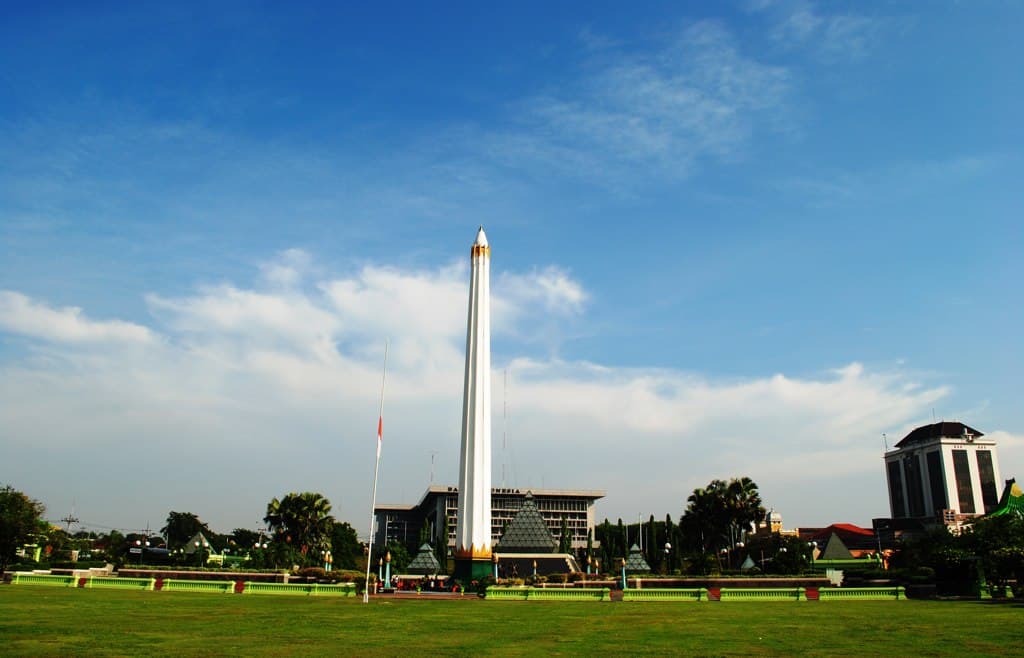
Start at the Heroes Monument (Tugu Pahlawan) to understand Surabaya's independence legacy, then walk to the nearby Museum Surabaya (Gedung Siola). Head north to Jembatan Merah (Red Bridge) and explore the Dutch colonial architecture along Rajawali Street.
Afternoon
Delve into the Arab Quarter (Ampel) around Masjid Ampel — browse the spice market lanes and try local Middle Eastern street food. Continue to Chinatown (Kapasan) for a taste of the city's Chinese heritage.
Evening
Head to Pasar Genteng night market for a street-food feast: try rawon (black beef soup) and lontong balap. Wind down with drinks in the Gubeng bar district.
Day 02
Day 2 – Colonial Culture & Iconic Landmarks
Morning
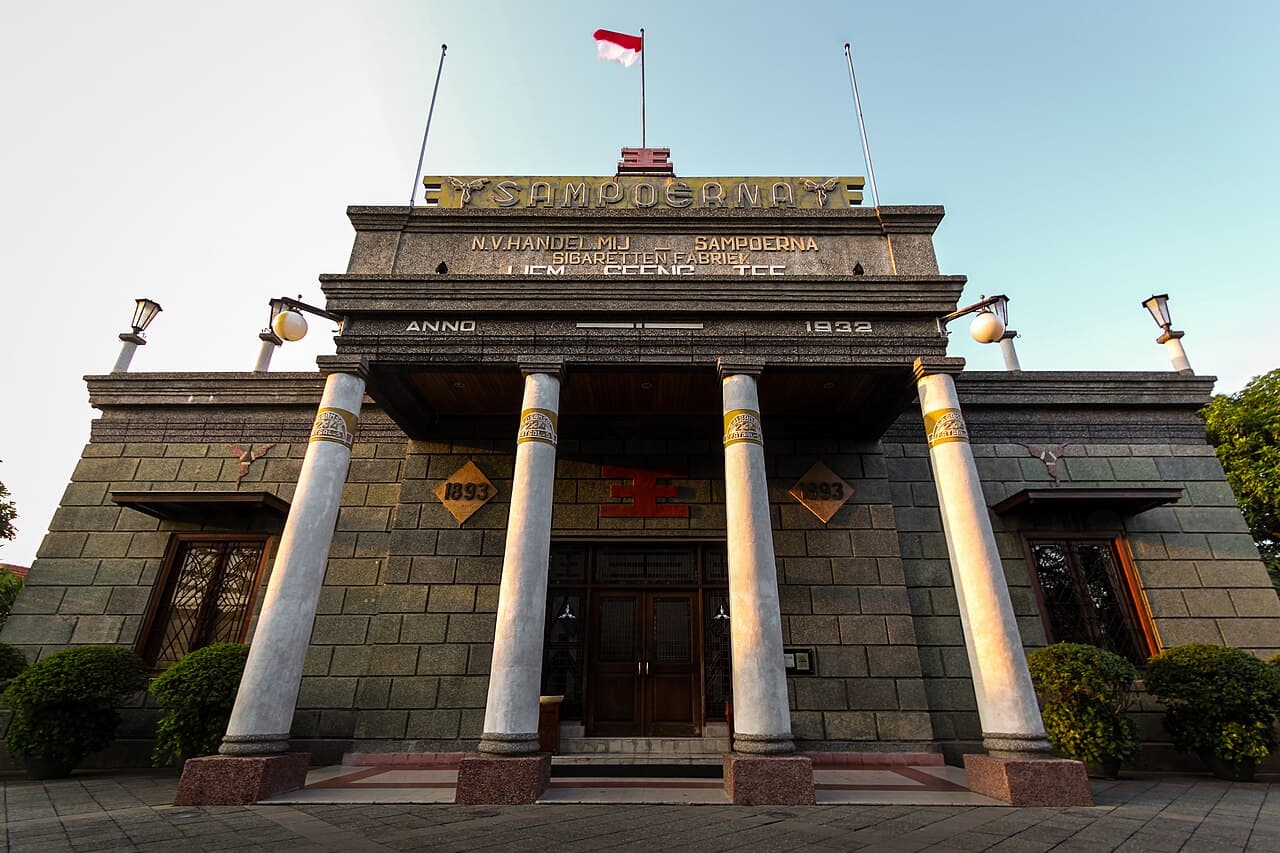
Tour the House of Sampoerna, a beautifully preserved Dutch colonial tobacco factory turned museum. Walk the surrounding old colonial quarter and grab coffee at one of the heritage cafés nearby.
Afternoon
Visit the Submarine Monument (Monumen Kapal Selam) — board the decommissioned KRI Pasopati submarine for a naval history deep-dive. Then stop at the Al-Akbar Mosque, Indonesia's second-largest, for its stunning turquoise domes and panoramic city views from the minaret.
Evening
Drive out to Kenjeran Beach for sunset and visit the seaside Sanggar Agung Temple. Dine on fresh seafood at the local warungs along the coast.
Day 03
Day 3 – Modern Surabaya & Day Trip Prep
Morning
Explore CitraLand's G-Walk culinary centre for a modern Surabaya breakfast experience, then browse Pasar Turi for souvenirs, local crafts, and textiles.
Afternoon
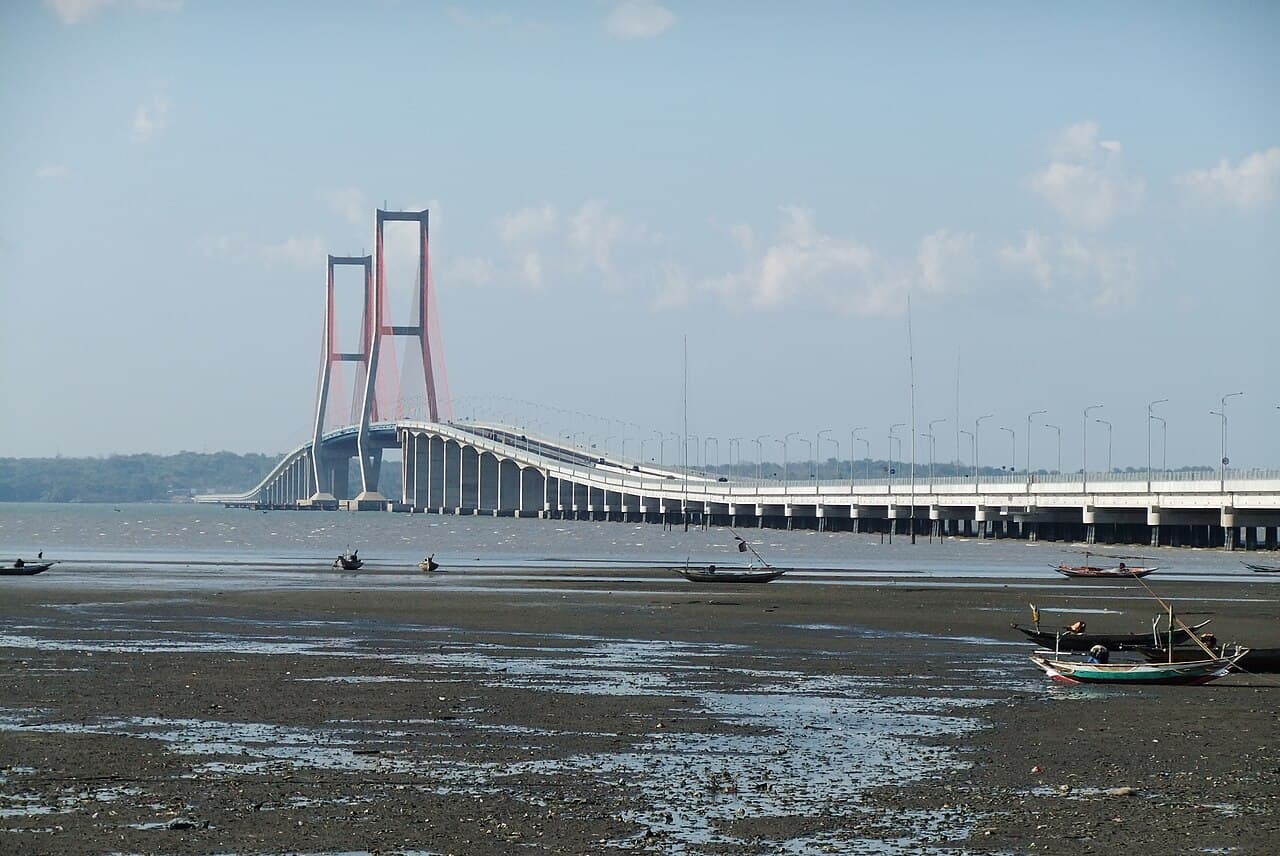
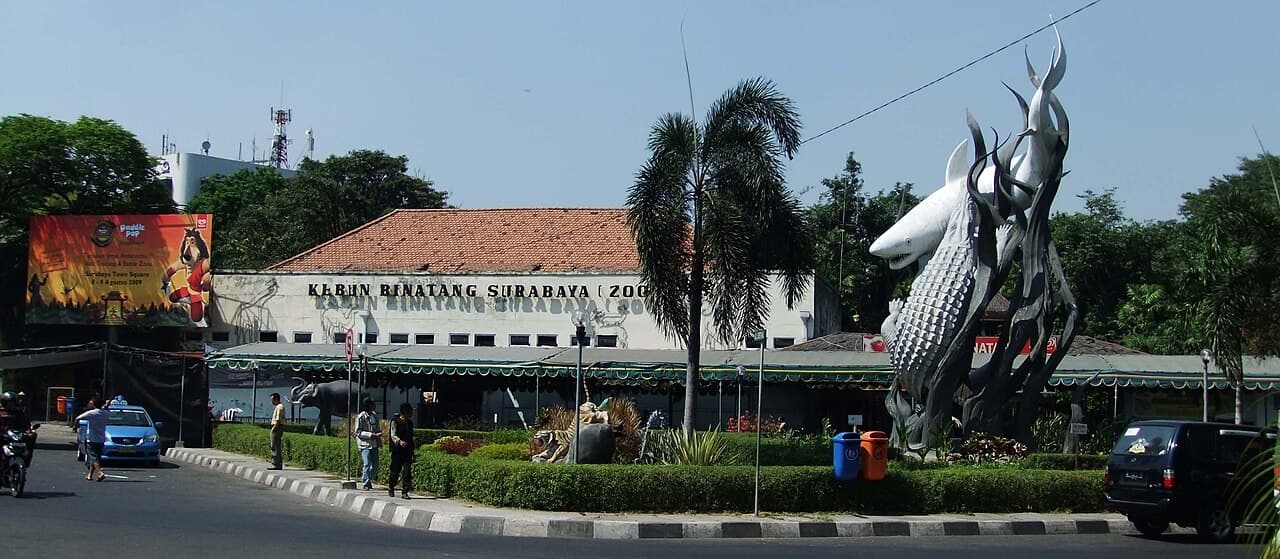
Cross the Suramadu Bridge — the longest bridge in Indonesia — over to Madura Island for a quick cultural excursion, then return for a visit to Surabaya Zoo (one of Southeast Asia's largest, open since 1916).
Evening
Book your transport for a dawn departure to Mount Bromo (roughly 3–4 hours by car). Enjoy a final dinner of Javanese cuisine and prepare for an early morning.
Work-ready layer
Coworking spots and laptop-friendly anchors.
Real coworking spaces, laptop-friendly cafés, and libraries mapped near the center of the city — the closest, best-rated desks first.
Spots surfaced0
Categories—
Mapped0
No coworking-ready spots surfaced for this city yet.
Map pending
No mapped workspace points yet.
Pick a different category or check back once we’ve indexed more desks for this city.
Concierge
Ask the Surabaya concierge.
Share your travel style, must-see spots, or work schedule and the concierge will help turn this guide into something personal.
Personal trip brief
Tell it what kind of trip you're trying to have, and it will tighten the plan.
01
Travel style
Ask for cafés, quiet neighborhoods, date-night spots, or a first 48-hour plan.
02
Work constraints
Mention calls, Wi-Fi needs, or how much of the day has to stay laptop-friendly.
03
Real tradeoffs
Get faster answers on where to stay, when to move neighborhoods, and what to skip.
Traveler reviews
Reviews of Surabaya
Written by signed-in Wanderlust members. We don't check that a reviewer has visited.
No reviews of Surabaya yet.
Plan a trip to Surabaya.
Tell the planner your dates, who's coming, your budget and pace, and it drafts a day-by-day itinerary you can edit.
Wanderlust Pro
Insider tips for Surabaya, unlimited AI-built itineraries, and travel companions you can invite to plan a trip together. From $5.00/month, billed annually.