Top sight
Top sight
Where the Himalayas meet the Ganges — yoga, rapids, and spiritual awakening in one sacred town.

Rishikesh is a sacred town in Uttarakhand, perched where the holy Ganges exits the Himalayas, and globally recognized as the Yoga Capital of the World. It draws spiritual seekers, adventure enthusiasts, and digital nomads alike with its ashrams, meditation centers, white-water rafting, and Himalayan trekking. The city is officially vegetarian and alcohol-free, lending it a uniquely calm, intentional energy rare among Indian travel destinations. With improved infrastructure, diverse accommodation from budget ashrams to riverside resorts, and a thriving international community, Rishikesh is more accessible than ever in 2025.
More cities for these months: Where to go in February · Where to go in March · Where to go in April · Where to go in May · Where to go in October · Where to go in November
Insider tips · Wanderlust Pro
Practical tips on the sights and neighbourhoods in this Rishikeshguide — when to go, what most visitors miss. Written with AI about the guide's own places; double-check details before you go. Pro members see every tip.
The quick answers travelers want before they commit to flights, neighborhoods, and how long to stay.
The closest airport is Jolly Grant Airport (DED) in Dehradun, about 20–21 km from Rishikesh — taxis take 35–45 minutes and cost from roughly ₹1,200–₹1,500. Direct domestic flights connect Delhi, Mumbai, and Bengaluru to DED daily. International visitors fly into Delhi's Indira Gandhi International Airport, then take a domestic connection or continue by road (approx. 240 km, 6–7 hours by car or Volvo bus from ISBT Kashmere Gate). By train, the most practical option is Haridwar Junction (25 km from Rishikesh), which is well served by Shatabdi Express, Jan Shatabdi, and Nanda Devi Express from Delhi; buses and taxis onward to Rishikesh run every 10–15 minutes and take 45–60 minutes. Rishikesh also has its own Yog Nagari Railway Station with a handful of direct trains from Delhi and Dehradun, though connectivity is limited.
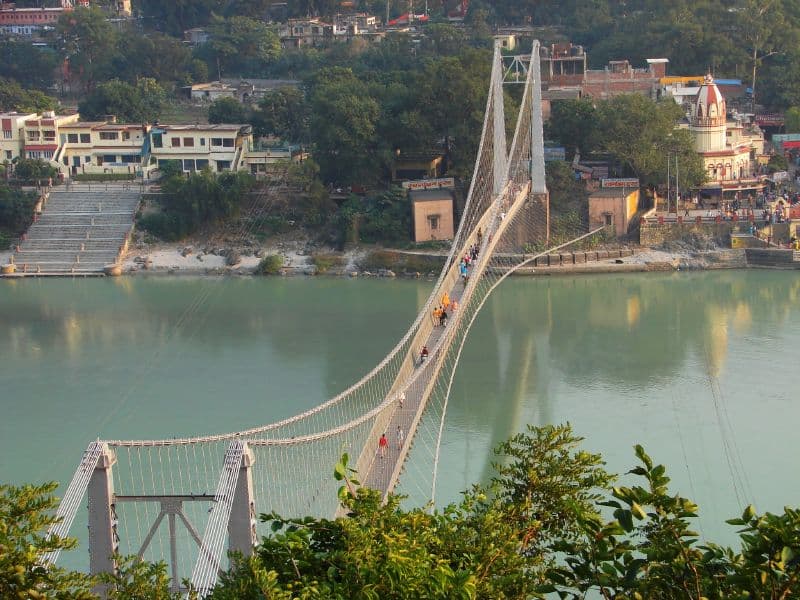
Most of Rishikesh's key spiritual sites are clustered around the two suspension bridges — Laxman Jhula and Ram Jhula — and are easily walkable. For longer journeys between neighborhoods, auto-rickshaws (locally called 'vikrams') are ubiquitous and run on fixed shared fares; negotiate before boarding as meters are absent. Tuk-tuks and shared jeeps connect major hubs like Tapovan, Swarg Ashram, and Muni Ki Reti. Private taxis and jeeps can be hired from the Swarg Ashram taxi stand or Laxman Jhula jeep stand for day trips to Neelkanth Mahadev Temple (~30 km) or Rajaji National Park. Motorbikes and scooters are available for rent and are ideal for independent exploration. The Ganges can also be crossed by ferry from Ram Jhula. Use registered taxis and autos for safety; ride-hailing apps have limited availability here.
Rishikesh rewards visitors almost year-round, but the experience varies dramatically by season. The sweet spots are February–May and October–November. Spring (February to April) brings blooming mustard fields, clear Himalayan skies, temperatures of 20–30°C, and the internationally celebrated International Yoga Festival in March — making it arguably the best all-round window. Autumn (October–November) sees post-monsoon freshness, brimming rivers ideal for rafting, and a festive atmosphere around Diwali and Kartik Purnima. Summer (May–June) gets warm (up to 39°C) but adventure sports including rafting are fully operational; budget travelers will find lower prices and fewer crowds. The monsoon (July–September) brings lush green landscapes and a meditative quiet, but white-water rafting closes for safety, and landslides can disrupt mountain roads — best suited to spiritual retreats and inner work. Winter (December–January) offers serene, crowd-free ghats and excellent conditions for ashram stays, though nights drop to 5–7°C and some outdoor activities run shorter hours.
Arrive and settle in Tapovan or Swarg Ashram. Walk across Laxman Jhula, browse the riverside market, and explore the multi-story Triyambakeshwar Temple on the bridge's east bank. Grab a masala chai and a thali breakfast at one of the Ganges-view cafés.
Head to Ram Jhula and visit the Sivananda Ashram. Stroll Swarg Ashram's ghats, feed the fish in the Ganges, and visit Geeta Bhawan for a feel of authentic ashram life. Wander the market lanes for rudraksha beads and ayurvedic goods.
Attend the Ganga Aarti at Triveni Ghat or Parmarth Niketan — one of India's most moving sunset rituals, with flames, chanting, and hundreds of floating diyas. Dine at a riverside café and retire early; Rishikesh sleeps early.
Head out early for white-water rafting. First-timers should book the popular 16 km Shivpuri to Laxman Jhula stretch (approx. ₹800–₹1,000), which balances thrills with accessibility. Rafting is closed July–September; best from October to June.
After rafting, recover with an Ayurvedic lunch. For the brave, continue to Jumpin Heights for bungee jumping (83 m, India's highest fixed platform), a giant swing, or flying fox. Pre-book online, especially on weekends.
Unwind at a riverside café in Tapovan. Catch live kirtan (devotional music) at a local ashram or spiritual center — free, soulful, and the perfect end to an action-packed day.
Trek or take an auto to the Beatles Ashram (Chaurasi Kutir), the abandoned retreat where the Fab Four stayed in 1968. Now an open-air gallery of murals, it offers peaceful walking paths and Ganges panoramas. Arrive early to beat the crowds.
Take a jeep or taxi to Neelkanth Mahadev Temple (~30 km, 1.5 hrs), one of Uttarakhand's most sacred Shiva shrines set deep in forested hills. The scenic drive through sal and mixed forest is half the experience. Alternatively, hike the Kunjapuri Sunrise Trail for sweeping Himalayan views.
Return to Rishikesh for a final sunset walk along the ghats. Pick up last-minute souvenirs — local honey, herbal teas, yoga gear — from Swarg Ashram market before a farewell dinner at a rooftop café overlooking the Ganges.
Real coworking spaces, laptop-friendly cafés, and libraries mapped near the center of the city — the closest, best-rated desks first.
No coworking-ready spots surfaced for this city yet.
Pick a different category or check back once we’ve indexed more desks for this city.
Ask for cafés, quiet neighborhoods, date-night spots, or a first 48-hour plan.
Mention calls, Wi-Fi needs, or how much of the day has to stay laptop-friendly.
Get faster answers on where to stay, when to move neighborhoods, and what to skip.
Written by signed-in Wanderlust members. We don't check that a reviewer has visited.
No reviews of Rishikesh yet.
Tell the planner your dates, who's coming, your budget and pace, and it drafts a day-by-day itinerary you can edit.
Wanderlust Pro
Insider tips for Rishikesh, unlimited AI-built itineraries, and travel companions you can invite to plan a trip together. From $5.00/month, billed annually.
Insider tips · Wanderlust Pro
Practical tips on the sights and neighbourhoods in this Rishikeshguide — when to go, what most visitors miss. Written with AI about the guide's own places; double-check details before you go. Pro members see every tip.