City guide · Updated June 2026
AfricaMorocco34° · -6.8°
Rabat,Morocco.
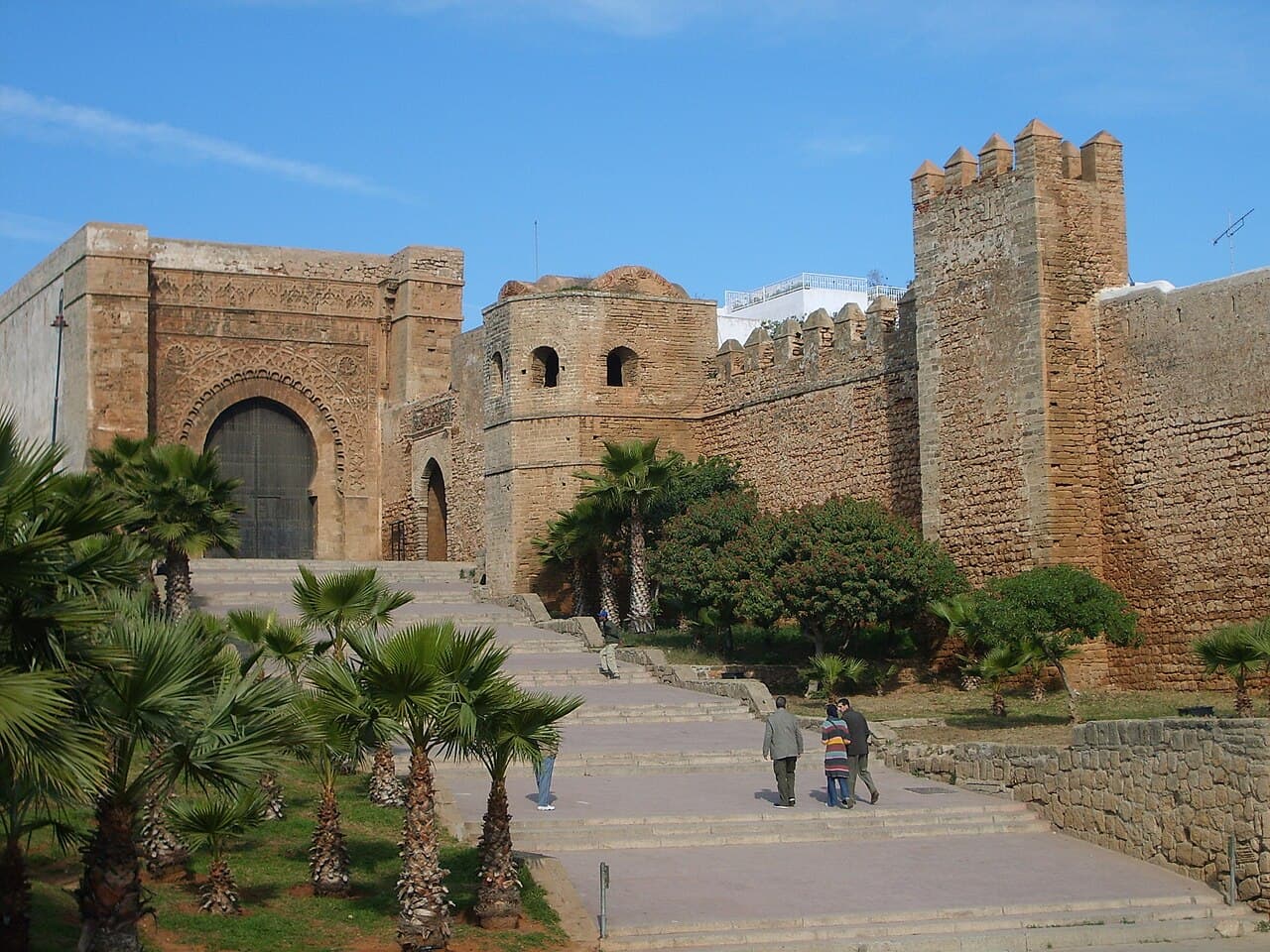
Morocco's UNESCO-listed capital — a serene Atlantic city where imperial grandeur meets modern cosmopolitan living.
Rabat · MA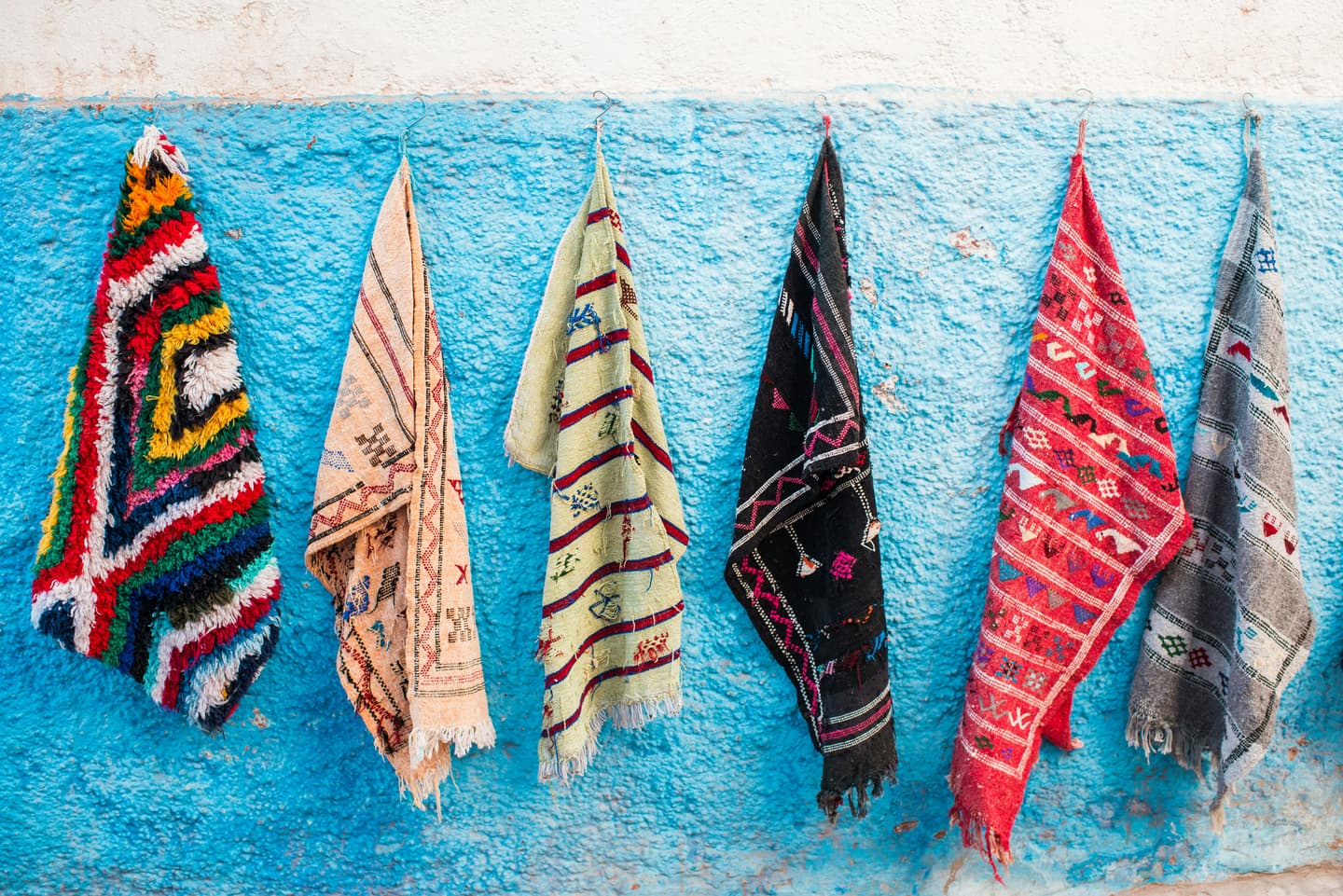
RabatMorocco
★
Rabat-Salé Airport (RBA)NEAREST AIRPORT
Population
595,161.8
Total residents
Global rank
#407
Wanderlust index
Best time
Spring (March–May) and autumn…
Peak window
Time zone
Africa/Casablanca
Local time
Currency
Moroccan Dirham (MAD)
Money in use
Language
Arabic, French, Darija (Moroccan Arabic), Berber (Tamazight)
Spoken locally
01 · Overview
About Rabat
Morocco's UNESCO-listed capital — a serene Atlantic city where imperial grandeur meets modern cosmopolitan living.
Rabat is Morocco's refined, UNESCO World Heritage capital, blending ancient medinas, royal monuments, and colonial-era boulevards with a calm that sharply contrasts the bustle of Marrakech or Casablanca. Perched on the Atlantic coast at the mouth of the Bouregreg River, the city offers cliff-top kasbahs, Roman ruins, and a largely untouristy medina alongside a growing scene of co-working spaces and international restaurants. Its well-planned ville nouvelle, reliable tram network, and role as a 2030 FIFA World Cup host city make it an increasingly compelling base for travellers and long-term residents alike.
02 · Wanderlust scorecard
How Rabat scores
Ratings run 0 to 5 unless marked. They come from our AI-assisted research and are refreshed on a rolling basis.
4.2
/ 5
Cost of living
Affordability, 0–5. Higher means cheaper.
4
/ 5
Leisure
Leisure rating, 0–5.
46
Mbps
Connectivity
Median internet speed.
4
/ 5
Safety
Safety rating, 0–5. Higher is safer.
3.8
/ 5
Overall livability
Overall rating, 0–5.
3.5
/ 5
Air quality
Air-quality rating, 0–5. Higher is cleaner.
7.1
index
Index score
Wanderlust ranking, 0–10: overall, safety, internet, cost, leisure and air quality, weighted.
03 · Weather & when to go
Best time to visit Rabat
Current weather and the forecast, and the months our research rates best for a visit.
Month by month
Best months Either side Other months
Jan
Feb
Mar
Apr
May
Jun
Jul
Aug
Sep
Oct
Nov
Dec
Sweet spot: Spring (March–May) and autumn (September–November) offer the most pleasant temperatures and minimal rain, though summer suits beach lovers thanks to Atlantic breezes keeping the coast cool..
More cities for these months: Where to go in March · Where to go in April · Where to go in May · Where to go in September · Where to go in October · Where to go in November
04 · Things to do
Things to do in Rabat
Top sights from our AI-assisted research, and other places we have photos of.
Top sight
Top sight
Chellah Necropolis
Top sight
Top sight
Rabat Medina
Top sight
Top sight
Andalusian Gardens
Top sight
Top sight
Bouregreg Riverfront
05 · Monthly cost of living
Cost of living in Rabat
Estimated monthly totals in USD from our AI-assisted research, one per profile. Treat them as a starting point for a budget, not a quote.
$1,400
estimated monthly spend · USDProfileExpat
Price references — vs. profile benchmarks
Nomadmonthly spend · USD
$1,100
-21%
Expatmonthly spend · USD
$1,400
baseline
Familymonthly spend · USD
$2,892.9
+107%
Localmonthly spend · USD
$714.2
-49%
Median fiber speeddownload · Mbps
46
Mbps
06 · Neighborhoods
Where to stay in Rabat
Neighborhoods our AI-assisted research lists as popular with visitors.
Medina
Hassan
Agdal
Souissi
07 · Insider tips
Sights and neighbourhoods, with a tip each.
Practical tips on places from this Rabat guide, written with AI. One is free; Pro members see the rest. Double-check details before you go.
Insider tips · Wanderlust Pro
Practical tips on the sights and neighbourhoods in this Rabatguide — when to go, what most visitors miss. Written with AI about the guide's own places; double-check details before you go. Pro members see every tip.
08 · Practical notes
Practical information for Rabat
The essentials from this guide's data, in one place.
01
Getting there
- Nearest airport — Rabat-Salé Airport (RBA)
02
Money
- Currency — Moroccan Dirham (MAD)
- Affordability — 4.2/5 on the Wanderlust index (higher is cheaper)
03
Internet
- Median speed — 46 Mbps
- Internet score — 1.7/5
04
Safety
- Safety score — 4/5 from our AI-assisted research
05
Language
- Primary language — Arabic, French, Darija (Moroccan Arabic), Berber (Tamazight)
06
Timing
- Best window — Spring (March–May) and autumn (September–November) offer the most pleasant temperatures and minimal rain, though summer suits beach lovers thanks to Atlantic breezes keeping the coast cool.
- Time zone — Africa/Casablanca
Questions
Frequently asked, plainly answered.
The quick answers travelers want before they commit to flights, neighborhoods, and how long to stay.
Is Rabat safe for travelers?+
Rabat has a safety rating of 4 out of 5.
What is the best time to visit Rabat?+
The best time to visit Rabat is Spring (March–May) and autumn (September–November) offer the most pleasant temperatures and minimal rain, though summer suits beach lovers thanks to Atlantic breezes keeping the coast cool..
How expensive is Rabat?+
Rabat has an affordability score of 4.2 out of 5, where 5 is most affordable.
What is the internet speed in Rabat?+
Rabat has an average internet speed of 46 Mbps.
What currency does Rabat use?+
The currency used in Rabat is Moroccan Dirham (MAD).
What language is spoken in Rabat?+
The primary language spoken in Rabat is Arabic, French, Darija (Moroccan Arabic), Berber (Tamazight).
Researched city guide
Getting there, getting around and when to go
Written with AI-assisted web research. Where we have sources, they are listed under each part.
What works
- UNESCO World Heritage city with iconic monuments and far fewer tourists than Marrakech or Fez
- Safe, clean, and well-planned — consistently rated one of Morocco's most liveable cities
- Cost of living 30–50% below Western Europe, with nomad-friendly co-working spaces in Agdal and Hassan districts
- Atlantic beach minutes from the city centre; surfable waves and coastal parks on the doorstep
- Excellent rail and tram connections; Al Boraq high-speed train links Tangier (1h20) and Casablanca (~45 min)
- Growing restaurant and café scene blending Moroccan, French-colonial, and international cuisine
What to weigh
- Limited direct international flight routes compared to Casablanca (CMN) — most visitors connect through CMN
- No dedicated digital nomad visa; stays beyond 90 days require a Carte de Séjour residence process
- Quieter nightlife and entertainment scene than Casablanca or Marrakech
- Medina is smaller and less spectacular than Fez or Marrakech's — some travellers find sightseeing exhausted in 1–2 days
- PM2.5 levels are above WHO annual guidelines; air quality is moderate rather than excellent
Getting in
How to arrive
Rabat-Salé Airport (RBA) is the city's own international gateway, just 10 km from the centre. The Alsa City Bus AE line runs from the Arrivals Terminal to Gare Rabat Ville (and Rabat Agdal station) in 30–40 minutes for MAD 25 (~€2.40), departing every 60–90 minutes. A petit taxi from the airport to the city centre is fixed at MAD 150 (~€14) by day and MAD 200 (~€19) at night, taking about 20 minutes. Travellers flying into Casablanca Mohammed V (CMN) can reach Rabat by ONCF train via a change at Casa Port or Casa Voyageurs — the full journey takes around 100 minutes and costs approximately MAD 80 (~€7.40). By taxi from CMN the trip takes 80 minutes at a flat rate of roughly MAD 650 (~€60). Rabat is also served by the Al Boraq high-speed rail network: the Rabat–Tangier leg takes 1h20 and the Rabat–Casablanca express is around 45 minutes. CTM and Supratours long-distance coaches connect Rabat to Fez, Marrakech, and other cities, with the CTM station conveniently adjacent to the main train station.
Getting around
Moving through the city
Rabat is one of only two Moroccan cities with a full tram network: two lines operated by Rabat-Salé Tramway link Salé to central Rabat and the Agdal district. The city is also highly walkable — nearly all historic sights are within comfortable strolling distance of one another. Petit taxis (identifiable by their blue colour) are metered and cheap, with typical short hops starting at MAD 10–20 (~$1–2); agree on the meter before departing. Careem ride-hailing operates in Rabat and accepts card payment, with fares slightly above petit taxis. An extensive ALSA public bus network covers outer neighbourhoods and suburbs. Crossing the Bouregreg River to visit neighbouring Salé is possible by traditional rowboat ferry, tram, or on foot via the Hassan II Bridge.
When to go
Timing your trip
Rabat enjoys a temperate Atlantic climate that makes it visitable year-round, but the sweet spots are spring (March–May) and autumn (September–November), when international visitors find mild temperatures and minimal crowds. Winters (December–February) bring Rabat's coldest and wettest weather — average lows around 8°C (46°F) and daytime highs of 17°C (63°F) — though the city remains perfectly functional for sightseeing. Summer is warm rather than scorching thanks to Atlantic sea breezes, and the beaches are ideal for swimming from June through August. Beach lovers and water-sports fans may actually prefer the April–September window, when most days are sunny and sea temperatures are welcoming. Avoid planning purely cultural itineraries around Ramadan, when many restaurants and cafés close during daylight hours, though the atmosphere of the medina at iftar time is uniquely special.
Plan your trip
3 days in Rabat: a sample itinerary
A ready-made starting point. Make it your own — clone it into an editable journey and reshape every stop.
Day 01
Day 1 – Imperial Monuments & the Historic Core
Morning
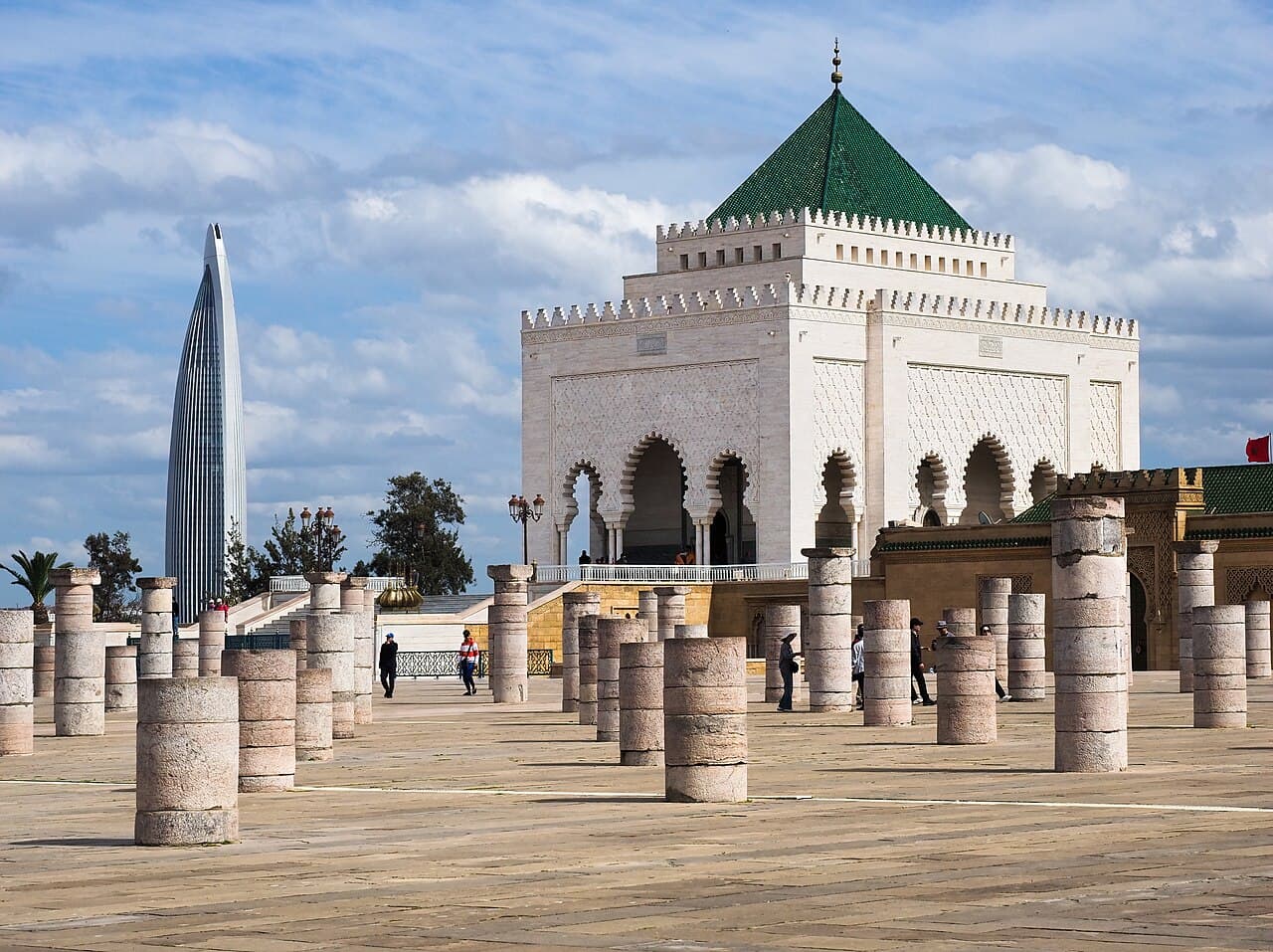
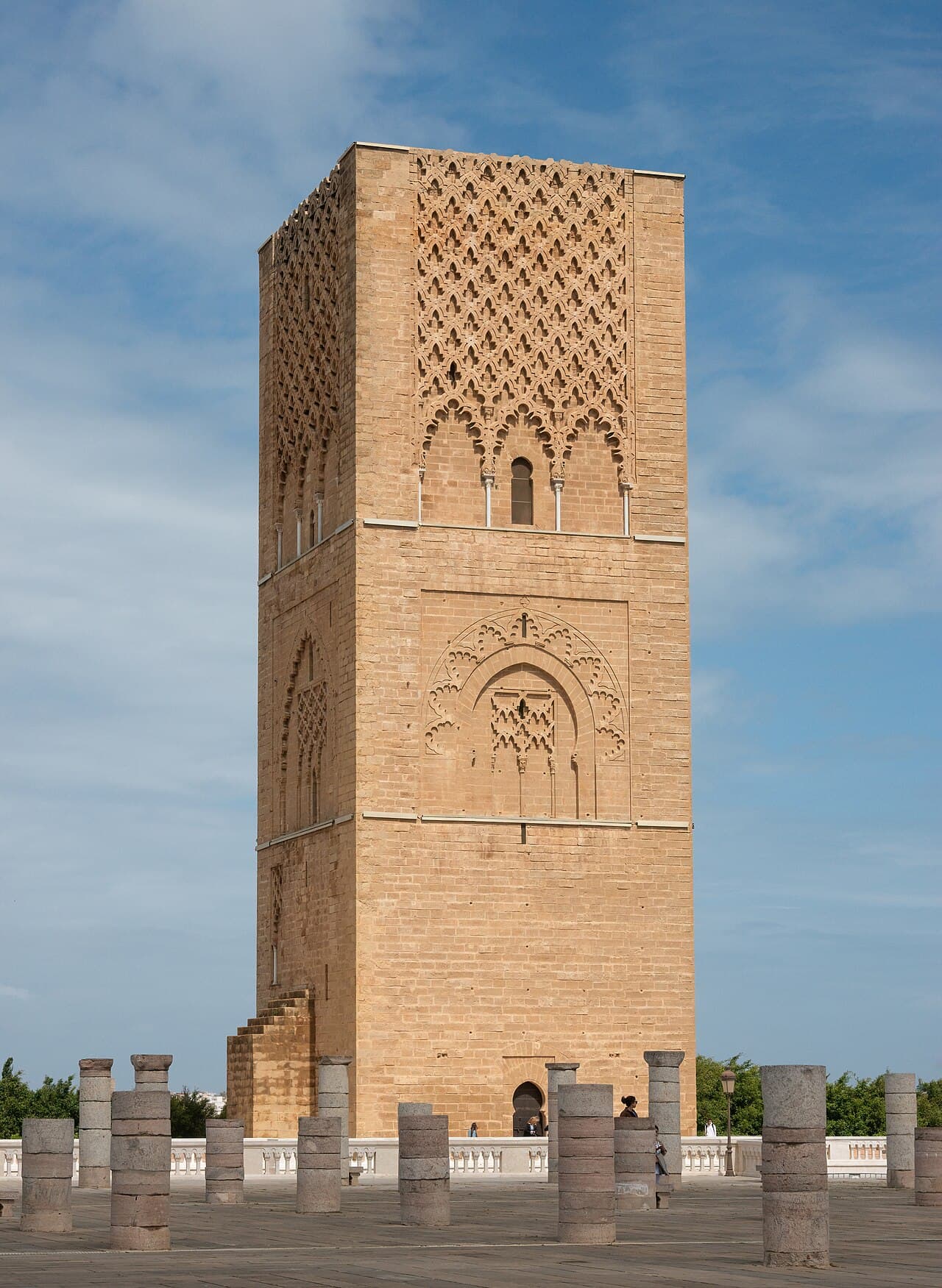
Start at the Hassan Tower and Mausoleum of Mohammed V — arrive early for stunning light on the red sandstone minaret and white marble tomb. Entry to the mausoleum complex is free and open to all visitors.
Afternoon
Walk uphill into the Kasbah of the Udayas: explore the blue-and-white alleyways, catch Atlantic views from the ramparts, and stroll through the Andalusian Gardens. Lunch at Café des Oudayas overlooking the Bouregreg estuary.
Evening
Head into the Medina for dinner — the area around Rue des Consuls offers authentic Moroccan restaurants with tajine and harira at local prices. End the night with mint tea at a terrace café.
Day 02
Day 2 – Ruins, Gardens & the Ville Nouvelle
Morning
Spend the morning at the Chellah Necropolis — a serene walled site combining Roman ruins and medieval Islamic architecture, filled with storks nesting in the minarets. Allow 1.5–2 hours.
Afternoon
Walk or tram to the Ville Nouvelle: explore the palm-lined Boulevard Mohammed V, browse the Marché Central for street food and fresh produce, and visit the Mohammed VI Museum of Modern and Contemporary Art.
Evening
Dinner in the Agdal district, Rabat's upscale neighbourhood with tree-lined streets, wine-serving restaurants, and lively café culture popular with embassy staff and expats.
Day 03
Day 3 – Coast, Salé & Day-Trip Options
Morning
Take the tram or rowboat ferry across the Bouregreg to neighbouring Salé — explore the medina, Grand Mosque, and the atmospheric Marinid Medrassa before the crowds arrive.
Afternoon
Return to Rabat for an afternoon on Plage de Rabat (the city's central Atlantic beach), or take the 45-minute Al Boraq train to Casablanca to visit the Hassan II Mosque — one of the world's largest — before heading back in the early evening.
Evening
Farewell dinner at one of Rabat's seafood restaurants near the coast, sampling the city's signature fresh catch, grilled fish, and seafood pastilla.
Work-ready layer
Coworking spots and laptop-friendly anchors.
Real coworking spaces, laptop-friendly cafés, and libraries mapped near the center of the city — the closest, best-rated desks first.
Spots surfaced0
Categories—
Mapped0
No coworking-ready spots surfaced for this city yet.
Map pending
No mapped workspace points yet.
Pick a different category or check back once we’ve indexed more desks for this city.
Concierge
Ask the Rabat concierge.
Share your travel style, must-see spots, or work schedule and the concierge will help turn this guide into something personal.
Personal trip brief
Tell it what kind of trip you're trying to have, and it will tighten the plan.
01
Travel style
Ask for cafés, quiet neighborhoods, date-night spots, or a first 48-hour plan.
02
Work constraints
Mention calls, Wi-Fi needs, or how much of the day has to stay laptop-friendly.
03
Real tradeoffs
Get faster answers on where to stay, when to move neighborhoods, and what to skip.
Traveler reviews
Reviews of Rabat
Written by signed-in Wanderlust members. We don't check that a reviewer has visited.
No reviews of Rabat yet.
Plan a trip to Rabat.
Tell the planner your dates, who's coming, your budget and pace, and it drafts a day-by-day itinerary you can edit.
Wanderlust Pro
Insider tips for Rabat, unlimited AI-built itineraries, and travel companions you can invite to plan a trip together. From $5.00/month, billed annually.