Top sight
Top sight
Morocco's Red City — a sensory whirlwind of ancient souks, rose-gold palaces, and Atlas Mountain air.
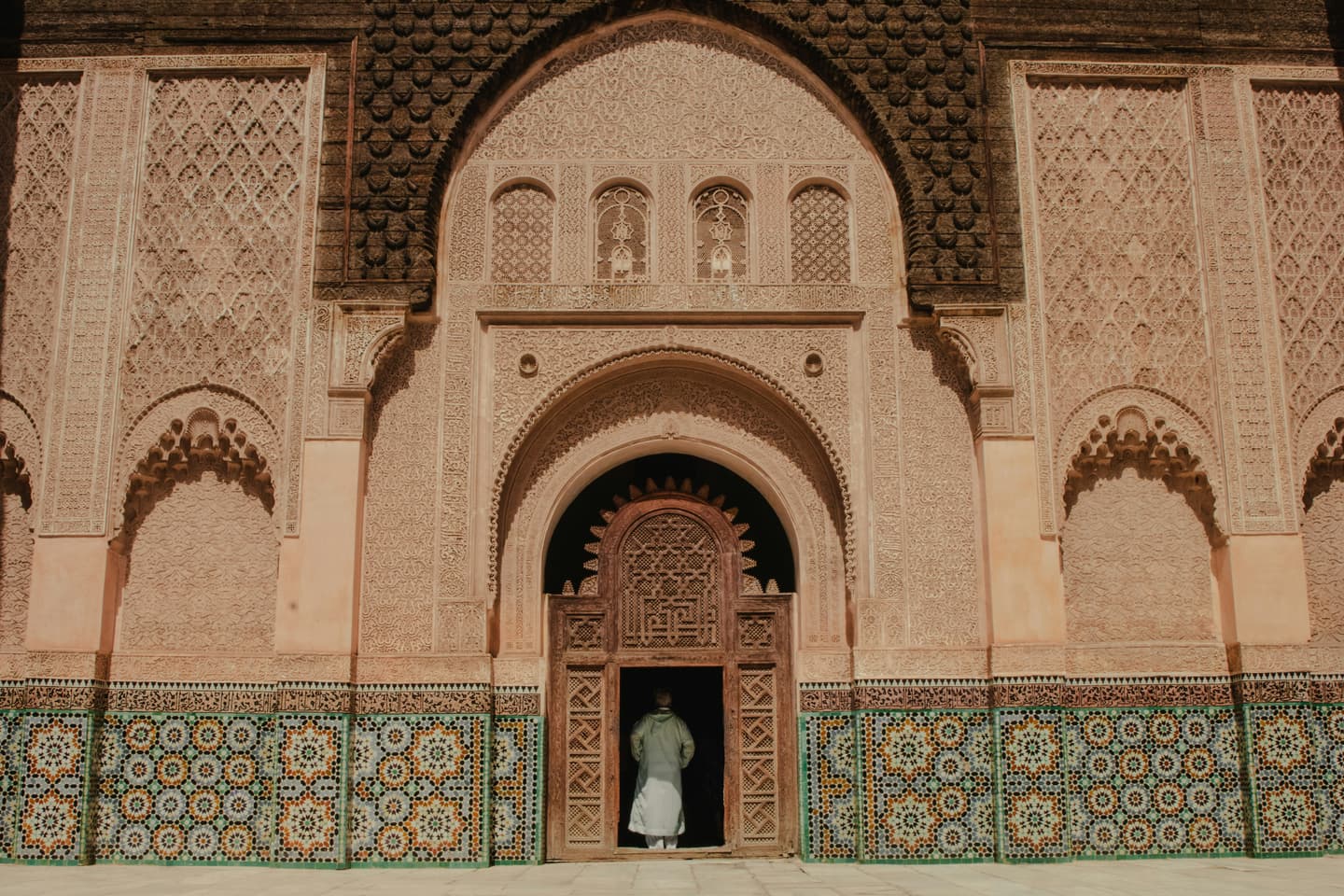
Marrakesh is Morocco's most iconic city, where a UNESCO-listed medieval Medina pulses with snake charmers, spice merchants, and centuries-old architecture. The city fuses a labyrinthine old town with the leafy, French-influenced boulevards of Gueliz, offering travelers everything from hammam rituals and rooftop tagine dinners to day trips into the High Atlas. Colorful, challenging, and utterly unforgettable, it rewards those who lean into the controlled chaos.
More cities for these months: Where to go in March · Where to go in April · Where to go in May · Where to go in September · Where to go in October · Where to go in November
Insider tips · Wanderlust Pro
Practical tips on the sights and neighbourhoods in this Marrakeshguide — when to go, what most visitors miss. Written with AI about the guide's own places; double-check details before you go. Pro members see every tip.
The quick answers travelers want before they commit to flights, neighborhoods, and how long to stay.
Marrakesh Menara Airport (RAK) sits just 6–8 km from the city centre — roughly 15–30 minutes by road. As of 2025, both United and Delta offer nonstop flights from the US directly to RAK, while a wide range of European carriers including easyJet, Ryanair, and British Airways serve the airport. The most affordable ground transfer is the ALSA Line 19 airport shuttle: it departs from Terminal 2 arrivals every 20 minutes between 6 AM and 11:30 PM, costs 30 MAD one-way (≈ €3), and takes 25–40 minutes to key stops including Jemaa el-Fnaa, Gueliz, and the train station. The local Line 11 city bus (4–6 MAD) stops a 10-minute walk from the airport exit and is slower (45+ min) with limited luggage space. Official petit taxis (beige with brown stripe) are available 24/7 outside the terminal; the fare to the city centre is nominally 70–100 MAD, though agreeing a price before you set off is advisable since meters are not always used from the airport. For peace of mind, pre-booked private transfers start from around 100 MAD. Note: Uber and Careem do not currently operate from RAK — plan on a taxi or pre-booked transfer.
The Medina's narrow lanes are best explored on foot, but for longer cross-city journeys the petit taxi (small red cab) is the standard option. Typical in-city fares run 20–40 MAD (€2–4); always agree the price before you get in or insist the meter is used, as drivers don't always run it automatically. Grand taxis (shared, for up to 6 passengers) cover longer routes and destinations outside the city. Uber does not operate anywhere in Morocco. Careem works in Marrakesh and allows in-app booking and payment, removing the need to negotiate; Bolt is also expanding in Moroccan cities and is worth checking on arrival. The ALSA city bus network is functional but slow and not well-suited to luggage-heavy travel. For the Medina's tighter pedestrian zones, note that riads are often located down car-free alleys — your taxi will drop you at the nearest gate and your host can send a porter.
Spring (March to May) and autumn (September to November) are universally considered the best windows to visit Marrakesh. Daytime temperatures sit between 20–30 °C, skies are mostly clear, and the city's gardens — from the celebrated Jardin Majorelle to the rose-filled courtyards of the Medina's riads — are at their most photogenic. Easter week draws large crowds, so booking timed-entry tickets for Jardin Majorelle well in advance is mandatory during that period. Summer (June–August) brings punishing heat, with highs regularly exceeding 40 °C and occasional spikes toward 45 °C; outdoor sightseeing becomes uncomfortable before 9 AM and after 6 PM, though the snow-capped High Atlas — visible from Medina rooftops — tempts heat-weary visitors for day trips with temperatures around 10 °C cooler. Winter (December–February) is mild by daytime (averages 19–22 °C) but cold after dark, and sees a spike in European visitors seeking winter sun; accommodation rates rise around Christmas and New Year. Ramadan, whose dates shift annually, falls in the February–April window in coming years and meaningfully changes the city's rhythm — many restaurants close during daylight hours and taxi availability dips around the evening call to prayer.
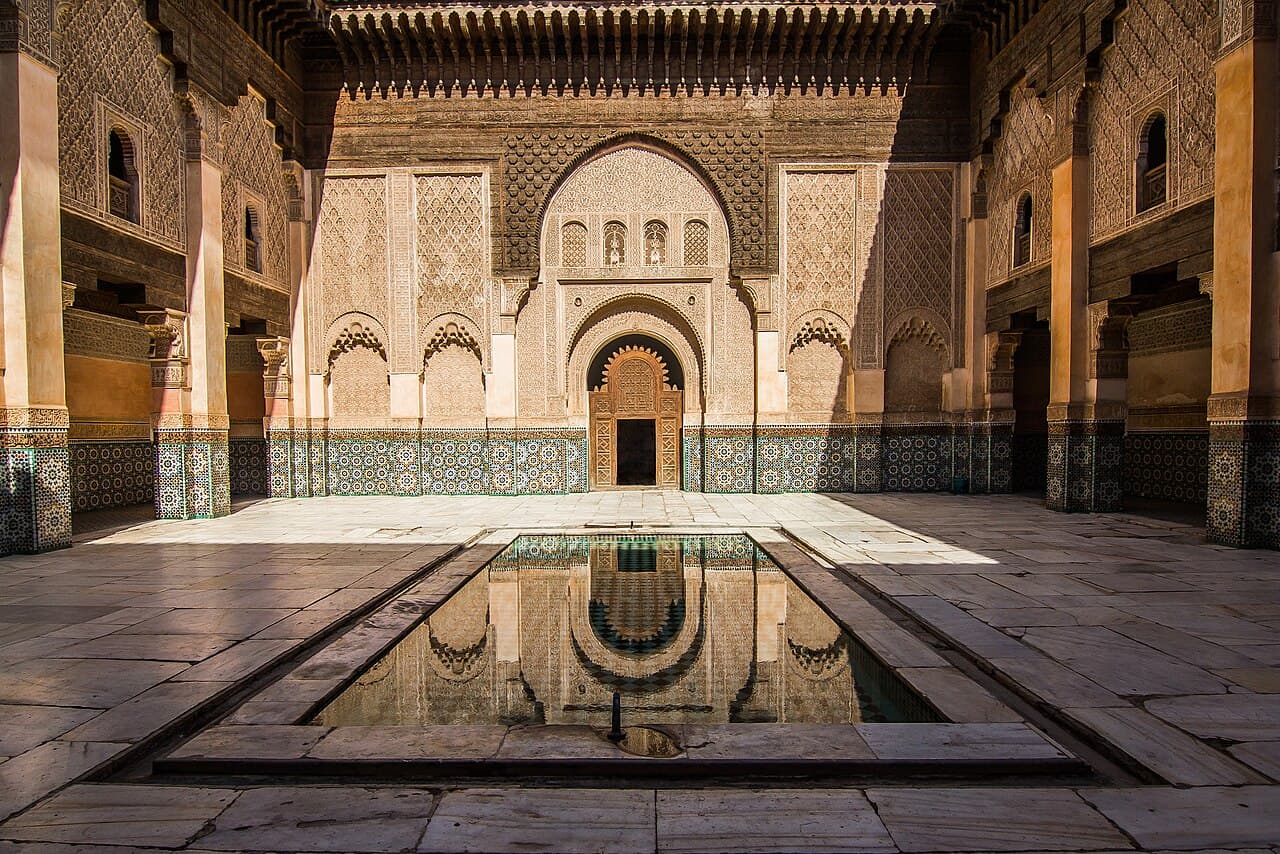
Arrive and check into your riad in the Medina. Start early at the Ben Youssef Madrasa, one of North Africa's finest examples of Moorish architecture, before the crowds arrive. Wind through the Souks of the Medina — from the dyers' quarter (Souk Sabbaghin) to the spice market.
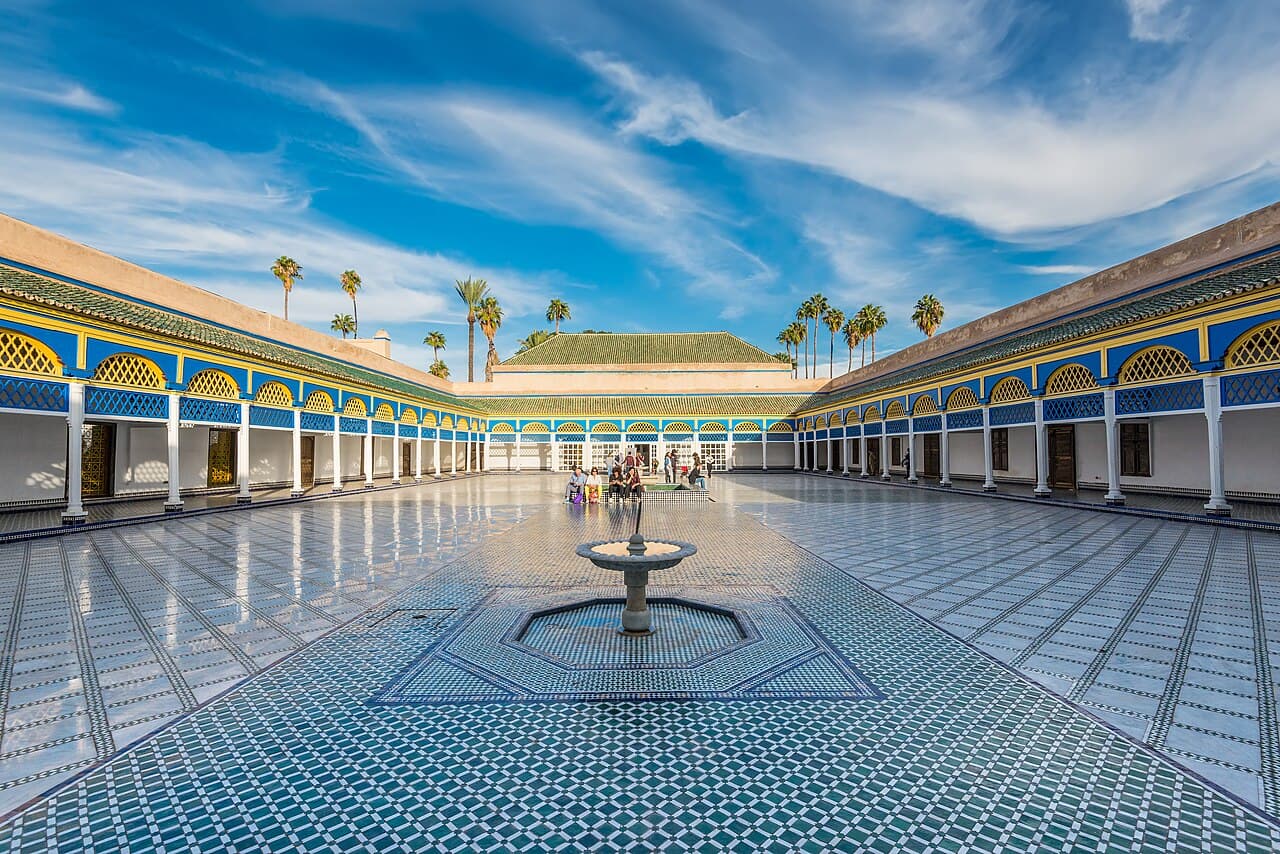
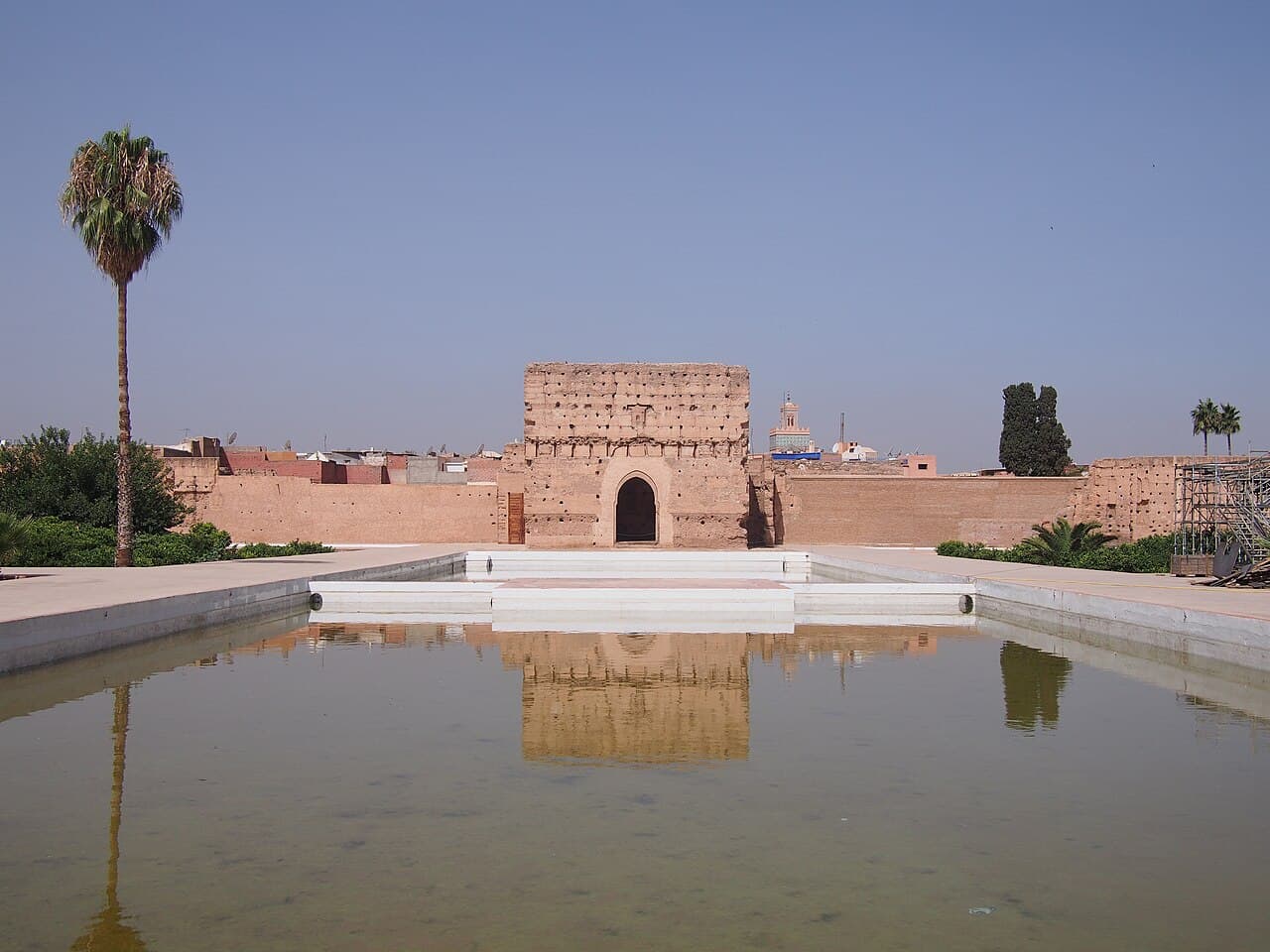
Visit Bahia Palace to admire its ornate carved-stucco courtyards, then head to the nearby ruins of El Badi Palace for sweeping rooftop views over the city and the resident stork colonies.
Emerge onto Jemaa el-Fnaa as the square transforms at dusk — storytellers, gnawa musicians, and rows of steaming food stalls. Climb a rooftop café terrace for the best view, then dine at the square's communal food stalls on harira soup and grilled merguez.
Book a timed-entry ticket in advance for Jardin Majorelle — the cobalt-blue Cubist garden built by Jacques Majorelle and later rescued by Yves Saint Laurent. Combine it with the adjacent YSL Museum for the full cultural experience.
Stroll into Gueliz (the French-built new town) for lunch at a contemporary Moroccan restaurant, then browse the art galleries and concept stores along Avenue Mohammed V. Pick up handmade pottery or leather goods at the fixed-price Ensemble Artisanal to avoid souk bargaining fatigue.
Treat yourself to a traditional hammam — either a classic neighbourhood bathhouse or a riad spa experience. Finish the evening with a rooftop dinner overlooking the lit-up Koutoubia Mosque minaret.
Join a guided day trip into the High Atlas Mountains, just 45–60 minutes from the city. Hike through Berber villages in the Ourika Valley or explore the dramatic Imlil plateau at the foot of Mount Toubkal (4,167 m), North Africa's highest peak.
Share a traditional tagine lunch with a local Berber family in a mountain village. On the return, stop at the pottery and weaving cooperatives near the foothills to watch artisans at work.
Return to Marrakesh for a final sunset from a Medina rooftop. Wind down with Moroccan mint tea and pastilla (sweet-savoury pastry) at a traditional café before an evening stroll through the quieter Kasbah quarter.
Real coworking spaces, laptop-friendly cafés, and libraries mapped near the center of the city — the closest, best-rated desks first.
No coworking-ready spots surfaced for this city yet.
Pick a different category or check back once we’ve indexed more desks for this city.
Ask for cafés, quiet neighborhoods, date-night spots, or a first 48-hour plan.
Mention calls, Wi-Fi needs, or how much of the day has to stay laptop-friendly.
Get faster answers on where to stay, when to move neighborhoods, and what to skip.
Written by signed-in Wanderlust members. We don't check that a reviewer has visited.
No reviews of Marrakesh yet.
Tell the planner your dates, who's coming, your budget and pace, and it drafts a day-by-day itinerary you can edit.
Wanderlust Pro
Insider tips for Marrakesh, unlimited AI-built itineraries, and travel companions you can invite to plan a trip together. From $5.00/month, billed annually.
Insider tips · Wanderlust Pro
Practical tips on the sights and neighbourhoods in this Marrakeshguide — when to go, what most visitors miss. Written with AI about the guide's own places; double-check details before you go. Pro members see every tip.