Top sight
Top sight
Morocco's sun-bleached "Wind City" — where Gnawa rhythms, Atlantic surf, and a UNESCO medina meet.
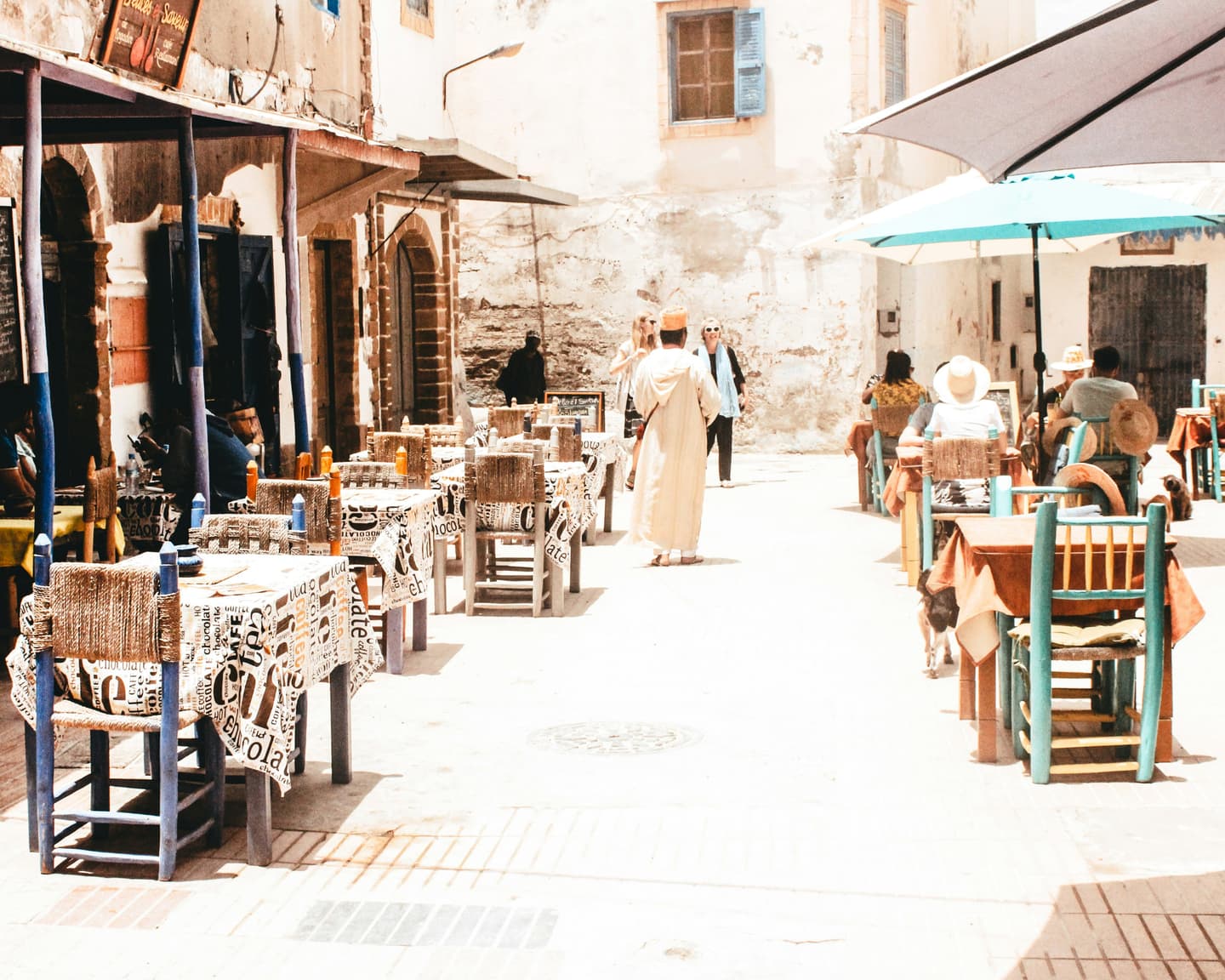
Essaouira is a compact, walkable port city on Morocco's Atlantic coast — nicknamed "the Windy City of Africa" — whose UNESCO World Heritage medina blends Arabo-Muslim and European architecture behind blue-and-white ramparts. The Atlantic breeze keeps temperatures mild year-round (rarely above 28 °C), making it one of Morocco's best kitesurfing and windsurfing destinations. A thriving artistic community, fresh-from-the-port seafood grills, and a far more relaxed pace than Marrakech make it equally popular with families, nomads, and long-stay creatives.
More cities for these months: Where to go in April · Where to go in May · Where to go in June · Where to go in September · Where to go in October · Where to go in November
Insider tips · Wanderlust Pro
Practical tips on the sights and neighbourhoods in this Essaouiraguide — when to go, what most visitors miss. Written with AI about the guide's own places; double-check details before you go. Pro members see every tip.
The quick answers travelers want before they commit to flights, neighborhoods, and how long to stay.
**By Air – ESU (Essaouira-Mogador Airport):** The closest gateway sits just 15–17 km from the Medina; a taxi from the official rank at arrivals costs a fixed 150 MAD (~€15), and the ride takes about 20 minutes. Direct seasonal flights connect from Paris, Lyon, Marseille, and other European cities; domestic connections from Casablanca are also available. Note that flight routes to ESU are limited and often pricier than flying into Marrakech.
**Via Marrakech (RAK – Menara Airport):** Most travellers fly into Marrakech (~180 km away) and continue overland. Supratours runs 7 buses daily (07:45, 09:00, 10:45, 12:00, 14:45, 16:45, 19:00); the 3-hour journey costs 140 MAD per person. CTM operates one departure at 08:30 at a similar price. Grand taxis from Marrakech run 600–900 MAD for the whole car (up to 6 passengers). Private transfers typically cost 600–900 MAD (€60–90).
**Via Casablanca:** CTM runs 9 daily buses (190 MAD, ~6 hrs); Supratours offers 5 departures from 235 MAD. There is no train to Essaouira — the nearest rail station is in Marrakech.
Essaouira is best explored on foot. The entire traffic-free Medina is compact and walkable, and the beach promenade extends easily from its southern gate. For trips outside the old town, petit taxis charge fixed rates of around 5–15 MAD within the city — always ask the driver to use the meter. Taxis only accept cash, so keep dirhams handy. Supratours and CTM intercity buses depart from stations close to Bab Sba (the Supratours stop is a 5-minute walk from the Medina entrance) and connect to Marrakech, Agadir, and Casablanca. The Lima Bus local network operates 9 routes with 42 stops covering surrounding areas including Sidi Kaouki. Car hire is useful for day trips into the countryside but unnecessary within the city itself — and vehicles cannot enter the Medina.
Essaouira's Atlantic climate is remarkably stable — temperatures range from around 19 °C in January to 28 °C in July and August, with the cold Canary Current keeping the city far cooler than inland Morocco year-round. That said, timing does matter.
**September & October** are widely considered the best months: Atlantic winds drop significantly, temperatures hover around 25–26 °C, and summer crowds have thinned. October in particular is arguably the finest single month to visit.
**April–June** is the prime spring window. Mild temperatures, building sunshine, and strong winds make this the top season for kitesurfers and windsurfers. June also hosts the world-renowned **Gnaoua World Music Festival**, which transforms the medina and ramparts into open-air concert stages.
**July & August** are peak tourist season, especially busy with Moroccan and European holidaymakers. The Atlantic winds are at their most ferocious — a blessing for water-sports enthusiasts, but intense for beach-goers. Book accommodation well in advance.
**November–February** is quieter and cooler (lows can reach 11 °C), with the highest rainfall of the year peaking in November and December. It remains far milder than inland Morocco and appeals to travellers seeking cultural immersion, uncrowded medina strolls, and hammam afternoons.
Explore the UNESCO-listed Medina on foot — wander the blue-and-white alleys of the souk, browse marquetry woodwork shops, and visit the Galerie d'Art Frederic Damgaard for a taste of Essaouira's contemporary art scene.
Walk the Skala de la Ville (sea bastion) for panoramic Atlantic views, then head to the working fishing port to watch the colourful blue boats unload the day's catch. Pick your fish at the harbour market and have it grilled on the spot at one of the port-side stalls.
Stroll the medina as the golden hour light catches the rampart walls, then settle into a rooftop café such as Café L'Esprit for mint tea and ocean views. Seek out a live Gnawa music session in the medina's intimate venues.
Head to Plage d'Essaouira — the 2 km crescent beach just south of the medina — for a sunrise walk along the promenade. Book a beginner kitesurfing or windsurfing lesson with one of the established schools (e.g. Océan Vagabond); strong consistent winds make Essaouira one of Morocco's top spots.
Rent a quad or join a guided camel ride through the dramatic dunes near Diabat beach, passing argan-tree groves and dipping briefly into the Atlantic shallows. Visit the ruins at Diabat and the legendary (if mythologised) Jimi Hendrix Café nearby.
Return to the medina for a traditional hammam experience — a restorative ritual after a day of wind and sun. Dine at one of the many riad restaurants serving freshly grilled seafood tagines.
Explore the Mellah (former Jewish quarter) — discover the layered history of Essaouira's once-vibrant Sephardic community through its distinctive architecture and the Sidi Mohamed Ben Abdallah Museum. Browse the spice souk for argan oil and ras el hanout (buy from licensed cooperatives to avoid counterfeits).
Take a day trip to Sidi Kaouki beach (~30 min south), a quieter, low-key surf village beloved by those seeking an escape from the already-relaxed Essaouira. Alternatively, drive the scenic argan-tree coast toward Cap Sim.
Return in time for a sunset horseback ride along the beach — a quintessential Essaouira experience available for all riding levels. Watch the sun drop into the Atlantic before a final dinner at a medina rooftop restaurant.
Real coworking spaces, laptop-friendly cafés, and libraries mapped near the center of the city — the closest, best-rated desks first.
No coworking-ready spots surfaced for this city yet.
Pick a different category or check back once we’ve indexed more desks for this city.
Ask for cafés, quiet neighborhoods, date-night spots, or a first 48-hour plan.
Mention calls, Wi-Fi needs, or how much of the day has to stay laptop-friendly.
Get faster answers on where to stay, when to move neighborhoods, and what to skip.
Written by signed-in Wanderlust members. We don't check that a reviewer has visited.
No reviews of Essaouira yet.
Tell the planner your dates, who's coming, your budget and pace, and it drafts a day-by-day itinerary you can edit.
Wanderlust Pro
Insider tips for Essaouira, unlimited AI-built itineraries, and travel companions you can invite to plan a trip together. From $5.00/month, billed annually.
Insider tips · Wanderlust Pro
Practical tips on the sights and neighbourhoods in this Essaouiraguide — when to go, what most visitors miss. Written with AI about the guide's own places; double-check details before you go. Pro members see every tip.