City guide · Updated June 2026
AsiaIndonesia-3° · 104.6°
Palembang,Sumatra.
South Sumatra's ancient river city — pempek capital, Srivijaya heritage, and Indonesia's first LRT.
Palembang · ID
PalembangIndonesia
★
Sultan Mahmud Badaruddin II International Airport (PLM)NEAREST AIRPORT
Population
1,498,942.5
Total residents
Global rank
#256
Wanderlust index
Best time
Dry season, June–September…
Peak window
Time zone
Asia/Jakarta
Local time
Currency
Indonesian Rupiah (IDR)
Money in use
Language
Indonesian (Bahasa Indonesia); Palembang Malay widely spoken locally
Spoken locally
01 · Overview
About Palembang
South Sumatra's ancient river city — pempek capital, Srivijaya heritage, and Indonesia's first LRT.
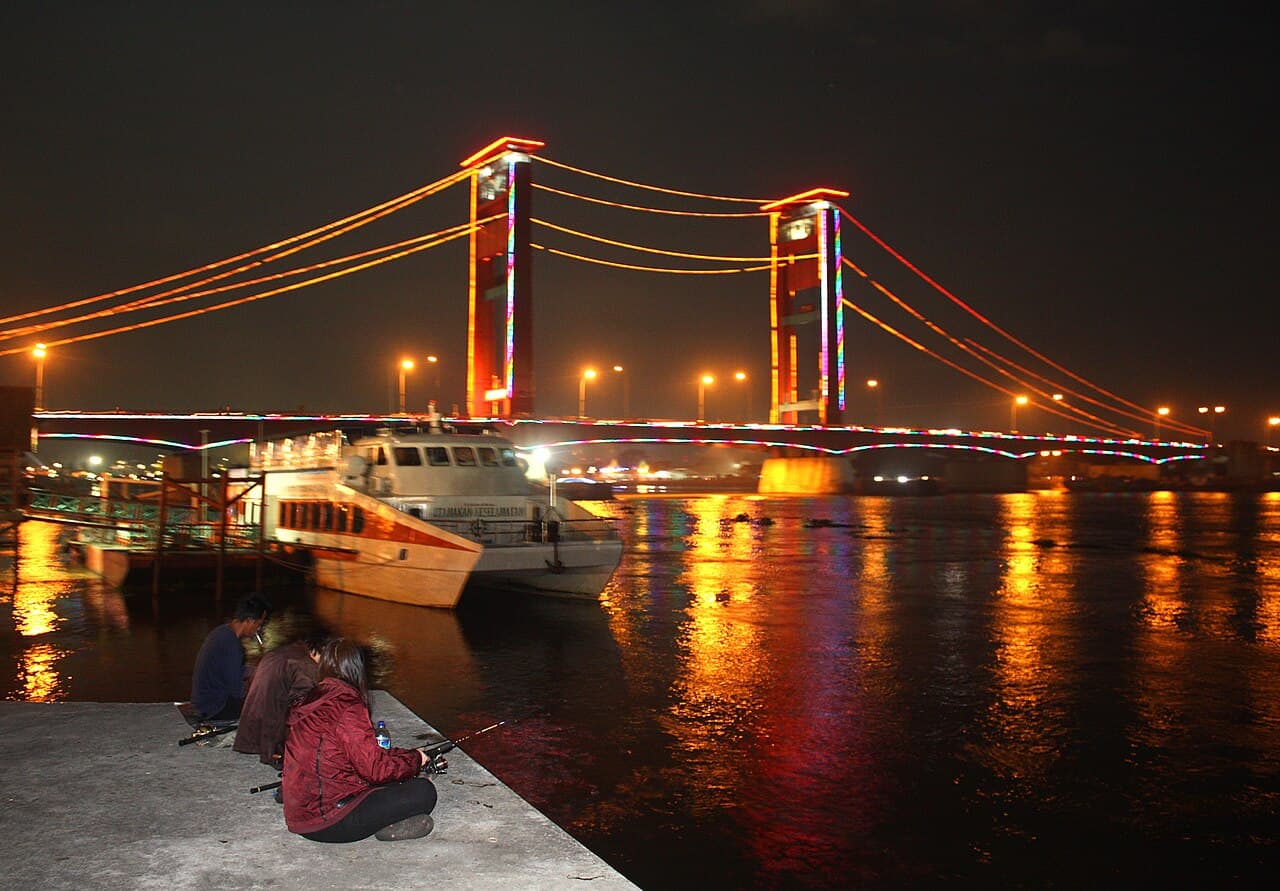
Palembang, the capital of South Sumatra, is one of Indonesia's oldest cities, sitting astride the broad Musi River and tracing its roots to the mighty Srivijaya Empire of the 7th century. The iconic Ampera Bridge stitches together the city's two halves — Seberang Ilir and Seberang Ulu — while Kemaro Island, floating pagodas, and a vibrant street-food scene reward curious visitors. Famous across Indonesia as the birthplace of pempek fish cakes, Palembang blends deep cultural heritage with modern infrastructure including Sumatra's first light-rail system. It remains an off-the-beaten-path urban gem for history buffs, foodies, and travellers seeking authentic Sumatran city life.
02 · Wanderlust scorecard
How Palembang scores
Ratings run 0 to 5 unless marked. They come from our AI-assisted research and are refreshed on a rolling basis.
5
/ 5
Cost of living
Affordability, 0–5. Higher means cheaper.
3.5
/ 5
Leisure
Leisure rating, 0–5.
17
Mbps
Connectivity
Median internet speed.
3.5
/ 5
Safety
Safety rating, 0–5. Higher is safer.
3.1
/ 5
Overall livability
Overall rating, 0–5.
3
/ 5
Air quality
Air-quality rating, 0–5. Higher is cleaner.
7.4
index
Index score
Wanderlust ranking, 0–10: overall, safety, internet, cost, leisure and air quality, weighted.
03 · Weather & when to go
Best time to visit Palembang
Current weather and the forecast, and the months our research rates best for a visit.
Month by month
Best months Either side Other months
Jan
Feb
Mar
Apr
May
Jun
Jul
Aug
Sep
Oct
Nov
Dec
Sweet spot: Dry season, June–September, offers the least rainfall and most sunshine for sightseeing..
More cities for these months: Where to go in June · Where to go in July · Where to go in August · Where to go in September
04 · Things to do
Things to do in Palembang
Top sights from our AI-assisted research, and other places we have photos of.
Top sight
Top sight
Kemaro Island & Chinese Pagoda
Top sight
Top sight
Benteng Kuto Besak (Kuto Besak Fortress)
Top sight
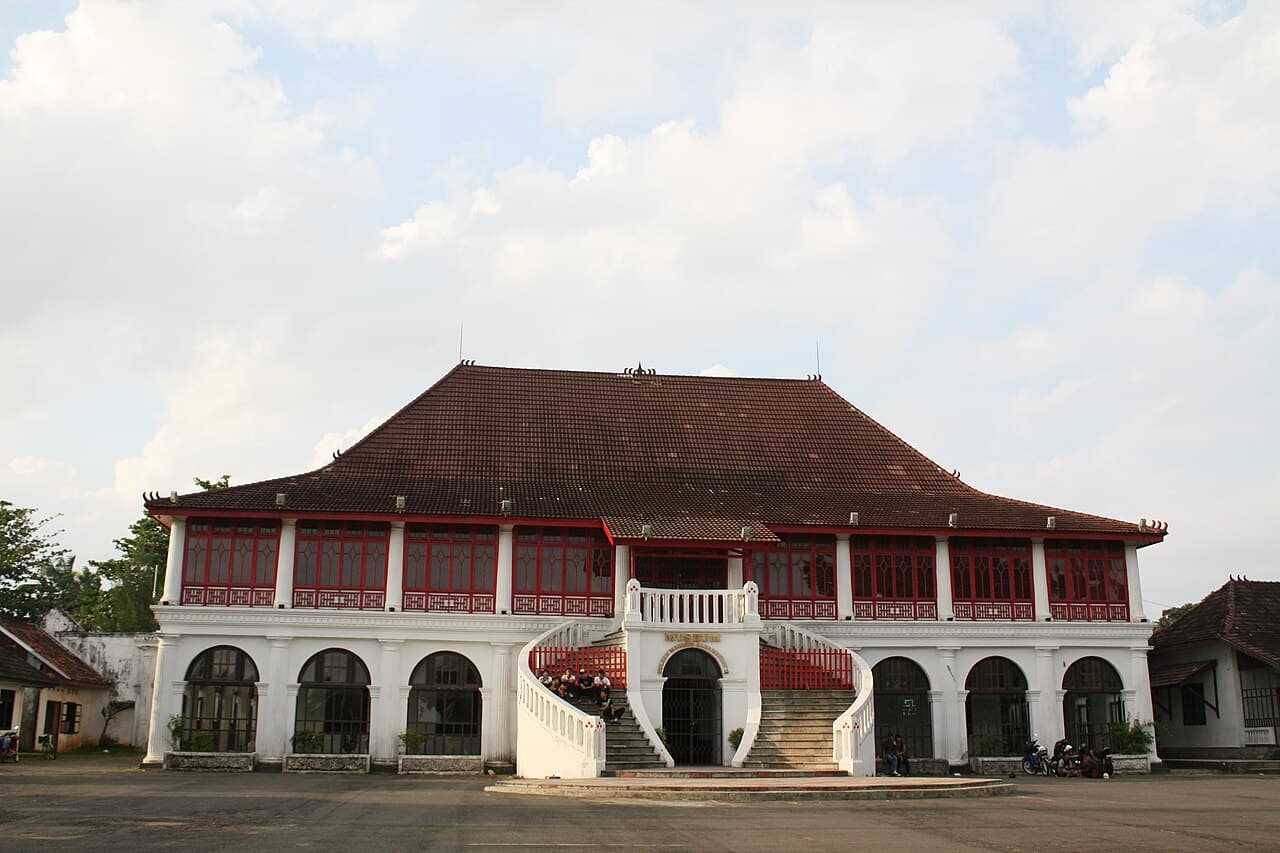
Sultan Mahmud Badaruddin II Museum
Photo: fitri agung from Pekanbaru, Riau, Indonesia, Indonesia · CC BY 2.0
Top sight
Top sight
Bukit Siguntang Archaeological Park
Top sight
Top sight
Masjid Agung Palembang (Great Mosque)
Top sight
Top sight
Monpera (Monument of People's Struggle)
Top sight
Top sight
Al-Quran Al-Akbar (Giant Wooden Quran)
05 · Monthly cost of living
Cost of living in Palembang
Estimated monthly totals in USD from our AI-assisted research, one per profile. Treat them as a starting point for a budget, not a quote.
$979
estimated monthly spend · USDProfileExpat
Price references — vs. profile benchmarks
Nomadmonthly spend · USD
$1,160
+18%
Expatmonthly spend · USD
$979
baseline
Familymonthly spend · USD
$2,313.3
+136%
Localmonthly spend · USD
$548.4
-44%
Median fiber speeddownload · Mbps
17
Mbps
06 · Neighborhoods
Where to stay in Palembang
Neighborhoods our AI-assisted research lists as popular with visitors.
Bukit Kecil (City Centre / Ampera area)
Ilir Barat (Jakabaring & Sports City)
Talang Semut (Kambang Iwak Park district)
Kampung Kapitan (historic Chinese quarter)
07 · Insider tips
Sights and neighbourhoods, with a tip each.
Practical tips on places from this Palembang guide, written with AI. One is free; Pro members see the rest. Double-check details before you go.
Insider tips · Wanderlust Pro
Practical tips on the sights and neighbourhoods in this Palembangguide — when to go, what most visitors miss. Written with AI about the guide's own places; double-check details before you go. Pro members see every tip.
08 · Practical notes
Practical information for Palembang
The essentials from this guide's data, in one place.
01
Getting there
- Nearest airport — Sultan Mahmud Badaruddin II International Airport (PLM)
02
Money
- Currency — Indonesian Rupiah (IDR)
- Affordability — 5/5 on the Wanderlust index (higher is cheaper)
03
Internet
- Median speed — 17 Mbps
- Internet score — 4.5/5
04
Safety
- Safety score — 3.5/5 from our AI-assisted research
05
Language
- Primary language — Indonesian (Bahasa Indonesia); Palembang Malay widely spoken locally
06
Timing
- Best window — Dry season, June–September, offers the least rainfall and most sunshine for sightseeing.
- Time zone — Asia/Jakarta
Questions
Frequently asked, plainly answered.
The quick answers travelers want before they commit to flights, neighborhoods, and how long to stay.
Is Palembang safe for travelers?+
Palembang has a safety rating of 3.5 out of 5.
What is the best time to visit Palembang?+
The best time to visit Palembang is Dry season, June–September, offers the least rainfall and most sunshine for sightseeing..
How expensive is Palembang?+
Palembang has an affordability score of 5 out of 5, where 5 is most affordable.
What is the internet speed in Palembang?+
Palembang has an average internet speed of 17 Mbps.
What currency does Palembang use?+
The currency used in Palembang is Indonesian Rupiah (IDR).
What language is spoken in Palembang?+
The primary language spoken in Palembang is Indonesian (Bahasa Indonesia); Palembang Malay widely spoken locally.
Researched city guide
Getting there, getting around and when to go
Written with AI-assisted web research. Where we have sources, they are listed under each part.
What works
- Exceptionally affordable — one of Indonesia's cheapest major cities for food, transport, and accommodation
- Unique Srivijayan and sultanate heritage with layered Chinese, Malay, and Dutch colonial history
- Outstanding street food scene centred on pempek, tekwan, mie celor, and river-fresh seafood
- Indonesia's first LRT provides fast, cheap airport-to-centre connectivity
- Low tourist crowds — authentic city experience without the Bali or Yogyakarta rush
- Vibrant river life: Musi River cruises, floating markets, and Kemaro Island day trips
What to weigh
- Air quality can suffer from seasonal haze and industrial activity in surrounding South Sumatra
- Hot and humid year-round; heavy rain is common outside the June–September dry window
- Limited English signage and fewer English-speaking locals compared to Bali or Jakarta
- Tap water is not safe to drink; bottled water is essential
- Petty crime (pickpocketing, bag-snatching) in crowded markets and at night
- International flight connections are limited — most routes transit through Jakarta
Getting in
How to arrive
The main gateway is Sultan Mahmud Badaruddin II International Airport (PLM), served by daily domestic flights from Jakarta (CGK) taking approximately 1 hour 30 minutes, plus connections from other Sumatran cities. From the airport, the Palembang LRT is the easiest option into the city centre: trains depart from the integrated Bandara SMB II station with a flat fare of Rp 10,000 (~USD 0.60) and reach central stops such as Ampera in around 25–49 minutes. By land, long-distance buses from other Sumatran cities arrive at the Alang-Alang Lebar Bus Terminal, while train travellers alight at Stasiun Kertapati on the southern bank of the Musi River.
Getting around
Moving through the city
Palembang's LRT (Indonesia's first light-rail system) connects the airport, city centre, and Jakabaring Sport City across 13 stations. Fares are heavily subsidised: Rp 5,000 (~USD 0.30) for non-airport journeys and Rp 10,000 (~USD 0.60) for trips to/from the airport, payable by cash or e-money cards (BCA Flazz, Mandiri e-Money, BNI TapCash, BRI Brizzi). An integrated ticket combining LRT + Trans Musi bus costs just Rp 7,000. Trans Musi buses cover six main routes (fares Rp 3,000–5,000), while colour-coded Oplet minivans operate 6 AM–10 PM for Rp 4,000–10,000. Gojek and Grab ride-hailing apps offer the most convenient door-to-door travel. For river trips to Kemaro Island, traditional Ketek boats depart from the Ampera Bridge waterfront (fares negotiable, roughly Rp 50,000–100,000).
When to go
Timing your trip
Palembang sits in a tropical rainforest climate with heat and humidity year-round — temperatures hold steady between 31°C and 34°C regardless of season. The clearest window for travel is June through September, when rainfall dips to its annual low (August averages just 84 mm over 11 rainy days) and sunshine peaks at around 8 hours per day. July and August are the driest months; June sees the lowest overall chance of significant rain. The Sriwijaya Festival in June is a cultural highlight worth timing a visit around. Avoid November through April if you dislike downpours: December alone can see 310 mm of rain, and the January-to-April stretch is the year's wettest stretch. Shoulder months of May and October offer a compromise — still warm and mostly manageable, with slightly fewer crowds.
Plan your trip
3 days in Palembang: a sample itinerary
A ready-made starting point. Make it your own — clone it into an editable journey and reshape every stop.
Day 01
Day 1 — The Musi River & City Icons
Morning
Arrive via PLM airport and take the LRT (Rp 10,000) to the Ampera station. Walk across or along the iconic Ampera Bridge for panoramic Musi River views, then visit the nearby Benteng Kuto Besak fortress plaza.
Afternoon
Explore the Sultan Mahmud Badaruddin II Museum (housed in the old Dutch fort) to trace Palembang's history from the Srivijaya era to independence. Cross to Monpera for rooftop views of the bridge and skyline (entry Rp 10,000–20,000).
Evening
Head to Jalan Sudirman Walk or Pasar 16 Ilir for street food — try pempek, tekwan, and mie celor. Return to the Ampera Bridge after dark to see it illuminated in colourful lights.
Day 02
Day 2 — Kemaro Island & Cultural Heritage
Morning
Take a Ketek boat from the Ampera riverfront to Kemaro Island (Rp 50,000–100,000, negotiate with boatmen). Explore the 9-storey Chinese pagoda, Klenteng Hok Tjing Rio temple, and learn the island's romantic folklore.
Afternoon
Return to the city and visit Bukit Siguntang, the sacred hill believed to be the spiritual heart of the Srivijaya Empire, with ancient tombs and Buddha statues unearthed from the hillside.
Evening
Visit the Masjid Agung Palembang (Great Mosque, est. 1748) to admire its blend of Malay, Chinese, and European architecture. Finish the evening shopping for traditional Songket handwoven textiles at a local workshop or the Zainal Songket Museum.
Day 03
Day 3 — Parks, Quirky Sights & Local Life
Morning
Join locals for a morning walk or jog at Taman Kambang Iwak (KI Park), where street food vendors set up on Sundays. Nearby, visit the Al-Quran Al-Akbar — the world's largest wooden Quran carving.
Afternoon
Head south by LRT to Jakabaring Sport City, built for the 2018 Asian Games, to explore the stadium complex, rowing lake, and adjacent OPI Mall. Alternatively, wander the Al-Munawar Arab Village for historic Hadhrami architecture.
Evening
Enjoy a sunset Musi River cruise from the Kuto Besak promenade, then settle in for a final pempek feast at a riverside warung before heading back to the hotel.
Work-ready layer
Coworking spots and laptop-friendly anchors.
Real coworking spaces, laptop-friendly cafés, and libraries mapped near the center of the city — the closest, best-rated desks first.
Spots surfaced0
Categories—
Mapped0
No coworking-ready spots surfaced for this city yet.
Map pending
No mapped workspace points yet.
Pick a different category or check back once we’ve indexed more desks for this city.
Concierge
Ask the Palembang concierge.
Share your travel style, must-see spots, or work schedule and the concierge will help turn this guide into something personal.
Personal trip brief
Tell it what kind of trip you're trying to have, and it will tighten the plan.
01
Travel style
Ask for cafés, quiet neighborhoods, date-night spots, or a first 48-hour plan.
02
Work constraints
Mention calls, Wi-Fi needs, or how much of the day has to stay laptop-friendly.
03
Real tradeoffs
Get faster answers on where to stay, when to move neighborhoods, and what to skip.
Traveler reviews
Reviews of Palembang
Written by signed-in Wanderlust members. We don't check that a reviewer has visited.
No reviews of Palembang yet.
Plan a trip to Palembang.
Tell the planner your dates, who's coming, your budget and pace, and it drafts a day-by-day itinerary you can edit.
Wanderlust Pro
Insider tips for Palembang, unlimited AI-built itineraries, and travel companions you can invite to plan a trip together. From $5.00/month, billed annually.