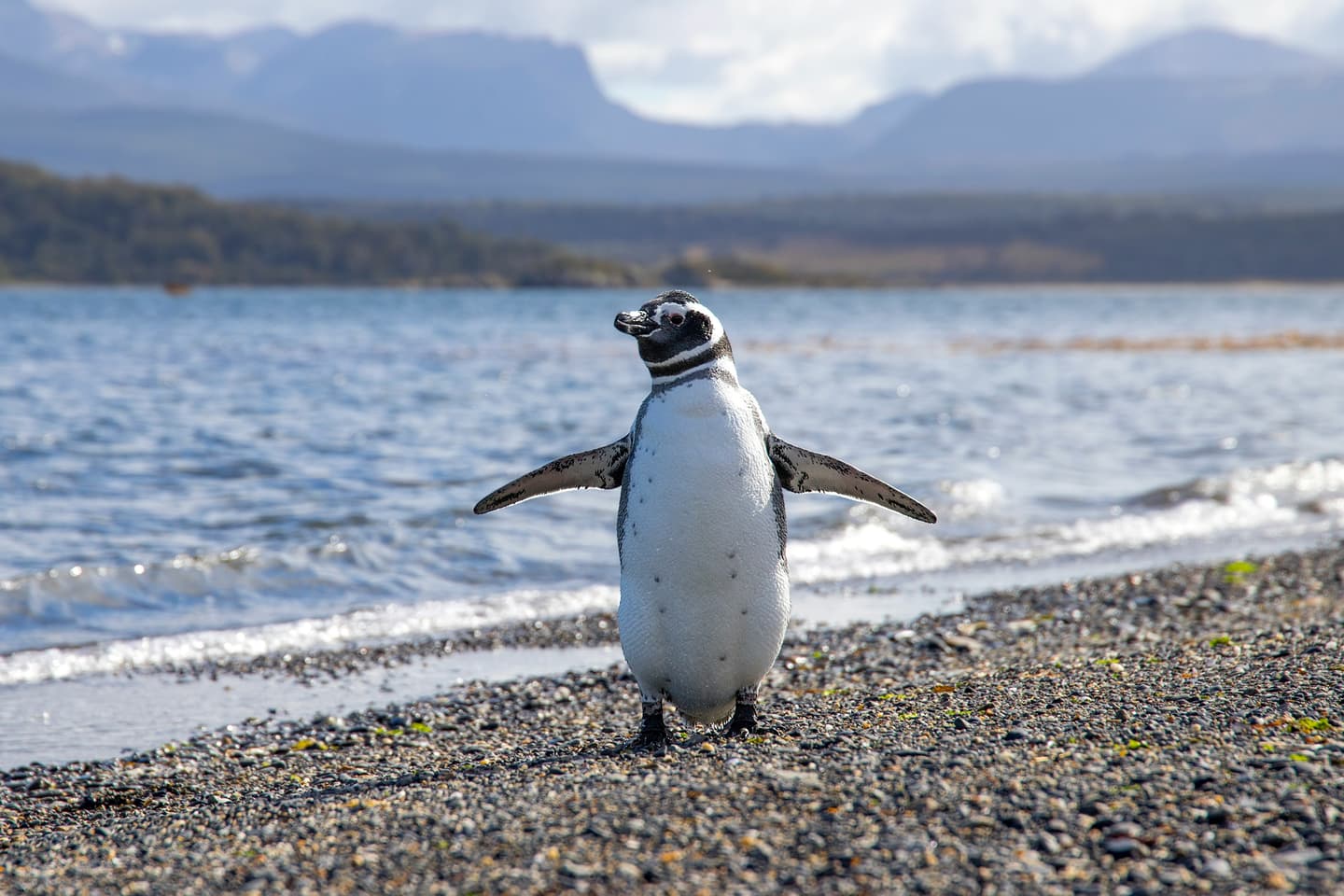
 City postcard
Ushuaia
The world's southernmost city — a wild Patagonian outpost where the Andes meet the Beagle Channel.
The world's southernmost city — a wild Patagonian outpost where the Andes meet the Beagle Channel.
Ushuaia, Argentina — nicknamed "El Fin del Mundo" (The End of the World) — sits at the very tip of South America on the island of Tierra del Fuego, wedged between the Andes and the Beagle Channel. It is the world's southernmost major city and the primary gateway for Antarctic expeditions, drawing adventurers with world-class hiking, Beagle Channel wildlife cruises, and the southernmost ski resort on Earth. Despite its remote location, the city has grown into a well-equipped tourism hub of roughly 82,000 residents, with a buzzing waterfront, colorful streets, and a calendar of activities that changes dramatically with the seasons.
City postcardThe world's southernmost city — a wild Patagonian outpost where the Andes meet the Beagle Channel.
 Top sight
A signature stop locals and returning travelers point to in Ushuaia.
A signature stop locals and returning travelers point to in Ushuaia.
Photo: Wikimedia Commons · CC BY-SA 2.0
A signature stop locals and returning travelers point to in Ushuaia.
A signature stop locals and returning travelers point to in Ushuaia.
A signature stop locals and returning travelers point to in Ushuaia.
A signature stop locals and returning travelers point to in Ushuaia.
A signature stop locals and returning travelers point to in Ushuaia.
A signature stop locals and returning travelers point to in Ushuaia.
A signature stop locals and returning travelers point to in Ushuaia.
A pocket of Ushuaia with its own temperament — worth a deliberate detour when you're in the area.
A pocket of Ushuaia with its own temperament — worth a deliberate detour when you're in the area.
A pocket of Ushuaia with its own temperament — worth a deliberate detour when you're in the area.
A pocket of Ushuaia with its own temperament — worth a deliberate detour when you're in the area.
The quick answers travelers want before they commit to flights, neighborhoods, and how long to stay.
The primary gateway is Malvinas Argentinas International Airport (USH), located about 4 km (2.5 miles) from the city center. The most common route is a direct flight from Buenos Aires (Aeroparque/AEP), which takes approximately 3.5 hours; Aerolíneas Argentinas and JetSMART offer multiple daily departures year-round, with increased frequency from November to March. The airport is a quick 10–15-minute taxi or shared shuttle ride into town; shared shuttles run around $7 USD per person. Uber also became available at USH from mid-2025. Overland travel is possible but long — buses from El Calafate or El Chaltén take 12–18 hours, including a ferry crossing of the Magellan Strait and a brief transit through Chile. It is also possible to arrive by sea from Punta Arenas, Chile.
Ushuaia is a compact city and many central attractions are walkable. Public transport is limited — Bus Line B serves some routes but runs infrequently, especially on weekends, and the stop is a 5-minute walk from the airport terminal. Taxis and remises (private hire cars) are the most practical option for getting around town. Uber launched in Ushuaia in August 2025 and is now available at the airport. For day trips to Tierra del Fuego National Park, regular minibuses depart from the city center (return trip ~$20 USD as of 2024) with multiple stops inside the park. Renting a car (available from Alamo, Avis, Hertz, and ~10 other providers at the airport) is recommended for exploring Lago Escondido, Cerro Castor, and the national park at your own pace.
Ushuaia is genuinely a year-round destination, but the experience changes dramatically by season. Summer (December–March) is peak season — temperatures hover around 8–10°C (46–50°F), daylight stretches past 10 pm in January, and nearly every activity is available: hiking, Beagle Channel cruises, penguin-watching at Isla Martillo, and the national park. Book flights and accommodation at least 2–3 months ahead during this window. Spring (October–November) is an excellent sweet spot — fewer crowds, lower prices, and still-accessible trails, though with cooler temperatures. Autumn (March–May) rewards photographers with vivid crimson and gold lenga beech foliage across the national park and Laguna Esmeralda. Winter (June–September) flips the script entirely: snow blankets the city and Cerro Castor ski resort opens, drawing skiers and snowboarders from around the world; dog sledding and snowshoeing are also available. Note that weather is notoriously changeable year-round — strong Patagonian winds can arrive without warning in any season.
Arrive into USH and settle in; stroll the colorful waterfront along Maipú avenue and explore downtown Centro. Visit the Museo Marítimo y del Presidio to learn about the city's history as a penal colony.
Head up to Glaciar Martial for sweeping panoramic views over the city, the Beagle Channel, and the surrounding Andes. The hike from the chairlift base takes about 45 minutes each way.
Dinner in the Andorra neighborhood at a local parrilla or seafood restaurant; try Patagonian lamb or king crab (centolla). Explore the lively waterfront bars — including Dublín, which claims to be the world's southernmost Irish pub.
Board a catamaran cruise on the Beagle Channel (departs ~9 am, 4–5 hours). Pass Les Eclaireurs Lighthouse, spot sea lions, seabirds, and seals on rocky islets, and sail to Isla Martillo to observe Magellanic and King penguin colonies.
Continue by bus or boat to historic Estancia Haberton — the oldest farm in Tierra del Fuego — for a guided tour of the grounds and its marine mammal museum.
Return to Ushuaia for a relaxed evening; browse outdoor gear and souvenir shops on San Martín street, or enjoy a craft beer at a waterfront bar on the Puerto del Fin del Mundo.
Catch the Tren del Fin del Mundo (End of the World Train) from the station on the western edge of town — a 7 km narrow-gauge journey through Andean-Patagonian forest with strong links to the prison era — arriving at Tierra del Fuego National Park.
Walk the 8 km Senda Costera (Coastal Trail) hugging the Beagle Channel from the End of the World Post Office to the Visitor Centre. Optional extension to Lago Roca or Laguna Verde for glacier and lake views.
Return to Ushuaia by minibus. Farewell dinner at Ramos Generales on Maipú for fresh-baked bread and a hearty Patagonian menu, or splurge on a tasting menu at one of the waterfront restaurants.
Real coworking spaces, laptop-friendly cafés, and libraries mapped near the center of the city — the closest, best-rated desks first.
No coworking-ready spots surfaced for this city yet.
Pick a different category or check back once we’ve indexed more desks for this city.
Ask for cafés, quiet neighborhoods, date-night spots, or a first 48-hour plan.
Mention calls, Wi-Fi needs, or how much of the day has to stay laptop-friendly.
Get faster answers on where to stay, when to move neighborhoods, and what to skip.
There aren’t any, yet!
Block off the weeks you're free. Wanderlust turns this dossier — flights, lodging, neighborhoods, timing — into a single draft itinerary in about ninety seconds.
Wanderlust Pro
Go deeper than the highlights — premium Ushuaia intel with hidden gems, top stays, and offline access on the ground. From $5.00/month, billed annually.