Top sight
Top sight
Brittany's lively capital blends medieval half-timbered streets with a youthful student spirit and world-class rail connections.

Rennes is the historic capital of Brittany, where centuries-old cobblestoned streets and timber-framed houses share the city with a vibrant university scene, acclaimed festivals, and one of France's liveliest Saturday markets. Firmly rooted in its Breton past yet always looking forward, the city offers an authentic French experience largely free of mass tourism. Its outstanding TGV rail link places Paris just 90 minutes away, making it an ideal base for both short breaks and longer stays. Clean air, compact walkability, and easy access to Brittany's spectacular coastline round out the appeal.
More cities for these months: Where to go in May · Where to go in June · Where to go in July · Where to go in August · Where to go in September
Insider tips · Wanderlust Pro
Practical tips on the sights and neighbourhoods in this Rennesguide — when to go, what most visitors miss. Written with AI about the guide's own places; double-check details before you go. Pro members see every tip.
The quick answers travelers want before they commit to flights, neighborhoods, and how long to stay.
Rennes is exceptionally well connected. By rail, high-speed TGV trains run from Paris-Montparnasse to Rennes in around 90 minutes with frequent daily departures — the easiest and most popular route for international visitors flying into Paris. The city's own airport, Rennes–Saint-Jacques (RNS), sits just 8 km southwest of the centre and serves a growing number of European routes. From the airport, STAR bus line C6 runs directly to Place de la République in the city centre in about 25 minutes; buses depart every 10–20 minutes and a single ticket costs around €1.80. A taxi to the centre takes roughly 20 minutes and costs approximately €18 daytime / €20 at night. Uber also operates in Rennes from around €16. A railway station at Saint-Jacques-de-la-Lande (a 15-minute walk from the terminal) connects to Gare de Rennes in 5 minutes for €5, though it runs only a few times daily.
The compact historic centre is best explored on foot — cobblestone streets and pedestrian lanes put most sights within easy walking distance. For longer journeys, the STAR network runs two metro lines covering most major neighbourhoods, with services every 5–10 minutes at peak hours. The same network's bus fleet fills in the gaps. A single STAR ticket costs around €1.80 and a day pass runs €4.80, valid on all buses and metro lines. The city also offers a self-service bike rental scheme starting at €1, ideal for parks and outer neighbourhoods. TER regional trains connect Gare de Rennes to Saint-Malo in under one hour for coastal day trips. Moovit and the STAR app are the go-to tools for live schedules.
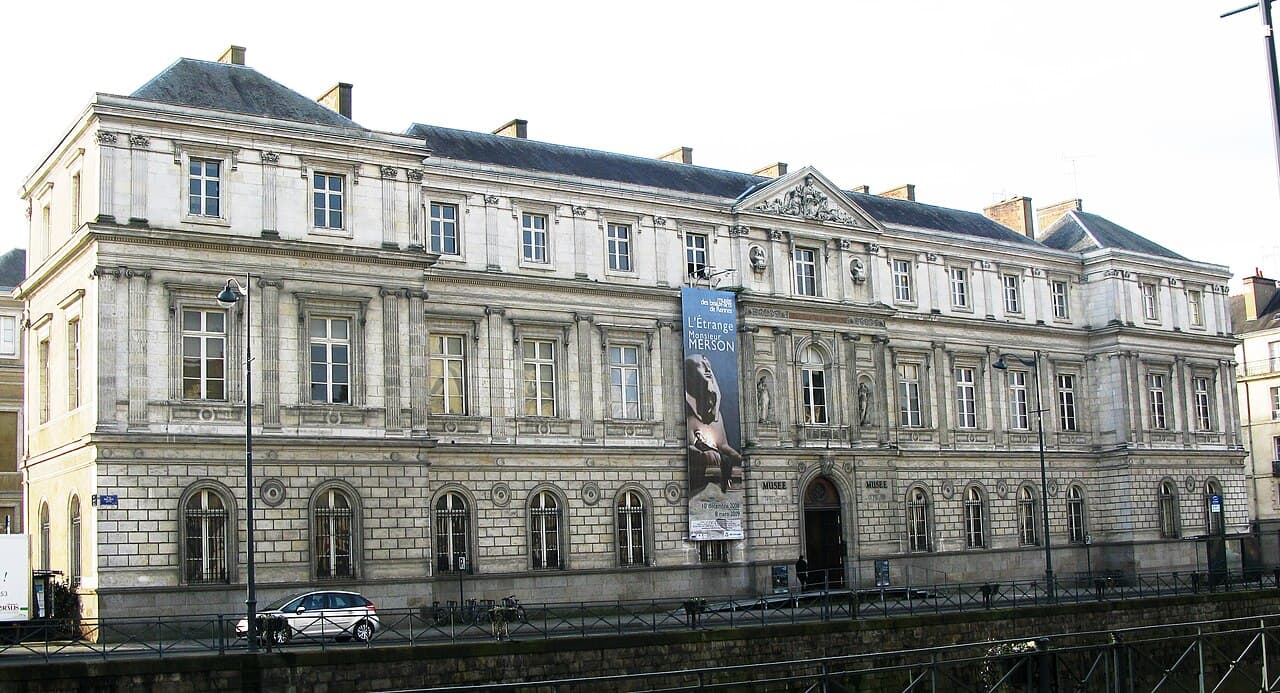
The sweet spot for visiting Rennes runs from late May through September. Summer (June–August) brings the warmest, driest conditions — temperatures hover between 20–23°C — along with the city's headline events: the Tombées de la Nuit street-arts festival transforms public squares in early July, and free outdoor concerts carry the energy through August. September is arguably the city's best-kept secret: rain drops to its lowest frequency of the year, crowds thin considerably, and terrace tables are still warm enough for evening drinks. Spring (April–May) suits budget travellers and culture lovers — the Mythos performing arts festival arrives in April, the Parc du Thabor bursts into bloom, and accommodation prices dip. Winter is atmospheric but rainy and cold (highs around 10°C), best reserved for indoor highlights like the Musée des Beaux-Arts, the planetarium at Les Champs Libres, and the acclaimed Transmusicales music festival in December.
Start in the Vieux Rennes, wandering the half-timbered lanes around Place des Lices and Rue de la Monnaie. If it's Saturday, lose yourself in the Marché des Lices — France's second-largest market — stocking up on crêpes, galettes, and Breton cider.
Head to the gilded Palais du Parlement de Bretagne for a guided tour of its ornate chambers, then cross to the Cathédrale Saint-Pierre and the medieval Portes Mordelaises gateway.
Settle into a crêperie in the old town for a classic galette-saucisse or buckwheat galette dinner, then join the lively terrace scene along Rue Saint-Michel.
Spend a leisurely morning in Parc du Thabor — stroll the rose gardens, visit the botanical sections, and enjoy panoramic views over the city. Pick up a pastry from a nearby boulangerie.
Head to Les Champs Libres cultural complex for the Musée de Bretagne (history of Brittany) and the interactive science centre with its planetarium. Allow 2–3 hours.
Explore the galleries and cocktail bars of the Quartier de la Liberté, or catch a show at the Opéra de Rennes on Place de la Mairie.
Take an early TER regional train from Gare de Rennes to Saint-Malo (under 1 hour) and explore the dramatic intra-muros walled city and ramparts.
Visit the beaches of Saint-Malo or, alternatively, join an organised day excursion from Rennes to Mont-Saint-Michel, arriving in time to see the tidal island at its most spectacular.
Return to Rennes by early evening. Wind down over Breton seafood and a glass of Muscadet in one of the brasseries near the Gare de Rennes.
Real coworking spaces, laptop-friendly cafés, and libraries mapped near the center of the city — the closest, best-rated desks first.
No coworking-ready spots surfaced for this city yet.
Pick a different category or check back once we’ve indexed more desks for this city.
Ask for cafés, quiet neighborhoods, date-night spots, or a first 48-hour plan.
Mention calls, Wi-Fi needs, or how much of the day has to stay laptop-friendly.
Get faster answers on where to stay, when to move neighborhoods, and what to skip.
Written by signed-in Wanderlust members. We don't check that a reviewer has visited.
No reviews of Rennes yet.
Tell the planner your dates, who's coming, your budget and pace, and it drafts a day-by-day itinerary you can edit.
Wanderlust Pro
Insider tips for Rennes, unlimited AI-built itineraries, and travel companions you can invite to plan a trip together. From $5.00/month, billed annually.
Insider tips · Wanderlust Pro
Practical tips on the sights and neighbourhoods in this Rennesguide — when to go, what most visitors miss. Written with AI about the guide's own places; double-check details before you go. Pro members see every tip.