 City postcard
Karlsruhe
Germany's fan-shaped "city without walls" — Baroque heritage, world-class media art, and a pioneering tram-train network.
Germany's fan-shaped "city without walls" — Baroque heritage, world-class media art, and a pioneering tram-train network.
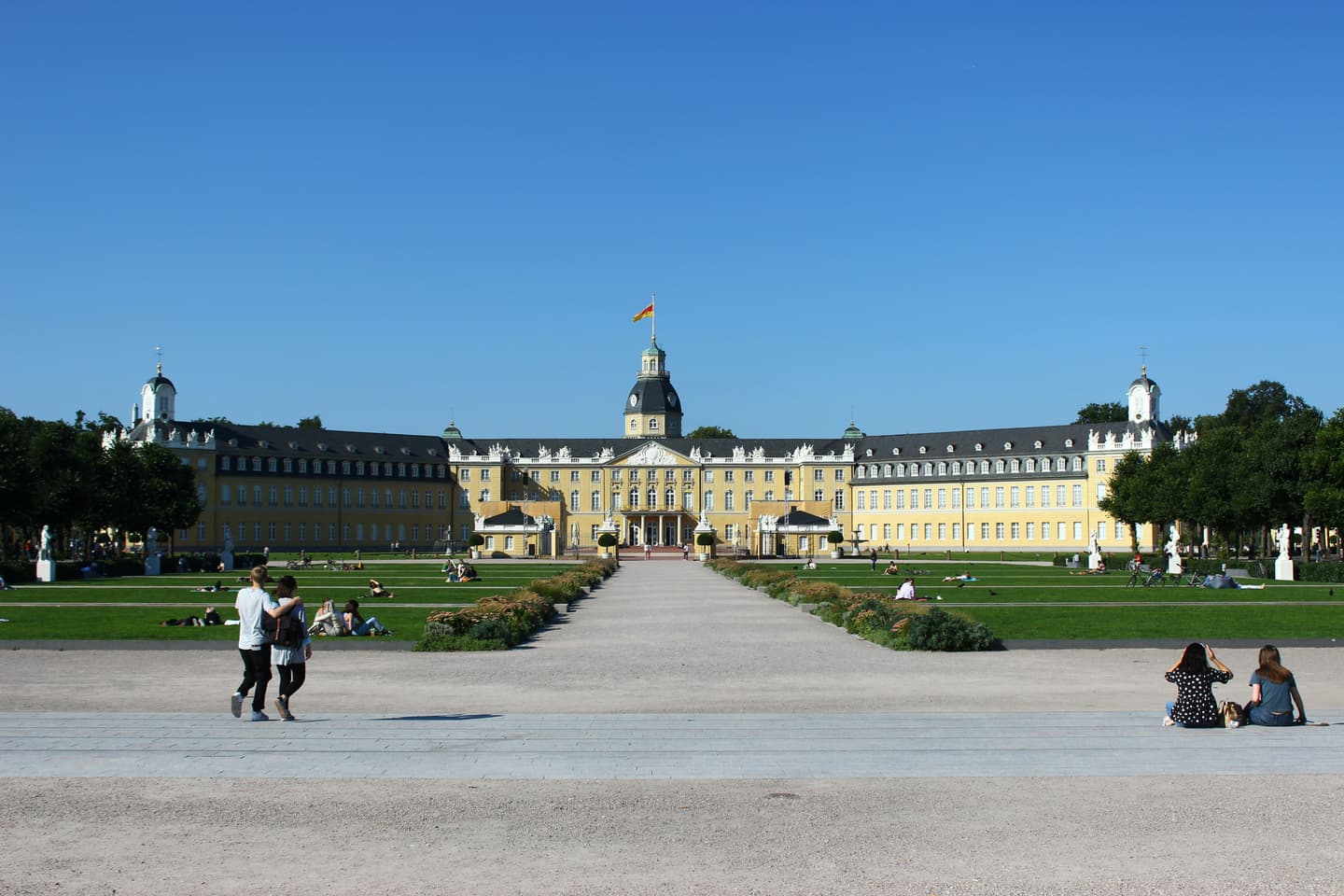
Karlsruhe is a planned Baroque city in southwest Germany, founded in 1715 by Margrave Karl Wilhelm, whose palace sits at the centre of 32 radiating streets — earning it the nickname "Fan City." Home to Germany's Federal Constitutional Court, the Karlsruhe Institute of Technology (KIT), and the internationally renowned ZKM Center for Art and Media, it balances royal heritage with tech-forward innovation. Situated on the Rhine Plain between the Black Forest, Vosges Mountains, and Palatinate Forest, it is a relaxed, green, and walkable city ideal for culture lovers, researchers, and day-trippers alike. Karlsruhe also holds the UNESCO Creative City of Media Arts designation and is famed as the birthplace of the globally influential tram-train "Karlsruhe Model."
City postcardGermany's fan-shaped "city without walls" — Baroque heritage, world-class media art, and a pioneering tram-train network.
 Top sight
A signature stop locals and returning travelers point to in Karlsruhe.
 Top sight
A signature stop locals and returning travelers point to in Karlsruhe.
A signature stop locals and returning travelers point to in Karlsruhe.
A signature stop locals and returning travelers point to in Karlsruhe.
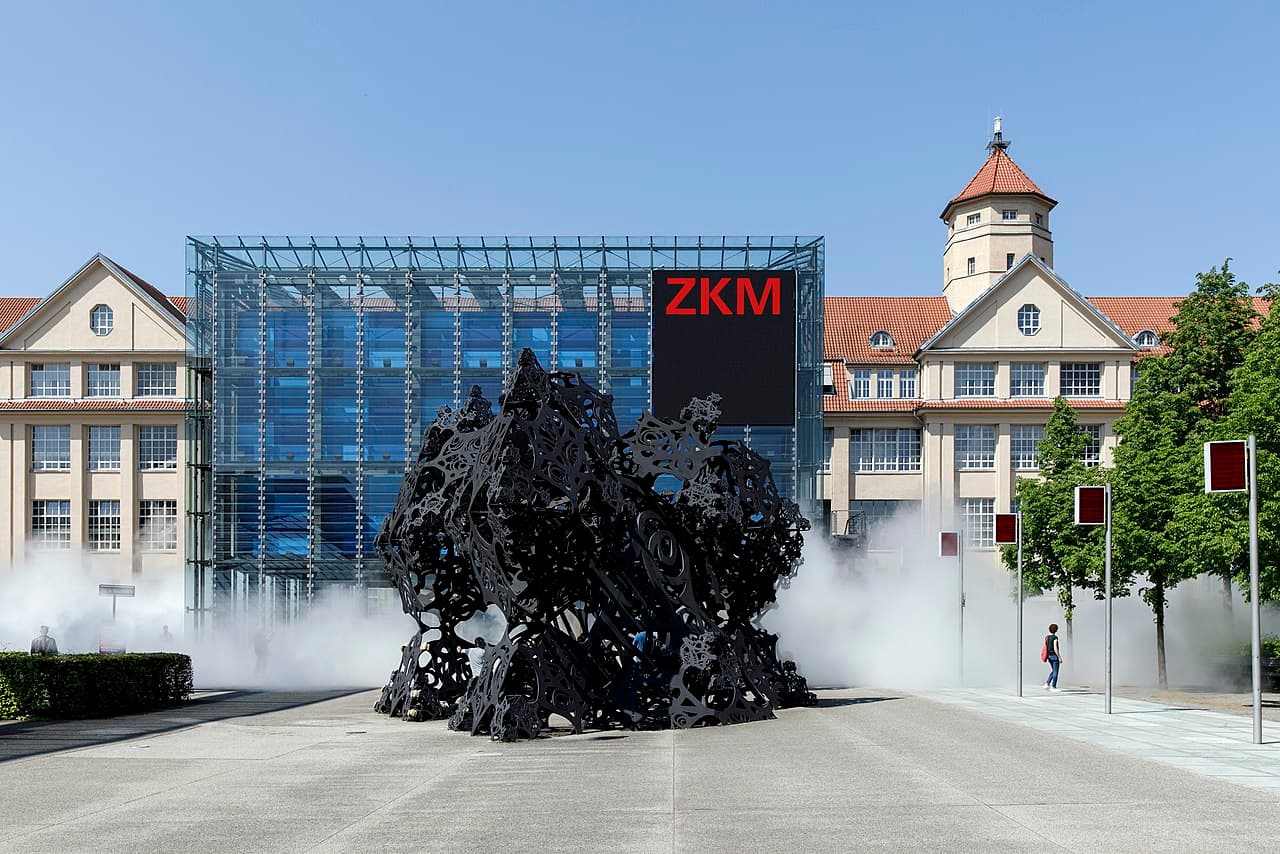
Photo: Zkmkarlsruhe · CC BY-SA 4.0
A signature stop locals and returning travelers point to in Karlsruhe.
A signature stop locals and returning travelers point to in Karlsruhe.
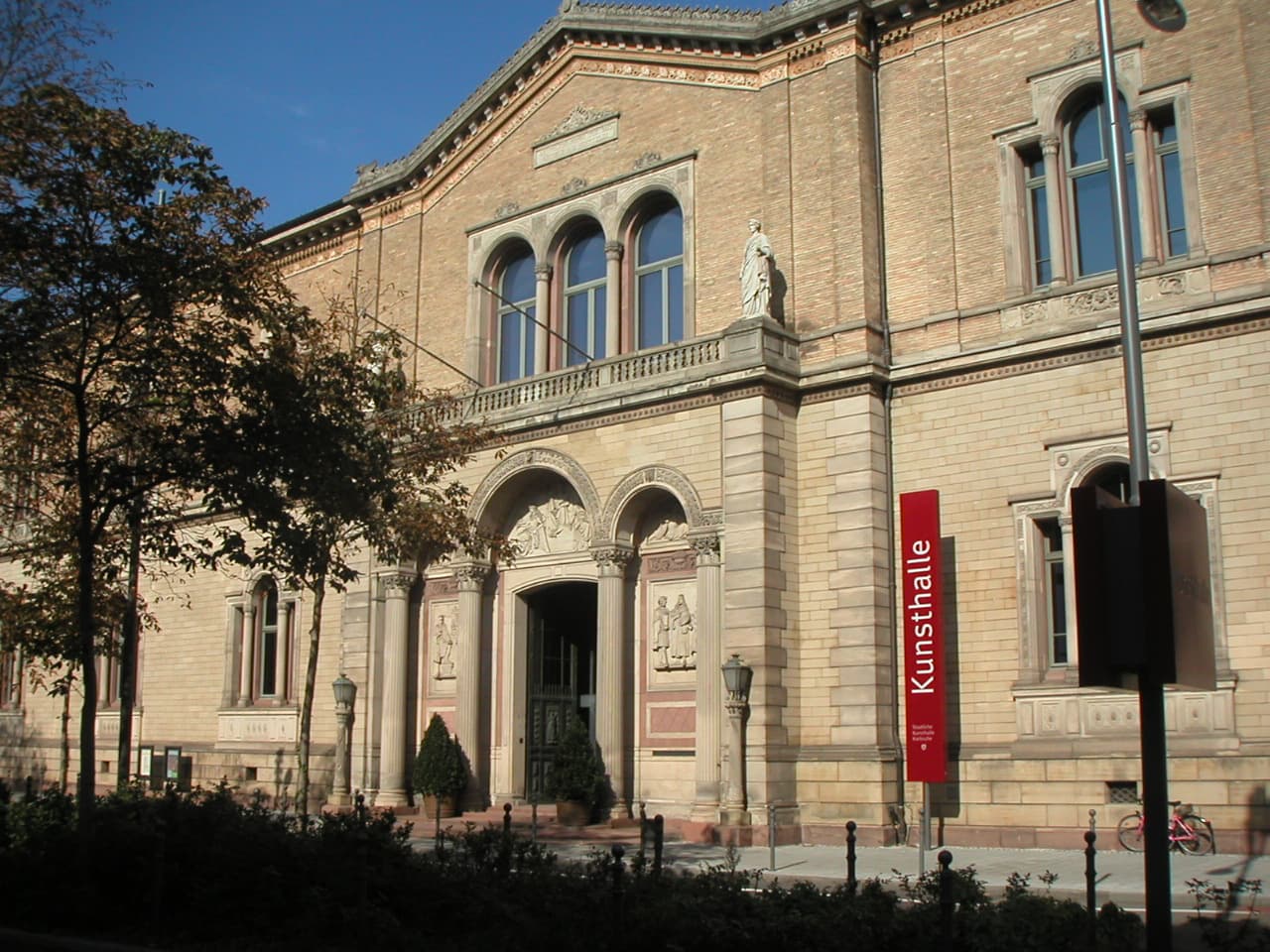
Photo: Armerdietrich · Public domain
A signature stop locals and returning travelers point to in Karlsruhe.
A signature stop locals and returning travelers point to in Karlsruhe.
A signature stop locals and returning travelers point to in Karlsruhe.
A signature stop locals and returning travelers point to in Karlsruhe.
A pocket of Karlsruhe with its own temperament — worth a deliberate detour when you're in the area.
A pocket of Karlsruhe with its own temperament — worth a deliberate detour when you're in the area.
A pocket of Karlsruhe with its own temperament — worth a deliberate detour when you're in the area.
A pocket of Karlsruhe with its own temperament — worth a deliberate detour when you're in the area.
The quick answers travelers want before they commit to flights, neighborhoods, and how long to stay.
**By air:** Karlsruhe/Baden-Baden Airport (FKB) is located 40 km south of the city and served by Ryanair, Wizz Air, Eurowings, and others — Ryanair added a fourth based aircraft there in March 2025. There is no direct train to the terminal; from the airport, KVV bus lines 234/X34 and 285 connect to nearby Rastatt or Bühl rail stations, and the line 215 bus runs to Baden-Baden station (approx. 25–26 min, hourly). From Baden-Baden, regional trains reach Karlsruhe Hbf in around 15 minutes. By car from the airport, allow about 28 minutes. Frankfurt Airport (FRA) — Germany's busiest — is roughly 1 hour away by ICE train (from ~€26) and offers more international connections. Stuttgart Airport is about 2 hours by train, requiring a change at Stuttgart Hbf.
**By rail (recommended):** Karlsruhe Hauptbahnhof is a major ICE/TGV hub. Fast trains connect Frankfurt (~1 hr 45 min by ICE), Stuttgart (~40 min), Basel (~45 min), and Paris via direct TGV. FlixTrain also serves the city. The main station sits south of the city centre, just 5–10 minutes by tram to Marktplatz.
**By bus:** Long-distance FlixBus services stop regularly; from Frankfurt Airport the journey is approximately 2 hours at roughly €10. The bus station is at the south entrance of the Hauptbahnhof.
**By road:** Karlsruhe has several exits from the A5 autobahn (~130 km south of Frankfurt); the A8 connects Stuttgart 80 km to the east.
Karlsruhe is best navigated by tram, Stadtbahn, or bicycle. The city's KVV network — operated by VBK and AVG — is one of the most extensive in Germany and famous worldwide as the origin of the 'Karlsruhe Model': a pioneering tram-train system where light-rail vehicles run seamlessly on both street tracks and mainline DB rail without transfers. The urban network spans ~79 km within the city, with 5 tram lines (1–5) plus multiple Stadtbahn S-lines serving 190+ stations across the region. Services run from approximately 5 am to midnight. A single city trip costs around €2.40–€2.50; day passes and monthly passes are available. Germany's nationwide Deutschlandticket (€49/month subscription) is valid on all KVV trams, buses, and regional Stadtbahn services — an excellent value for extended stays. Tickets can be purchased at machines (accepting cash and card), online, or via the KVV Regiomove app. Controllers are frequent; always validate before boarding. For cyclists, Karlsruhe is one of Germany's most bike-friendly cities, with extensive dedicated lanes. Nextbike rental bikes are available year-round using a smartphone; Call-a-Bike operates during warmer months. Reaching the historic Durlach neighbourhood takes 15–20 minutes on tram lines 1 or 2 from the centre.
April through October is generally the sweet spot for visiting Karlsruhe. Spring brings blooming parks and the Palace Gardens at their most photogenic, with mild temperatures and manageable crowds. Summer is Karlsruhe's sunniest season — the city receives more sun than most German cities — meaning outdoor cafés stay open late, the Schlossgarten fills with picnickers, and the city hosts das FEST, one of Germany's largest open-air rock and pop festivals, drawing over 200,000 visitors to Günther-Klotz-Anlage each July. Autumn softens the city with golden hues around the palace and is the ideal time for excursions into the nearby Black Forest. Winter is quieter but not without appeal: Karlsruhe's Christmas Market is well-regarded, and an ice rink opens opposite the palace. December through February sees colder, greyer weather and some attraction closures, but hotel prices drop noticeably.
Start at Marktplatz to see the iconic sandstone Karlsruhe Pyramid — the burial site of the city's founder — framed by the classicist Town Hall and Protestant church. Grab a coffee at one of the surrounding cafés, then walk north to Karlsruhe Palace (Schloss Karlsruhe). Climb the tower for a bird's-eye view of the city's famous radial street layout, then tour the Badisches Landesmuseum inside (adults €8, under-17s free).
Stroll south through the pedestrian Kaiserstraße for lunch and window shopping. In the afternoon, head to the Staatliche Kunsthalle Karlsruhe — one of Germany's first purpose-built museum buildings — to see works by Rembrandt and Cézanne. End the afternoon with a wander through the lush Botanical Garden next to the palace.
Return to Marktplatz for dinner at a regional restaurant. Sample local Baden cuisine — Tarte Flambée (Flammkuchen) or Schnitzel with Badische Salat — then explore the bars and beer gardens around Ludwigsplatz.
Devote your morning to the ZKM | Center for Art and Media, internationally renowned for its interactive digital art and media exhibitions. Budget at least two hours; many areas are free to enter. Pick up the KVV Regiomove app for seamless transit planning.
Head to Günther-Klotz-Anlage, Karlsruhe's largest park, for a picnic lunch and a long walk or jog. Then take the tram to Schloss Gottesaue, the Renaissance palace on the city's eastern edge, home to the Karlsruhe University of Music.
Try the vibrant dining scene in the Südstadt or Weststadt neighbourhoods, known for independent restaurants, craft beer bars, and a younger local crowd. Check listings for evening events at ZKM or the Staatliches Theater.
Take tram line 1 or 2 (15–20 minutes) to Durlach, Karlsruhe's oldest district, with its medieval market square, narrow streets, and half-timbered facades. Hike up to Turmberg (256 m) or ride Germany's second-oldest funicular for panoramic views over the Rhine Plain and Black Forest.
Return to the city centre for lunch, then take a regional Stadtbahn S-train for an easy half-day excursion: Baden-Baden (spa town, ~20 min), Ettlingen (charming medieval old town, ~15 min), or Pforzheim (jewellery capital, ~30 min).
Back in Karlsruhe, round off your stay with a leisurely evening in the Palace Gardens — in summer, look out for the miniature steam train running on Sundays — followed by dinner on Kaiserstraße.
Real coworking spaces, laptop-friendly cafés, and libraries mapped near the center of the city — the closest, best-rated desks first.
No coworking-ready spots surfaced for this city yet.
Pick a different category or check back once we’ve indexed more desks for this city.
Ask for cafés, quiet neighborhoods, date-night spots, or a first 48-hour plan.
Mention calls, Wi-Fi needs, or how much of the day has to stay laptop-friendly.
Get faster answers on where to stay, when to move neighborhoods, and what to skip.
There aren’t any, yet!
Block off the weeks you're free. Wanderlust turns this dossier — flights, lodging, neighborhoods, timing — into a single draft itinerary in about ninety seconds.
Wanderlust Pro
Go deeper than the highlights — premium Karlsruhe intel with hidden gems, top stays, and offline access on the ground. From $5.00/month, billed annually.