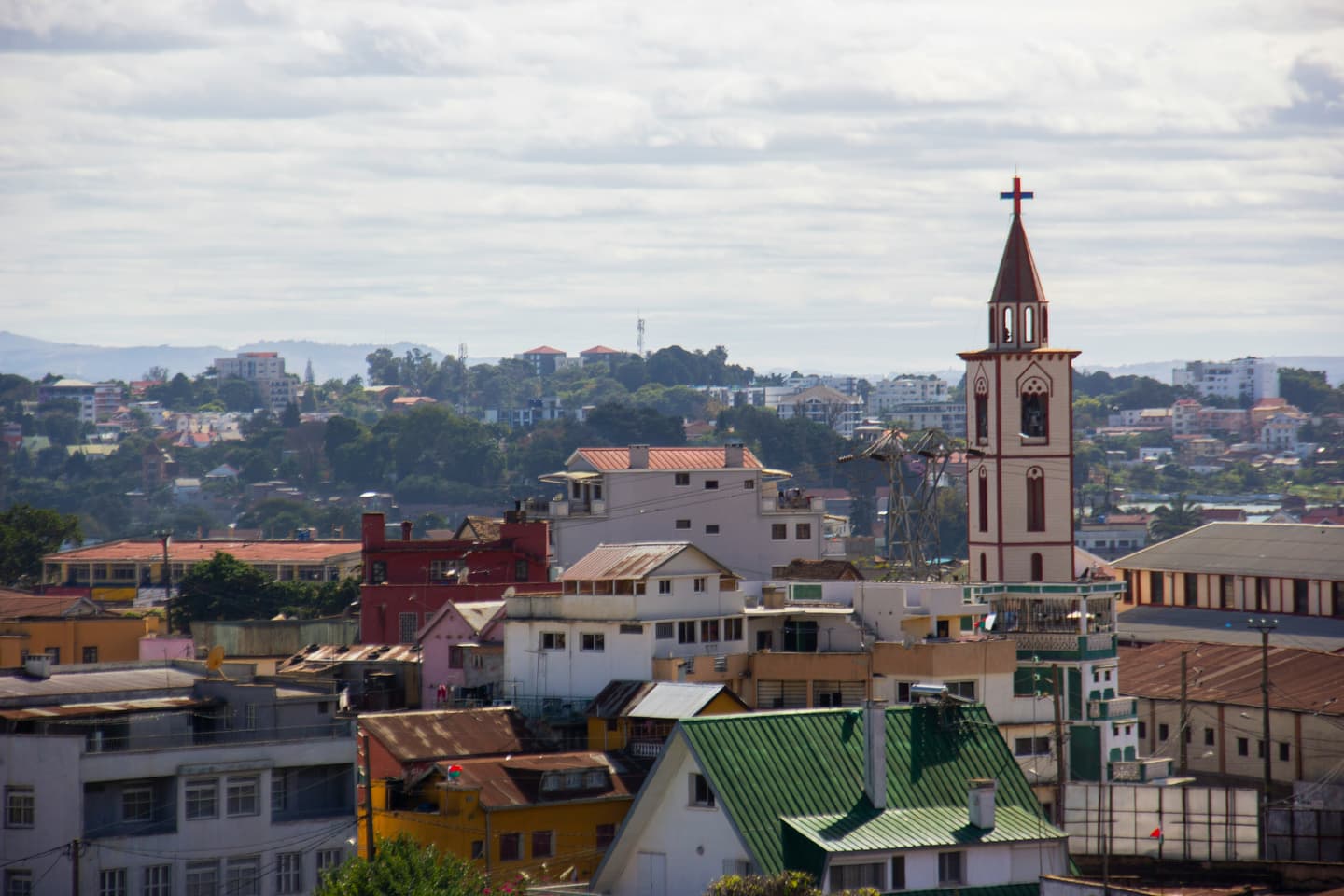
 City postcard
Antananarivo
Madagascar's highland capital — a city of a thousand hills, rich history, and untamed island culture.
Madagascar's highland capital — a city of a thousand hills, rich history, and untamed island culture.
Antananarivo (locally "Tana") is Madagascar's sprawling capital perched in the central highlands at roughly 1,300 m above sea level, where red-brick houses climb steep ridges above a bustling lower city. Known as the "City of the Thousand" after the warriors who once guarded its hills, Tana blends French colonial architecture with deep Merina kingdom heritage and a lively street culture. It serves as the essential gateway to Madagascar's extraordinary biodiversity, from nearby Andasibe rainforest to day-trip lemur parks, while offering its own reward: vivid markets, hilltop palaces, and genuine Malagasy warmth.
City postcardMadagascar's highland capital — a city of a thousand hills, rich history, and untamed island culture.
 Top sight
A signature stop locals and returning travelers point to in Antananarivo.
A signature stop locals and returning travelers point to in Antananarivo.
Photo: Hery Zo Rakotondramanana · CC BY-SA 2.0
A signature stop locals and returning travelers point to in Antananarivo.
A signature stop locals and returning travelers point to in Antananarivo.
A signature stop locals and returning travelers point to in Antananarivo.
A signature stop locals and returning travelers point to in Antananarivo.
A signature stop locals and returning travelers point to in Antananarivo.
A signature stop locals and returning travelers point to in Antananarivo.
A signature stop locals and returning travelers point to in Antananarivo.
A visual anchor inside Antananarivo worth building into the route.
A pocket of Antananarivo with its own temperament — worth a deliberate detour when you're in the area.
A pocket of Antananarivo with its own temperament — worth a deliberate detour when you're in the area.
A pocket of Antananarivo with its own temperament — worth a deliberate detour when you're in the area.
A pocket of Antananarivo with its own temperament — worth a deliberate detour when you're in the area.
Wanderlust Pro
Pro members see insider tips for Antananarivo: a short list of restaurants, cafés and sights, picked by AI as local suggestions to double-check before you go.
The quick answers travelers want before they commit to flights, neighborhoods, and how long to stay.
Antananarivo is served by Ivato International Airport (TNR), located approximately 16 km northwest of the city centre. Airlines including Air France, Ethiopian Airlines, Turkish Airlines, Air Mauritius, and Kenya Airways operate international routes. The journey downtown takes 30–45 minutes depending on traffic. The easiest and most affordable shared option is the airport shuttle van, which runs between the airport and the Isoraka/Analakely hotel zone every 30–45 minutes from 05:00–20:00 at a fare of around MGA 10,000 per person. A metered or negotiated taxi from the airport to downtown costs approximately MGA 25,000–40,000 (USD 5.50–8.80); beware of touts inside the arrivals hall who charge fixed premium fares — walking to the car park can yield a better price. Pre-booked private transfers are also widely available for a hassle-free arrival. Note that ride-hailing apps such as Uber and Bolt are not operational in Antananarivo.
The city is built across a dramatic ridge (Haute-Ville, upper town) and a lower commercial district (Basse-Ville, centred on Analakely market), making hilly, uneven streets a feature of daily navigation. The main public transit option is the taxi-be, an affordable minibus network with fares of around MGA 700–1,000 per ride; routes radiate from Analakely hub and cover most urban districts, though they are often crowded and confusing for first-timers. Standard yellow or beige taxis are the preferred choice for most visitors — always negotiate the fare before entering, as taxis do not use meters; city fares typically range from MGA 5,000–15,000 (USD 1–3). Ride-hailing apps are not available. For day trips beyond the city, taxi-brousse (bush taxis) depart from four major inter-city terminals corresponding to compass directions, while renting a car with a driver-guide is the most flexible option for exploring further afield.
Antananarivo's highland elevation (~1,300 m) gives it a temperate climate, but timing still matters greatly. The dry season from April to November is the sweet spot: temperatures are mild and pleasant, skies are clear, and road conditions are at their best for day trips. June through September is peak season for both business visitors and tourists — book accommodation three to four weeks ahead during this window. July to September is also when the Famadihana ancestral ceremony season takes place, offering a rare cultural experience for respectful visitors. October brings the Madajazzcar international jazz festival to Tana's stages, and jacaranda trees frame Lake Anosy in purple bloom. Avoid the wet season (December–March): heavy rain, occasional cyclones, and flooded roads can disrupt plans significantly, though the city itself remains functional. Madagascar's cyclone season broadly runs November to April, so shoulder months of April and November carry some risk.
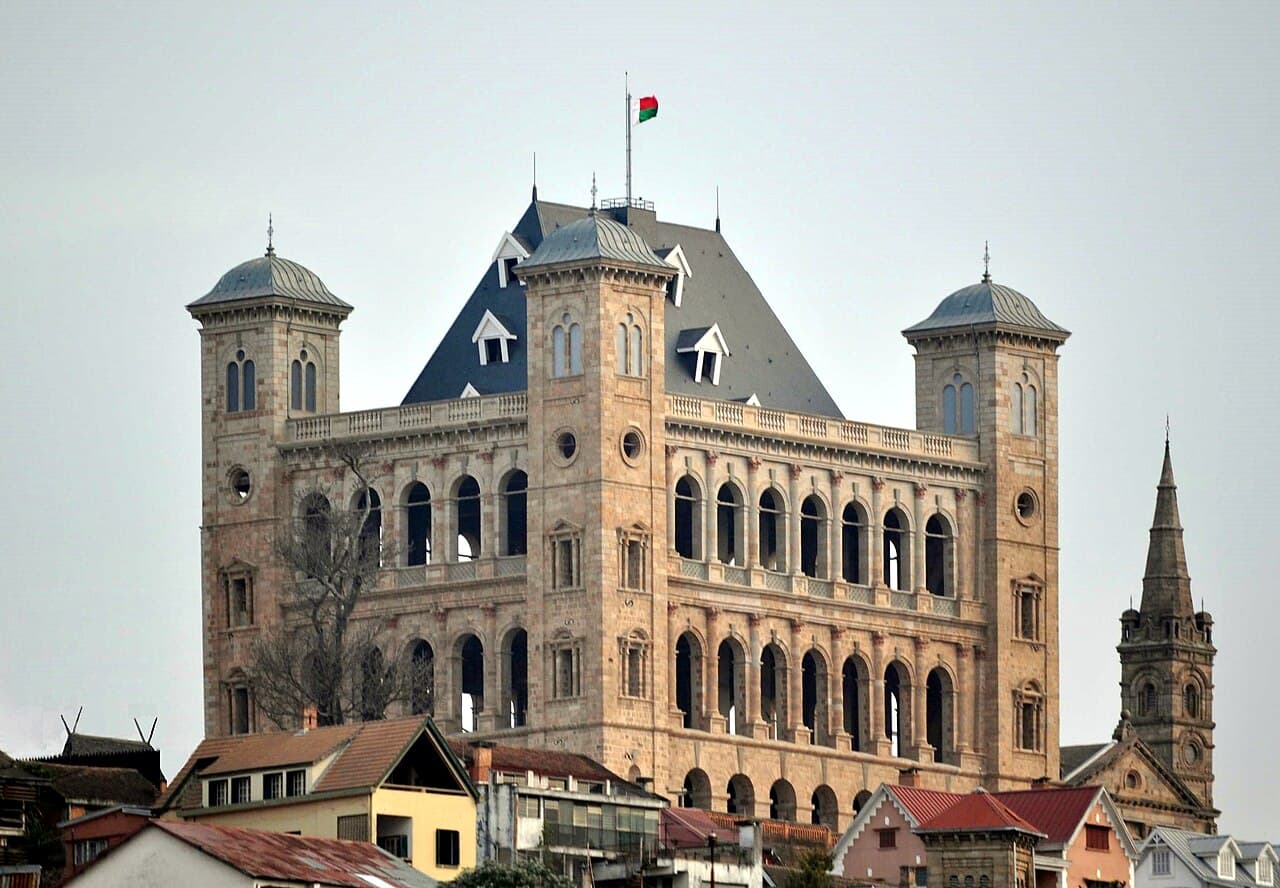
Start at the Rova of Antananarivo (Queen's Palace) on the city's highest hill for panoramic views and a deep dive into Merina kingdom history. Book a guide on-site for context.
Head downhill to Andohalo quarter to explore colonial-era streets, then visit the Musée de la Photographie de Madagascar for a beautifully curated visual history of the island.
Settle into Isoraka neighbourhood for dinner at a local restaurant — try romazava (beef and greens stew) or ravitoto — then sample Malagasy rum cocktails at one of the district's lively bars.
Dive into Analakely Market in the lower city — one of the most colourful markets in Africa. Browse crafts, textiles, and fresh produce; avoid purchasing items made from protected wildlife or rosewood.
Walk or taxi to Is'Art Galerie in Antaninarenina for contemporary Malagasy art, then stroll past Lake Anosy to see the WWI memorial island and surrounding jacaranda trees (spectacular in October).
Explore Independence Avenue for people-watching, then dine at one of the mid-range restaurants in the upper town near the Hilton Antananarivo.
Take a pre-arranged driver (recommended) to Lemurs' Park (~25 km from the city) for close-up encounters with several lemur species in a semi-wild setting, open daily.
On the return, detour to the Royal Hill of Ambohimanga — a UNESCO World Heritage Site and sacred hilltop palace complex that was the spiritual and political heart of the Merina kingdom.
Back in Tana, wind down with a final Malagasy meal in Isoraka or Antaninarenina, and pick up last-minute handicrafts from artisan stalls near Analakely.
Real coworking spaces, laptop-friendly cafés, and libraries mapped near the center of the city — the closest, best-rated desks first.
No coworking-ready spots surfaced for this city yet.
Pick a different category or check back once we’ve indexed more desks for this city.
Ask for cafés, quiet neighborhoods, date-night spots, or a first 48-hour plan.
Mention calls, Wi-Fi needs, or how much of the day has to stay laptop-friendly.
Get faster answers on where to stay, when to move neighborhoods, and what to skip.
There aren’t any, yet!
Block off the weeks you're free. Wanderlust turns this dossier — flights, lodging, neighborhoods, timing — into a single draft itinerary in about ninety seconds.
Wanderlust Pro
Insider tips for Antananarivo, unlimited AI-built itineraries, and travel companions you can invite to plan a trip together. From $5.00/month, billed annually.
Wanderlust Pro
Pro members see insider tips for Antananarivo: a short list of restaurants, cafés and sights, picked by AI as local suggestions to double-check before you go.