City guide · Updated regularly
AsiaHong Kong22.3° · 114.2°

Hong Kong,Hong Kong.

Where East meets West — a dazzling skyline, world-class food, and endless urban energy all in one compact city.
City BreakFood & CulinaryCulture & HistoryShoppingHiking & Outdoors
Hong Kong · HKHong Kong
Hong KongHong Kong
Hong Kong International Airport (HKG)NEAREST AIRPORT
Population
7,403,125
Total residents
Global rank
#298
Wanderlust index
Best time
Autumn (October–December) and…
Peak window
Time zone
Asia/Hong_Kong
Local time
Currency
Hong Kong Dollar (HKD)
Money in use
Language
Cantonese, English
Spoken locally
01 · The lay of the land

A field guide to Hong Kong.

Where East meets West — a dazzling skyline, world-class food, and endless urban energy all in one compact city.

Hong Kong is one of the world's great urban playgrounds, packing towering skyscrapers, ancient temples, bustling night markets, and some of Asia's finest dining into a surprisingly compact footprint. A short MTR or ferry ride connects the gleaming city centre to misty hiking trails, outlying islands, and tranquil fishing villages. The city's legendary efficiency — from its world-class transit to 24-hour street food culture — makes it as easy to navigate as it is endlessly rewarding to explore.

02 · Wanderlust scorecard

How Hong Kong holds up by the numbers.

The factors we track across every city, scored and recalibrated with each wave of member trips and on-the-ground research.
2.5
/ 5
Cost of living
Monthly spend benchmark — higher means easier on the wallet.
5
/ 5
Outdoors & play
Nature, nightlife, food scene, and things worth showing up for.
87
Mbps
Connectivity
Download speeds and café / coworking reliability for remote work.
4
/ 5
Safety
Personal safety, petty crime, and nighttime walkability.
2.9
/ 5
Overall livability
Our composite for how well the city adds up across every signal.
3
/ 5
Air quality
Year-round air quality averaged across seasons and wildfire windows.
7.4
index
Index score
Weighted composite including safety, cost, community, and outdoors.
03 · Live conditions & when to go

The city runs on its own calendar.

Current conditions, a rolling forecast, and a twelve-month guide to what each month actually feels like to show up in.

Best time to visit

Peak Shoulder Quiet
Jan
Feb
Mar
Apr
May
Jun
Jul
Aug
Sep
Oct
Nov
Dec
Sweet spot: Autumn (October–December) and spring (March–April) offer the most comfortable weather, with mild temperatures, low humidity, and clear skies ideal for sightseeing and hiking..
05 · Can't-miss experiences

Things you'd regret not doing.

Curated by our contributors and cross-checked against what locals recommend. Not a listicle — a short list of defining things.
Editor's pickTop sight
Top sight

Victoria Peak & Sky Terrace 428

A signature stop locals and returning travelers point to in Hong Kong.

Top sight
Top sight

Star Ferry & Victoria Harbour

A signature stop locals and returning travelers point to in Hong Kong.

Top sight
Top sight

Temple Street Night Market

A signature stop locals and returning travelers point to in Hong Kong.

Top sight
Top sight

Tai Kwun Heritage & Arts Centre

A signature stop locals and returning travelers point to in Hong Kong.

Top sight
Top sight

Big Buddha & Po Lin Monastery, Lantau Island

A signature stop locals and returning travelers point to in Hong Kong.

Top sight
Top sight

Hong Kong Disneyland

A signature stop locals and returning travelers point to in Hong Kong.

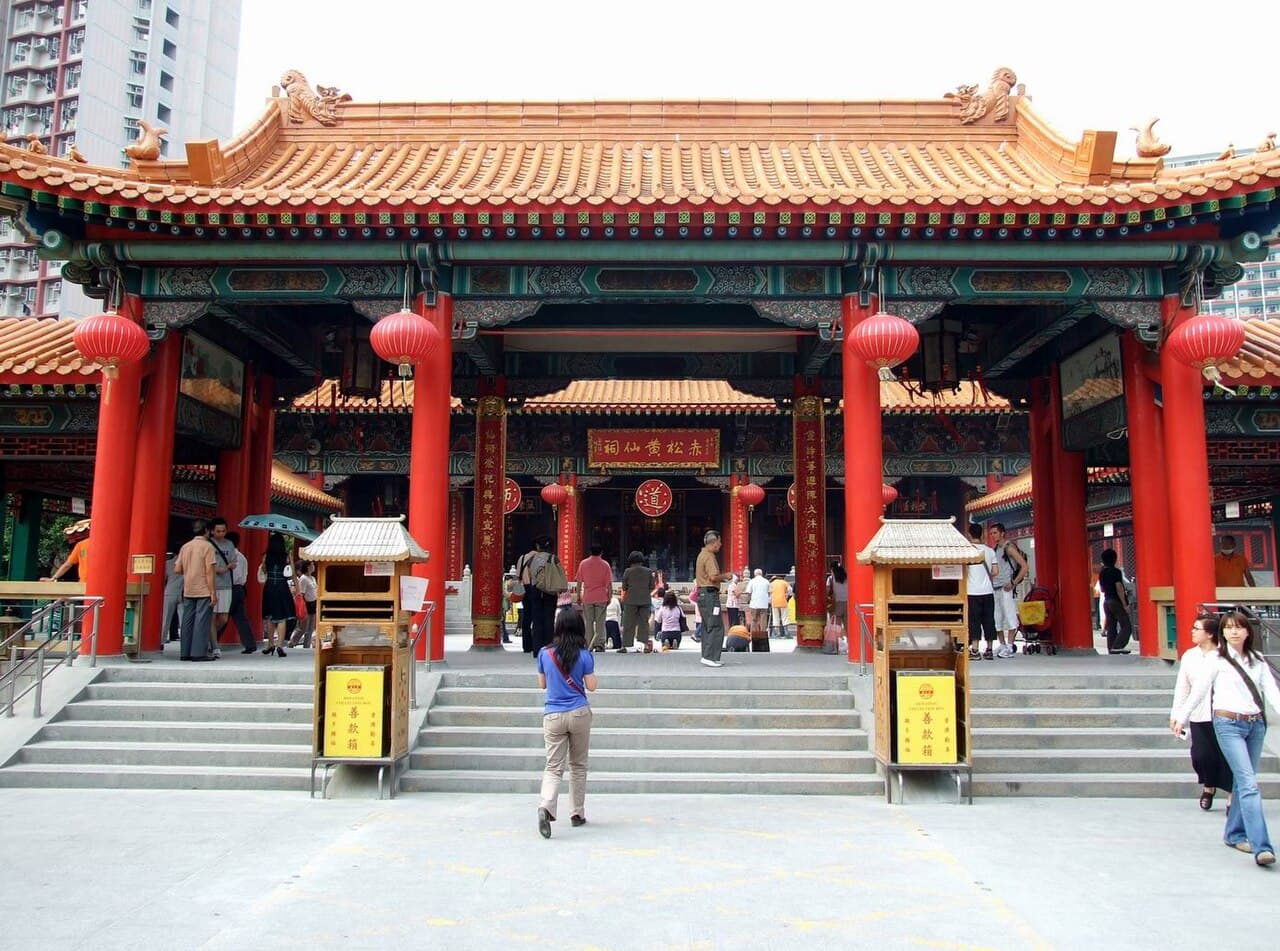
Wong Tai Sin Temple
Top sight

Wong Tai Sin Temple

A signature stop locals and returning travelers point to in Hong Kong.

Photo: Chong Fat · Public domain

Top sight
Top sight

Ladies' Market, Mong Kok

A signature stop locals and returning travelers point to in Hong Kong.

06 · Real cost of a month here

What living in Hong Kong actually costs.

Numbers are in USD and averaged across member-reported receipts and editorial research. Switch profiles to see how the math changes for different kinds of travellers.
$4,841
estimated monthly spend · USD
ProfileCouple · remote
Rent · 2BR$2,323.7
Groceries$677.7
Dining out$580.9
Transit$387.3
Utilities · fiber$338.9
Leisure$338.9
Misc$193.6

Price references — vs. profile benchmarks

Solo nomadmonthly spend · USD
$3,834
-21%
Couple · remotemonthly spend · USD
$4,841
baseline
Family of 4monthly spend · USD
$16,929.9
+250%
Localmonthly spend · USD
$4,724.6
-2%
Median fiber speeddownload · Mbps
87
Mbps
07 · Where to stay, by temperament

Micro-pockets of Hong Kong.

Each neighborhood has its own feel, its own pace, and its own answer to "can I walk to the good stuff?"
Central
Best known

A pocket of Hong Kong with its own temperament — worth a deliberate detour when you're in the area.

Tsim Sha Tsui
Local favorite

A pocket of Hong Kong with its own temperament — worth a deliberate detour when you're in the area.

Mong Kok
Local favorite

A pocket of Hong Kong with its own temperament — worth a deliberate detour when you're in the area.

Sheung Wan
Local favorite

A pocket of Hong Kong with its own temperament — worth a deliberate detour when you're in the area.

08 · Practical notes

Small things that quietly make your trip.

Orientation on money, movement, safety, and the quirks no blog post thinks to mention.
01 · Getting in

Fly in, wheels out

  • Nearest airportHong Kong International Airport (HKG). Expect taxis, rideshares, and scheduled transfers into town.
  • Country codeHK. Check visa requirements below.
  • Arrival window — plan at least half a day for a soft landing before any scheduled itinerary.
02 · Money & tipping

Local currency notes

  • CurrencyHong Kong Dollar (HKD). Most of the city accepts cards; keep a small cash float for markets and taxis.
  • Cost score2.5/5 on the Wanderlust index. Plan your monthly budget using the cost-of-living panel above.
  • Tipping — tipping customs vary by establishment. When in doubt, 10% at sit-down service is a safe floor.
03 · Remote work

Connectivity & cafés

  • Median speeds 87 Mbps. Fiber is usually available in the central neighborhoods listed above.
  • Internet score 5/5. Factors café culture, coworking options, and reliability.
  • Backup plan — a reliable mobile-data plan for the week absorbs most surprises on a shaky wifi day.
04 · Safety

Realistic risks

  • Safety score 4/5 from on-the-ground contributors. Pay attention to neighborhood-level variation.
  • Night out — stick to rideshare or licensed taxis after dark in unfamiliar areas.
  • Health — altitude, sun, and unfamiliar water are the usual culprits. Hydrate the first 48 hours.
05 · Language

Getting around linguistically

  • Primary languageCantonese, English. A few courtesy phrases go a long way, even in tourist zones.
  • Signage — main transport hubs tend to be multilingual. Offline maps are your friend once you leave the core.
  • Translation apps — download the offline language pack before you land.
06 · Timing & seasons

When to show up

  • Best windowAutumn (October–December) and spring (March–April) offer the most comfortable weather, with mild temperatures, low humidity, and clear skies ideal for sightseeing and hiking.. Flights and lodging book out 6–8 weeks ahead in peak months.
  • TimezoneAsia/Hong_Kong. Plan calls and meeting overlap accordingly.
  • Shoulder tip — the first and last weeks of peak season usually combine good weather with smaller crowds.
Questions

Frequently asked, plainly answered.

The quick answers travelers want before they commit to flights, neighborhoods, and how long to stay.

Is Hong Kong safe for travelers?
+
Hong Kong has a safety rating of 4 out of 5.
What is the best time to visit Hong Kong?
+
The best time to visit Hong Kong is Autumn (October–December) and spring (March–April) offer the most comfortable weather, with mild temperatures, low humidity, and clear skies ideal for sightseeing and hiking..
How expensive is Hong Kong?
+
Hong Kong has an affordability score of 2.5 out of 5, where 5 is most affordable.
What is the internet speed in Hong Kong?
+
Hong Kong has an average internet speed of 87 Mbps.
What currency does Hong Kong use?
+
The currency used in Hong Kong is Hong Kong Dollar (HKD).
What language is spoken in Hong Kong?
+
The primary language spoken in Hong Kong is Cantonese, English.
Researched city guide

The practical read.

Getting in, getting around, and the honest tradeoffs — researched and cited, not generated from thin air.

What works

  • World-class, ultra-efficient public transport (MTR, trams, ferries)
  • Extraordinary food scene — from Michelin-starred restaurants to HK$30 dim sum
  • Compact city with mountains, beaches, and islands all within easy reach
  • English widely spoken; easy to navigate for international visitors
  • 24-hour urban energy with vibrant markets, nightlife, and shopping
  • Gateway to Mainland China and Macau via rail and ferry

What to weigh

  • Very high cost of living — accommodation especially expensive
  • Hot, humid, and typhoon-prone summers (June–September)
  • Extremely crowded in peak autumn season and during Chinese New Year
  • Small apartments and limited green space in dense urban core
  • Air quality can be poor on hazy days, particularly in winter
  • Political climate has changed the character of some public events and nightlife
Getting in

How to arrive

Hong Kong International Airport (HKG) sits on Lantau Island and is served by hundreds of airlines. The fastest and most popular route into the city is the MTR Airport Express, which reaches Hong Kong Station (Central) in approximately 24 minutes, with trains running every 10 minutes from 05:54 to 00:48 daily. Adult single fares are HK$105 to Kowloon Station and HK$120 to Hong Kong Station (Central); same-day return fares are available at a small discount. Budget travellers can opt for Airport Bus routes (fare approx. HK$14–40), which take longer but are significantly cheaper. Taxis (red Urban taxis) are available 24 hours; expect fares of HK$280–320 to Tsim Sha Tsui and HK$350–400 to Central, with journey times of 25–40 minutes under normal traffic, plus tunnel toll and luggage surcharges.

Getting around

Moving through the city

Hong Kong's MTR (Mass Transit Railway) is the backbone of the city — a colour-coded, 271-km heavy rail network with 99 stations covering virtually every major district, carrying over 5 million passengers daily. Standard adult single-journey fares range from HK$4 to HK$66 depending on distance; typical short hops cost HK$5–6 and longer cross-city trips HK$16–20. The Octopus Card (available for HK$200 including a HK$50 refundable deposit and HK$150 credit) is the must-have travel card — it works on the MTR, buses, trams, ferries, taxis, and even some convenience stores. Tourists can also buy a single-day MTR Tourist Pass or bundle passes. Beyond the MTR, the iconic double-decker trams ('Ding Ding') trundle along Hong Kong Island for a flat fare of just HK$3 for adults. The Star Ferry crosses Victoria Harbour for just a few Hong Kong dollars, offering one of the world's great harbour views. Red taxis are widely available across Hong Kong Island, Kowloon and the New Territories.

When to go

Timing your trip

Autumn (October to December) is widely considered the finest time to visit Hong Kong. Temperatures settle to a comfortable 20–26°C, humidity drops sharply, and skies clear for crisp panoramic views from Victoria Peak or the harbour. October in particular is ideal for hiking, boat trips, and neighbourhood wandering. November stays warm and dry, with temperatures of 22–25°C and very little rain — perfect for exploring the outlying islands. December brings cool breezes and festive lights along the waterfront.

Spring (March to April) is the other sweet spot: mild temperatures of 19–26°C, fewer crowds than autumn's peak season, and blooming bauhinia flowers across the city. Be aware that fog, drizzle, and rising humidity become more likely from April onward. Avoid the summer months (June–September) if heat and humidity are a concern — temperatures regularly hit 33°C, typhoon season is in full swing, and 80% of the year's rainfall falls during this window. Winter (December–February) is cool and dry with crisp blue-sky days, though it can turn chilly and windy by January.

Plan your trip

A perfect 3 days in Hong Kong.

A ready-made starting point. Make it your own — clone it into an editable journey and reshape every stop.
Day 01

Day 1 – Hong Kong Island Icons

Morning

Ride the historic Peak Tram from Garden Road up to Victoria Peak and take in the sweeping panorama of the harbour and skyline from Sky Terrace 428. Descend via the Morning Trail on foot for a scenic hike.

Afternoon

Head to Central for lunch at a cha chaan teng (Hong Kong café). Explore Tai Kwun, the beautifully restored heritage arts centre in a former colonial police compound, then stroll the galleries and courtyards.

Evening

Hop on the Star Ferry across Victoria Harbour to Tsim Sha Tsui for the Symphony of Lights show at 8 PM. Walk the Avenue of Stars waterfront promenade and dine at one of the nearby restaurants.

Day 02

Day 2 – Kowloon Markets & Culture

Morning

Start at Wong Tai Sin Temple, one of Hong Kong's most vibrant religious sites, before heading to the adjacent Chi Lin Nunnery and its serene Tang Dynasty-style gardens. Take the MTR to Mong Kok.

Afternoon

Dive into Mong Kok's sensory overload: browse the Ladies' Market on Tung Choi Street, the Goldfish Market, and the Flower Market. Stop for a bowl of wonton noodles at a local dai pai dong.

Evening

Head to Temple Street Night Market as dusk falls for street food, fortune tellers, and lively haggling. Round the evening off with rooftop cocktails at a Tsim Sha Tsui bar overlooking the harbour.

Day 03

Day 3 – Lantau Island Escape

Morning

Take the MTR Tung Chung Line to Tung Chung, then ride the Ngong Ping 360 cable car up to the Ngong Ping Plateau to visit the iconic Tian Tan Big Buddha and the Po Lin Monastery.

Afternoon

Descend to the charming stilt-house fishing village of Tai O, famous for its dried seafood and traditional boat tours through the canals. Grab freshly made shrimp paste snacks from a local vendor.

Evening

Return to the city via MTR and finish with a ride on the heritage double-decker tram ('Ding Ding') along Hong Kong Island's north shore for a final taste of the city's unique street-level energy before dinner in Sheung Wan or Causeway Bay.

Work-ready layer

Coworking spots and laptop-friendly anchors.

Real coworking spaces, laptop-friendly cafés, and libraries mapped near the center of the city — the closest, best-rated desks first.

Spots surfaced0
Categories
Mapped0

No coworking-ready spots surfaced for this city yet.

Map pending

No mapped workspace points yet.

Pick a different category or check back once we’ve indexed more desks for this city.

Concierge

Ask the Hong Kong concierge.

Share your travel style, must-see spots, or work schedule and the concierge will help turn this guide into something personal.
Personal trip brief

Tell it what kind of trip you're trying to have, and it will tighten the plan.

01
Travel style

Ask for cafés, quiet neighborhoods, date-night spots, or a first 48-hour plan.

02
Work constraints

Mention calls, Wi-Fi needs, or how much of the day has to stay laptop-friendly.

03
Real tradeoffs

Get faster answers on where to stay, when to move neighborhoods, and what to skip.

Blogs & guides

Deeper reading for the same city.

There aren’t any, yet!

Plan a trip to Hong Kong.

Block off the weeks you're free. Wanderlust turns this dossier — flights, lodging, neighborhoods, timing — into a single draft itinerary in about ninety seconds.

Saved by 0 Wanderlusters
Avg. planning time · 90 sec

Wanderlust Pro

Go deeper than the highlights — premium Hong Kong intel with hidden gems, top stays, and offline access on the ground. From $5.00/month, billed annually.