City guide · Updated June 2026
Middle EastEgypt31.2° · 29.9°
Alexandria,Egypt.
Egypt's sun-drenched "Pearl of the Mediterranean," where ancient wonders meet a breezy coastal soul.
Alexandria · EG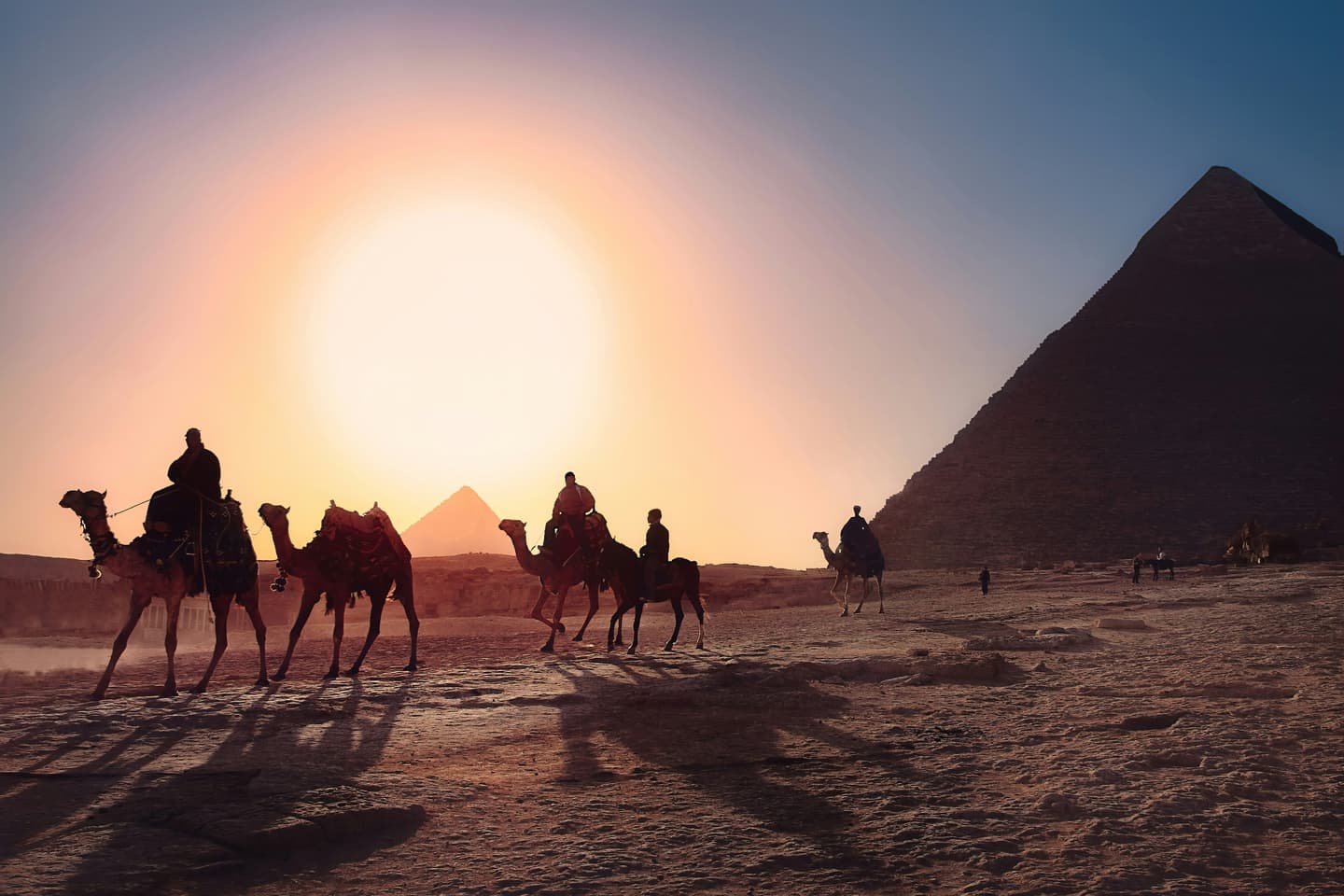
AlexandriaEgypt
★
Borg El Arab International Airport (HBE) — approx. 45 km southwest of the city centreNEAREST AIRPORT
Population
4,151,499.5
Total residents
Global rank
#772
Wanderlust index
Best time
Spring (March–May) and autumn…
Peak window
Time zone
Africa/Cairo
Local time
Currency
Egyptian Pound (EGP)
Money in use
Language
Arabic
Spoken locally
01 · Overview
About Alexandria
Egypt's sun-drenched "Pearl of the Mediterranean," where ancient wonders meet a breezy coastal soul.
Founded in 331 BCE by Alexander the Great, Alexandria is Egypt's principal seaport and second-largest city, stretching 40 km along the Mediterranean coast. Known as the "Bride of the Mediterranean," it layers Greco-Roman ruins, a world-class modern library, and a sweeping seafront Corniche over a distinctly cosmopolitan character unlike anywhere else in Egypt. Beach lovers, history buffs, and digital nomads alike find the city's low cost of living, mild sea-cooled climate, and growing remote-work infrastructure hard to resist.
02 · Wanderlust scorecard
How Alexandria scores
Ratings run 0 to 5 unless marked. They come from our AI-assisted research and are refreshed on a rolling basis.
5
/ 5
Cost of living
Affordability, 0–5. Higher means cheaper.
4
/ 5
Leisure
Leisure rating, 0–5.
30
Mbps
Connectivity
Median internet speed.
3.5
/ 5
Safety
Safety rating, 0–5. Higher is safer.
3.8
/ 5
Overall livability
Overall rating, 0–5.
2.5
/ 5
Air quality
Air-quality rating, 0–5. Higher is cleaner.
6.5
index
Index score
Wanderlust ranking, 0–10: overall, safety, internet, cost, leisure and air quality, weighted.
03 · Weather & when to go
Best time to visit Alexandria
Current weather and the forecast, and the months our research rates best for a visit.
Month by month
Best months Either side Other months
Jan
Feb
Mar
Apr
May
Jun
Jul
Aug
Sep
Oct
Nov
Dec
Sweet spot: Spring (March–May) and autumn (September–November) for ideal weather and thinner crowds; October–April for comfortable sightseeing temperatures of 20–28 °C..
More cities for these months: Where to go in March · Where to go in April · Where to go in May · Where to go in September · Where to go in October · Where to go in November
04 · Things to do
Things to do in Alexandria
Top sights from our AI-assisted research, and other places we have photos of.
Top sight
Top sight
Bibliotheca Alexandrina
Top sight
Top sight
Montaza Palace & Gardens
Top sight
Top sight
The Corniche & Stanley Beach
05 · Monthly cost of living
Cost of living in Alexandria
Estimated monthly totals in USD from our AI-assisted research, one per profile. Treat them as a starting point for a budget, not a quote.
$1,100
estimated monthly spend · USDProfileExpat
Price references — vs. profile benchmarks
Nomadmonthly spend · USD
$800
-27%
Expatmonthly spend · USD
$1,100
baseline
Familymonthly spend · USD
$936.5
-15%
Localmonthly spend · USD
$154.9
-86%
Median fiber speeddownload · Mbps
30
Mbps
06 · Neighborhoods
Where to stay in Alexandria
Neighborhoods our AI-assisted research lists as popular with visitors.
Corniche / Downtown
Montaza
Ramleh (El Raml)
Smouha
07 · Insider tips
Sights and neighbourhoods, with a tip each.
Practical tips on places from this Alexandria guide, written with AI. One is free; Pro members see the rest. Double-check details before you go.
Insider tips · Wanderlust Pro
Practical tips on the sights and neighbourhoods in this Alexandriaguide — when to go, what most visitors miss. Written with AI about the guide's own places; double-check details before you go. Pro members see every tip.
08 · Practical notes
Practical information for Alexandria
The essentials from this guide's data, in one place.
01
Getting there
- Nearest airport — Borg El Arab International Airport (HBE) — approx. 45 km southwest of the city centre
02
Money
- Currency — Egyptian Pound (EGP)
- Affordability — 5/5 on the Wanderlust index (higher is cheaper)
03
Internet
- Median speed — 30 Mbps
- Internet score — 0.3/5
04
Safety
- Safety score — 3.5/5 from our AI-assisted research
05
Language
- Primary language — Arabic
06
Timing
- Best window — Spring (March–May) and autumn (September–November) for ideal weather and thinner crowds; October–April for comfortable sightseeing temperatures of 20–28 °C.
- Time zone — Africa/Cairo
Questions
Frequently asked, plainly answered.
The quick answers travelers want before they commit to flights, neighborhoods, and how long to stay.
Is Alexandria safe for travelers?+
Alexandria has a safety rating of 3.5 out of 5.
What is the best time to visit Alexandria?+
The best time to visit Alexandria is Spring (March–May) and autumn (September–November) for ideal weather and thinner crowds; October–April for comfortable sightseeing temperatures of 20–28 °C..
How expensive is Alexandria?+
Alexandria has an affordability score of 5 out of 5, where 5 is most affordable.
What is the internet speed in Alexandria?+
Alexandria has an average internet speed of 30 Mbps.
What currency does Alexandria use?+
The currency used in Alexandria is Egyptian Pound (EGP).
What language is spoken in Alexandria?+
The primary language spoken in Alexandria is Arabic.
Researched city guide
Getting there, getting around and when to go
Written with AI-assisted web research. Where we have sources, they are listed under each part.
What works
- Exceptionally low cost of living — one of the most affordable cities in the world for expats and nomads
- Rich layered history: Greco-Roman, Islamic, and Ptolemaic sites within walking distance of each other
- Pleasant Mediterranean climate; notably cooler and breezier than Cairo or Luxor
- Vibrant seafood and street-food scene with Corniche dining at a fraction of Western prices
- Growing remote-work infrastructure with fibre broadband (up to 200 Mbps) and co-working spaces
- More cosmopolitan and relaxed atmosphere than other Egyptian cities — strong expat/foreigner presence
What to weigh
- Air quality is a concern due to heavy traffic, industrial port activity, and seasonal khamsin dust
- Traffic congestion and chaotic driving conditions make self-navigation stressful
- Public transport (buses, microbuses) is challenging for non-Arabic speakers to navigate
- Internet reliability for nomads can be inconsistent; fixed-line setup requires residency documents
- Language barrier — English is less widely spoken outside tourist sites
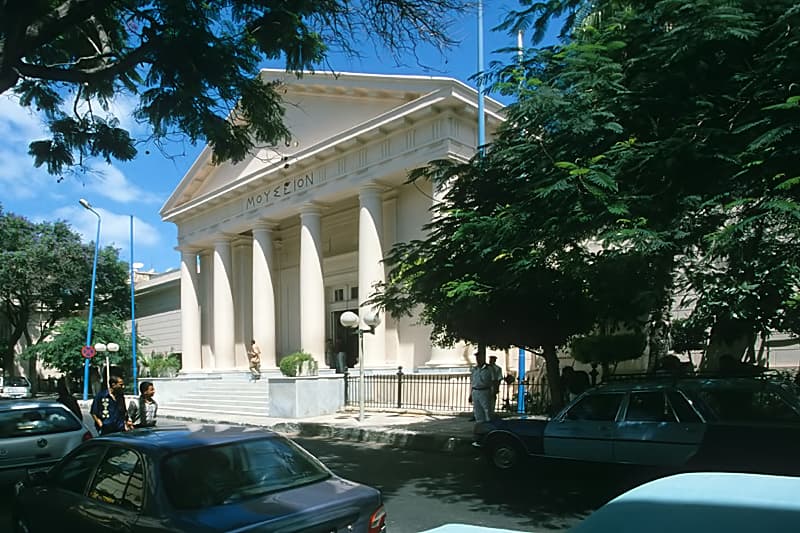
- Some key sites (e.g. Graeco-Roman Museum) periodically closed for renovations
Getting in
How to arrive
Most international visitors fly into Cairo International Airport (CAI) and connect to Alexandria by road or rail — the most practical gateway. Egypt's national railway (ENR) runs frequent express services between Cairo Ramses Station and Alexandria Misr Station; the journey takes roughly 2–2.5 hours with first-class fares around EGP 50 and second-class around EGP 35. Premium coach companies (Superjet, West & Middle Delta Bus Company) also link the two cities in about 3 hours for a modest fare; budget minibuses depart from outside Cairo's Ramsis Station for approximately EGP 140 (as of October 2025), though they can be cramped and crowded. By car, both the Agriculture Road and the Desert Road connect Cairo and Alexandria in around 3 hours. Alexandria's own Borg El Arab International Airport (HBE), roughly 45 km southwest of the city, handles some domestic and charter flights but has limited international connectivity.
Getting around
Moving through the city
Alexandria's most iconic way to travel locally is its historic tram network — one of the world's oldest, dating to 1863 — running 20 lines across 32 km with 140 stops. Trams operate from 5:30 AM to midnight approximately every 15 minutes; fares range from EGP 2 for a standard ride up to EGP 5.5 for air-conditioned carriages (as of 2025). They're charming and cheap but slow. For speed and convenience, Uber, InDrive, and Careem all operate in Alexandria; a typical 20-minute taxi or app ride costs around EGP 30–40. City buses (APTA) serve the Corniche and main corridors for EGP 3–10 per ride, while shared microbuses fill gaps throughout the city. The Corniche and historic centre are pleasant to explore on foot. Note that the Raml tram line is undergoing a major rehabilitation contract signed in May 2025, so some disruptions are possible.
When to go
Timing your trip
Alexandria enjoys a true Mediterranean climate — mild, sea-cooled winters and warm but breezy summers — making it far more comfortable year-round than Cairo or Upper Egypt. The sweet spots are spring (March–May) and autumn (September–November), when daytime temperatures hover between 20–25 °C, gardens burst with colour, and tourist crowds are manageable. Spring is widely considered the top pick: hotels are quieter, outdoor sightseeing is a pleasure, and the sea begins warming for swimming by May. Autumn brings a similarly relaxed pace, and the Alexandria International Film Festival typically takes place in September, adding a cultural highlight. The October–April window is also excellent for museum-hopping and walking the Corniche. Summers (June–August) are hot and humid — temperatures can exceed 35 °C — but Alexandrians themselves flock to the beaches, meaning coastal areas are lively and accommodation prices spike; the city's Mediterranean breeze makes it more bearable than the Egyptian interior. Winter (December–February) sees daytime highs of 20–22 °C and some rainfall, but remains comfortable for sightseeing. Beware the khamsin — hot, dusty desert winds that blow through March and April — which can temporarily reduce air quality and visibility.
Plan your trip
3 days in Alexandria: a sample itinerary
A ready-made starting point. Make it your own — clone it into an editable journey and reshape every stop.
Day 01
Day 1 – Ancient Alexandria & the Waterfront
Morning
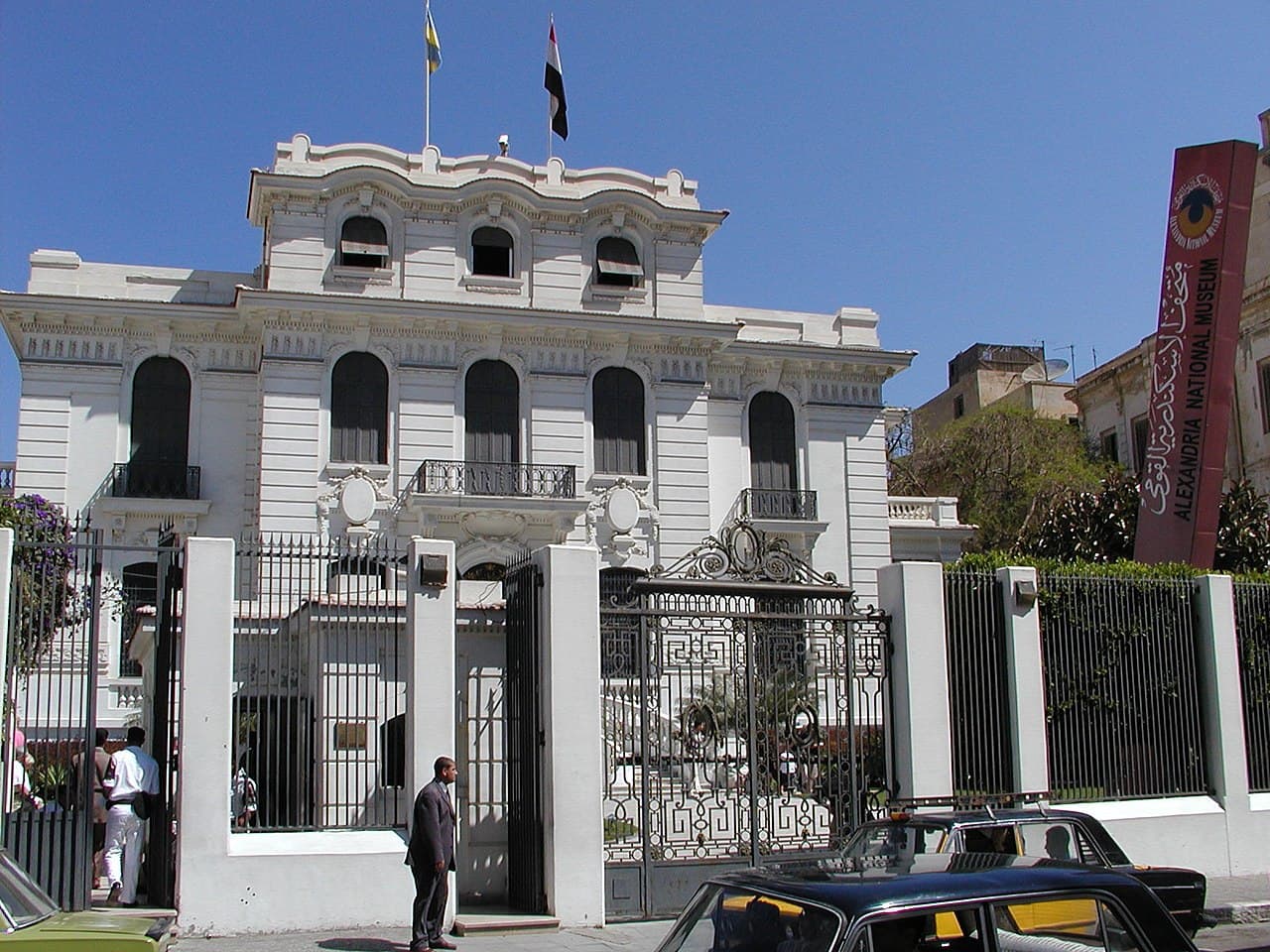
Start with a traditional Egyptian breakfast of ful medames at the legendary Mohamed Ahmed restaurant near Midan Ramla. Walk to the Alexandria National Museum to absorb Ptolemaic, Roman, and Islamic artefacts in a beautifully restored Italian palazzo.
Afternoon
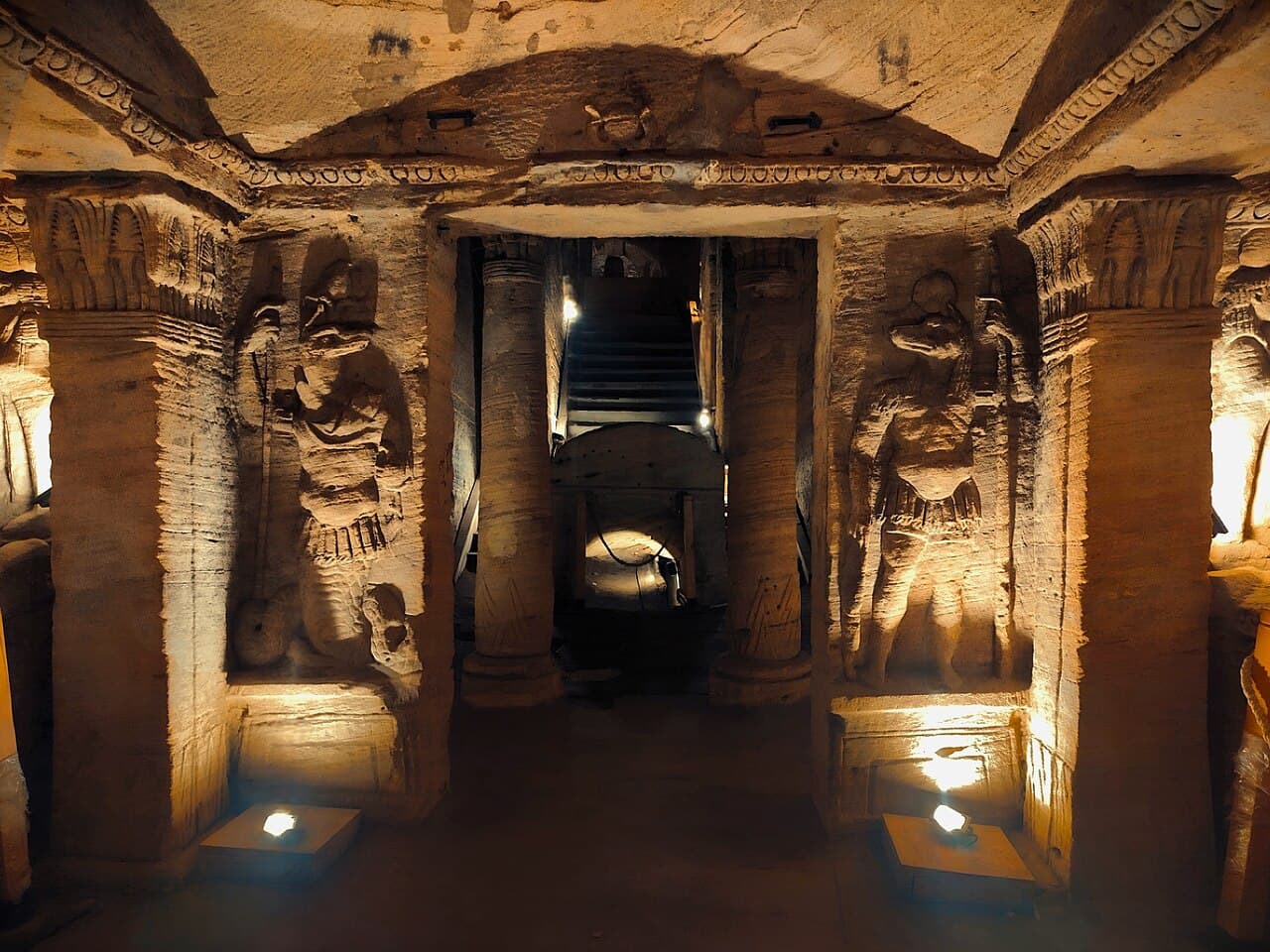
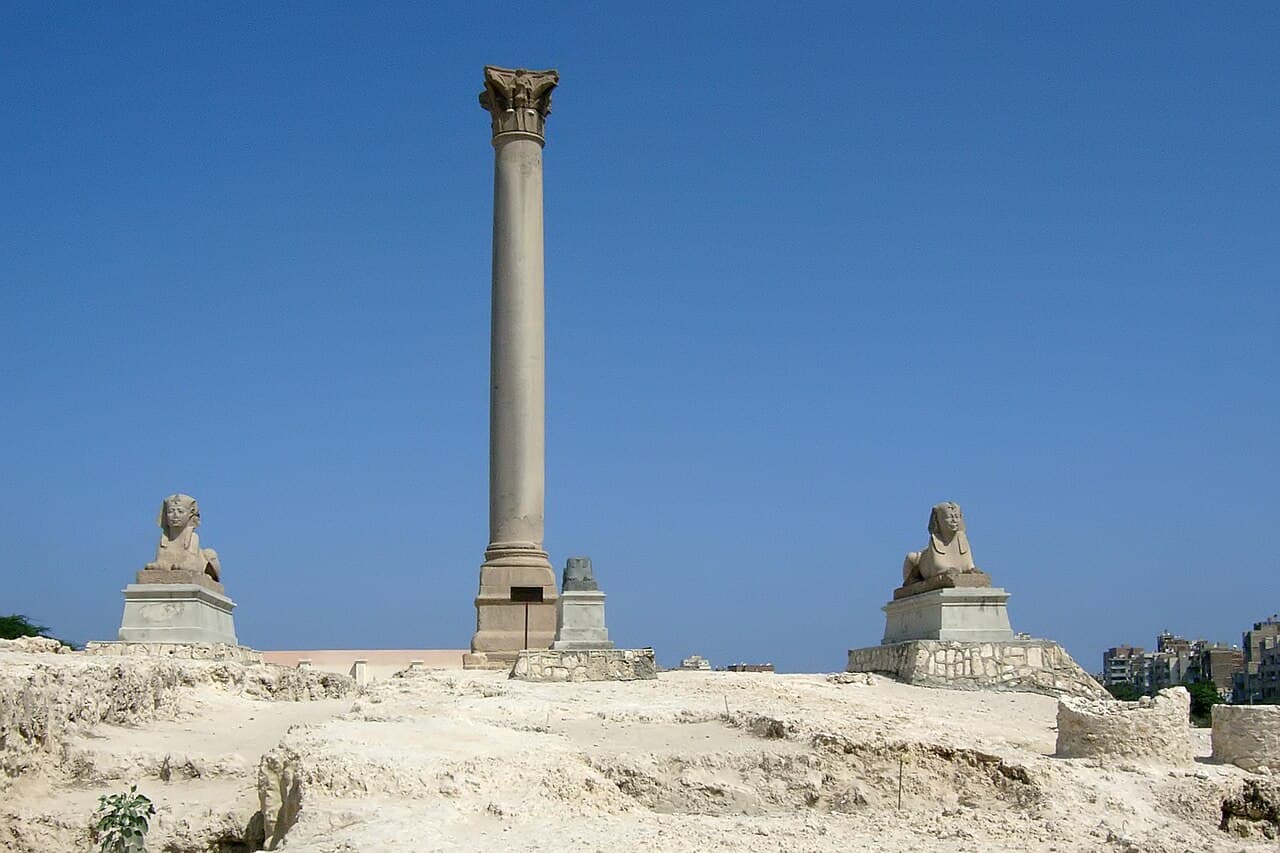
Head to the Catacombs of Kom el Shoqafa — the largest known Roman burial site in Egypt — then visit Pompey's Pillar and its adjacent sphinx garden. Finish the afternoon strolling the ancient Anfushi neighbourhood and its fish market, Al Midan.
Evening
Walk or take the tram west along the Corniche to watch the sunset over the Eastern Harbour. Dine on fresh grilled fish at a seafront restaurant in Anfushi or the Corniche area.
Day 02
Day 2 – Icons of the Mediterranean City
Morning
Visit the Bibliotheca Alexandrina when it opens at 9:30 AM — explore the main reading hall, the Antiquities Museum inside (entry EGP 100 extra), and the impressive waterfront architecture.
Afternoon
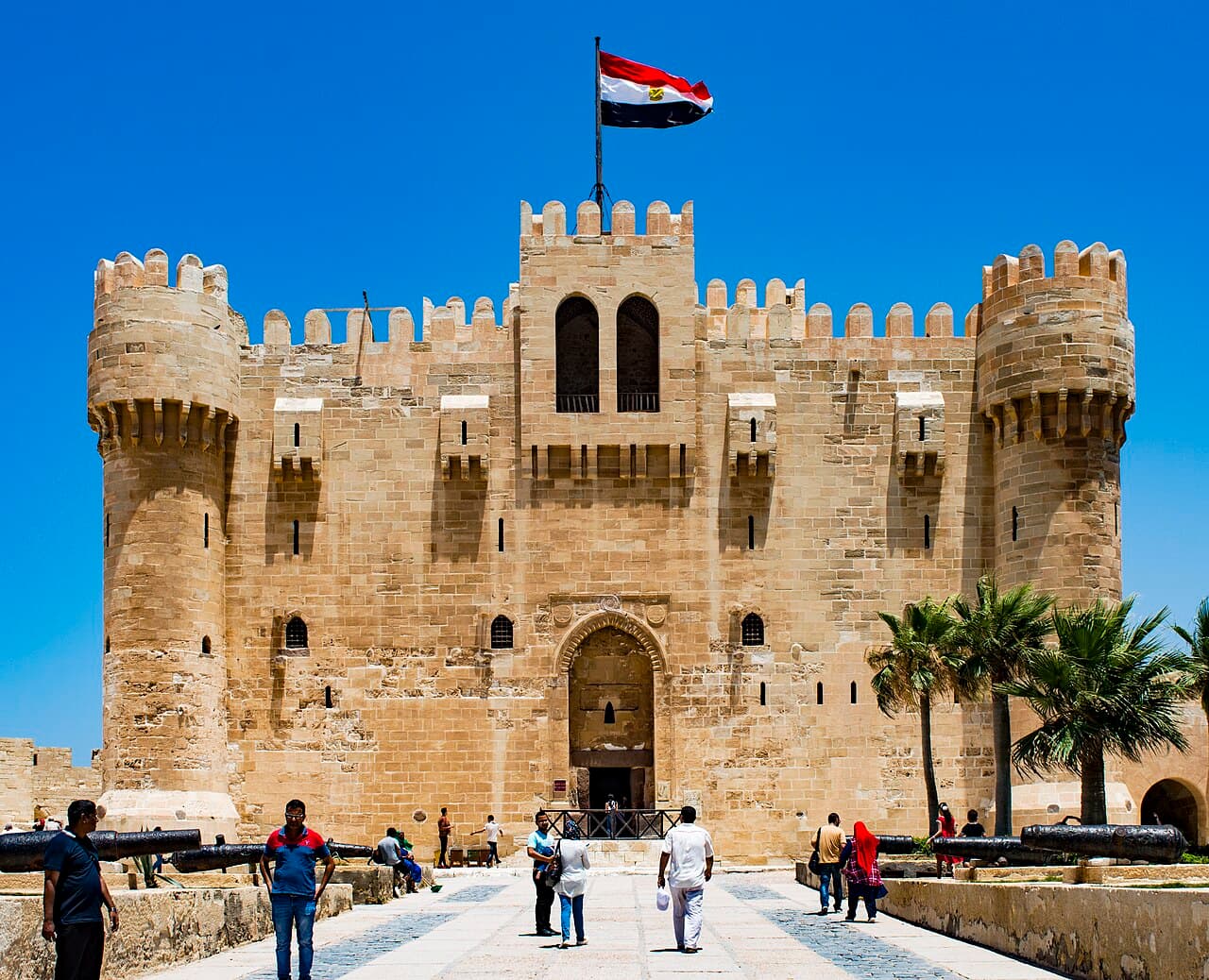
Walk or hop a microbus along the Corniche to Fort Qaitbay, the 15th-century citadel built on the site of the ancient Lighthouse of Alexandria. You can reach it on foot from Midan Ramla along the Corniche, or by tram or microbus. Explore the fort's ramparts for panoramic harbour views.
Evening
Ride the historic blue-and-cream tram eastward toward the Gleem or Stanley district for seafood at a mid-range Corniche-view restaurant, then enjoy a post-dinner walk along Stanley Beach.
Day 03
Day 3 – Royal Gardens, Local Flavour & Departure
Morning
Take an Uber or bus east to Montaza Palace and its expansive public gardens — ideal for a morning stroll, with views across the Eastern Harbour and access to the palace grounds. Explore the nearby beaches.
Afternoon
Browse the vibrant food markets and spice souks in the Old Town, picking up local produce and street snacks. Visit the Royal Jewelry Museum (in a former royal villa) if time allows.
Evening
Return to the city centre for a final dinner at a local koshary (kushari) joint or a Corniche café, then transfer to Borg El Arab Airport (HBE) or the train station for onward travel.
Work-ready layer
Coworking spots and laptop-friendly anchors.
Real coworking spaces, laptop-friendly cafés, and libraries mapped near the center of the city — the closest, best-rated desks first.
Spots surfaced0
Categories—
Mapped0
No coworking-ready spots surfaced for this city yet.
Map pending
No mapped workspace points yet.
Pick a different category or check back once we’ve indexed more desks for this city.
Concierge
Ask the Alexandria concierge.
Share your travel style, must-see spots, or work schedule and the concierge will help turn this guide into something personal.
Personal trip brief
Tell it what kind of trip you're trying to have, and it will tighten the plan.
01
Travel style
Ask for cafés, quiet neighborhoods, date-night spots, or a first 48-hour plan.
02
Work constraints
Mention calls, Wi-Fi needs, or how much of the day has to stay laptop-friendly.
03
Real tradeoffs
Get faster answers on where to stay, when to move neighborhoods, and what to skip.
Traveler reviews
Reviews of Alexandria
Written by signed-in Wanderlust members. We don't check that a reviewer has visited.
No reviews of Alexandria yet.
Plan a trip to Alexandria.
Tell the planner your dates, who's coming, your budget and pace, and it drafts a day-by-day itinerary you can edit.
Wanderlust Pro
Insider tips for Alexandria, unlimited AI-built itineraries, and travel companions you can invite to plan a trip together. From $5.00/month, billed annually.